Tirana, a colourful capital shaped by history and change
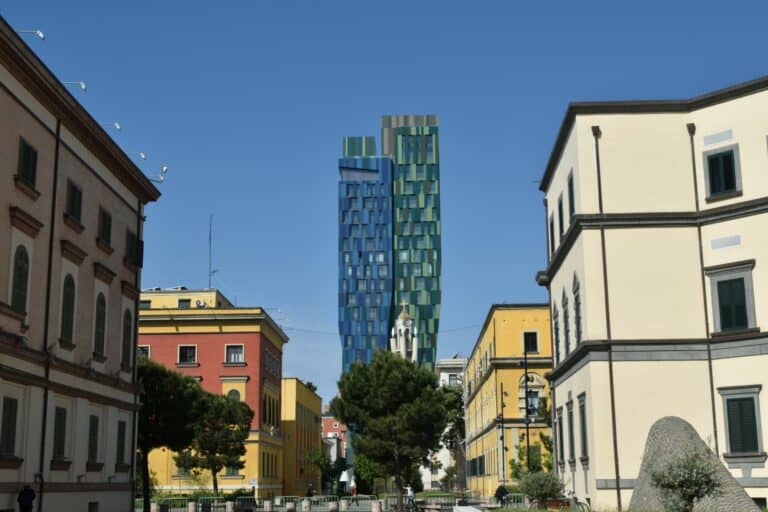
Tirana is a lively and rapidly evolving city where Ottoman landmarks, communist-era buildings and contemporary architecture stand within a short distance of one another. Located in central Albania near Mount Dajti, the capital provides an excellent introduction to the country’s history, culture and everyday life.
The natural starting point for exploring the city is Skanderbeg Square, a broad pedestrian space named after Albania’s national hero. Several important landmarks surround the square, including the Et’hem Bey Mosque, the Clock Tower and major cultural and administrative buildings. From here, many of central Tirana’s attractions can be reached on foot along wide boulevards decorated with colourful façades, public art and murals.
What to see in Tirana
To understand Albania’s recent past, visit Bunk’Art 1 and Bunk’Art 2, museums created inside bunkers built during the communist period. Their exhibitions explore political repression, isolation and daily life under the former regime. Another distinctive landmark is the Pyramid of Tirana, which has been transformed into a cultural space and an accessible viewpoint over the city.
The Blloku district, once reserved for senior communist officials, is now one of Tirana’s liveliest neighbourhoods. Its streets are filled with cafés, restaurants, shops and evening venues, making it an ideal place to experience the city’s contemporary atmosphere.
For a quieter break, head to the Grand Park of Tirana and its artificial lake, popular with local residents for walking and relaxation. Travellers with additional time can take the cable car towards Mount Dajti, enjoying panoramic views and a refreshing contrast with the busy city centre.
Spring and autumn generally offer the most comfortable conditions for sightseeing. Two or three days allow enough time to explore Tirana at a relaxed pace, while nearby destinations such as Kruja and Durrës can be included as day trips.