
Amritsar
Amritsar, the spiritual heart of Punjab
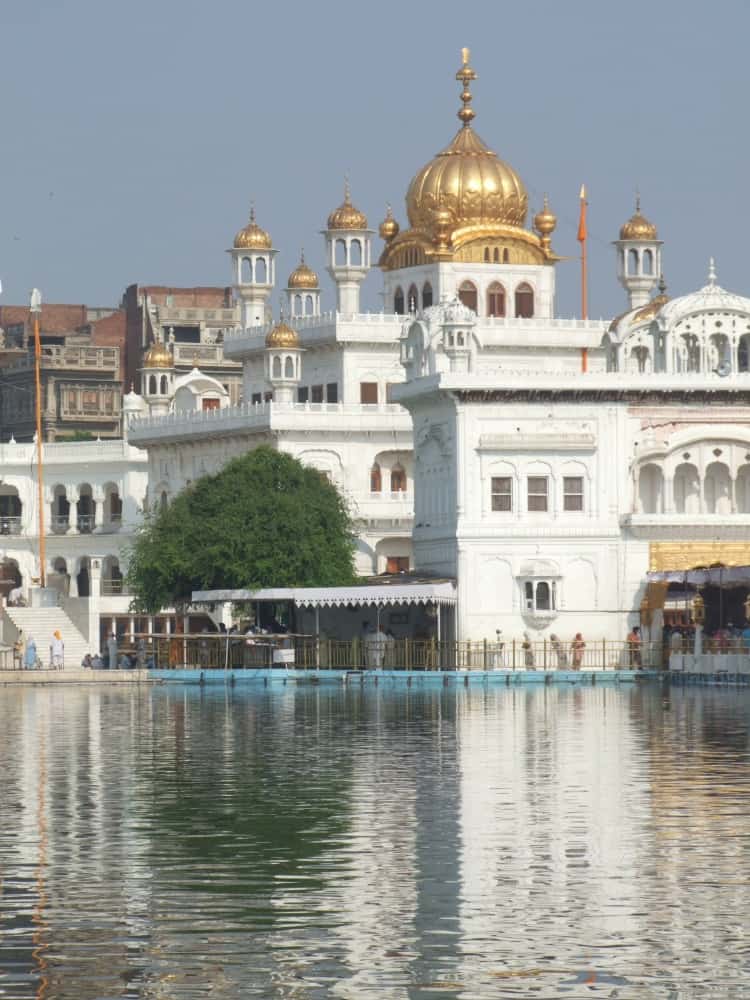
Amritsar is one of the most important cities in Punjab, in north-western India, and is best known as the spiritual centre of the Sikh religion. Founded in the sixteenth century, the city developed around the sacred site that today contains the magnificent Golden Temple, visited by millions of pilgrims and travellers every year.
The name Amritsar derives from the Amrit Sarovar, the sacred pool surrounding the shrine. The city was founded in 1577 by Guru Ram Das, the fourth Sikh Guru, and gradually developed into an important religious and commercial centre.
Amritsar also occupies an important place in modern Indian history. During the period of British rule, the city witnessed dramatic events that influenced the development of India’s independence movement.
What to see in Amritsar
The city’s essential attraction is the Golden Temple, or Harmandir Sahib. Covered in gold, the sanctuary stands in the middle of the sacred pool and is reached along a causeway. The atmosphere is especially memorable early in the morning and after sunset, when the illuminated temple is reflected in the water.
The complex also contains an enormous langar, the Sikh community kitchen where free meals are prepared every day for thousands of people regardless of religion, background or social status.
A short walk away is Jallianwala Bagh, the site of the 1919 massacre in which British troops opened fire on a crowd gathered inside the enclosed area. Today it serves as a memorial to the victims.
Amritsar’s old city is also worth exploring for its lively streets, markets, shops and opportunities to discover the rich cuisine of Punjab.
Around 30 kilometres from Amritsar is the Wagah-Attari border between India and Pakistan. It is famous for the elaborate daily ceremony accompanying the closing of the border gates.
When to visit Amritsar
October to March generally provides the most comfortable weather for sightseeing. Temperatures can become extremely high between April and June, while the summer months are also affected by the monsoon season.
After the massacre
[ Sept.2006 ] In Amritsar in India, we visited a park called Jallianwala Bagh, too. This was a site of a massacre of 1919 when India was being governed by the UK. A general called…
