
Nara
Nara, ancient temples, sacred deer and Japanese history
Nara is one of Japan’s most historically important cities. Located in the Kansai region, within easy reach of Kyoto and Osaka, it served as the country’s capital from 710 to 784, when it was known as Heijō-kyō. During this period, major Buddhist institutions were established and magnificent temples were constructed, many of which still demonstrate Nara’s fundamental role in the development of Japanese culture.
Much of the sightseeing centres around Nara Park, an extensive green area where temples, shrines and museums share the landscape with hundreds of freely roaming deer. Traditionally regarded as messengers of the gods in local Shinto beliefs, the deer have become one of the city’s most recognisable symbols.
Beyond this famous image, Nara offers historic neighbourhoods, gardens, forests and exceptional religious art. Its relatively compact scale and peaceful atmosphere make it an excellent place to explore some of the earliest chapters of Japanese history.
What to see in Nara
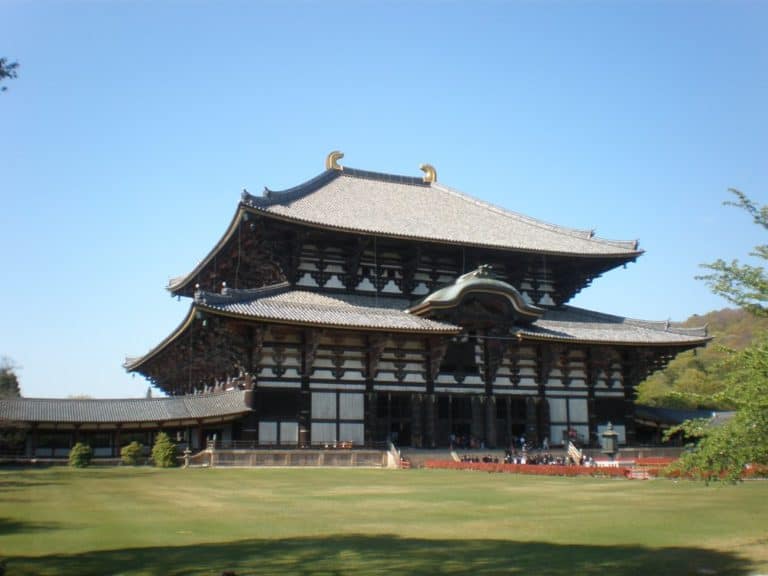
The city’s most celebrated monument is Tōdai-ji, one of Japan’s great Buddhist temples. Inside stands the monumental Daibutsu, a bronze statue of Vairocana Buddha approximately 15 metres high.
Walking through Nara Park leads to Kasuga Taisha, an important Shinto shrine renowned for the many stone and bronze lanterns lining its wooded approaches.
Another essential site is Kōfuku-ji, an ancient Buddhist temple closely associated with the powerful Fujiwara family and particularly recognisable for its historic pagoda.
For a different perspective on the city, explore Naramachi, Nara’s traditional merchant district. Old machiya townhouses survive among small museums, shops and cafés, preserving the atmosphere of an earlier period.
When to visit Nara
Spring and autumn are especially beautiful, with cherry blossoms and colourful foliage surrounding the temples and parks. Winter provides a quieter atmosphere and can be an excellent season for sightseeing.
With its magnificent temples, famous deer and exceptional heritage, Nara is an essential destination for anyone interested in the origins of Japanese history and culture.
