
Warsaw
Warsaw, history and rebirth in the Polish capital
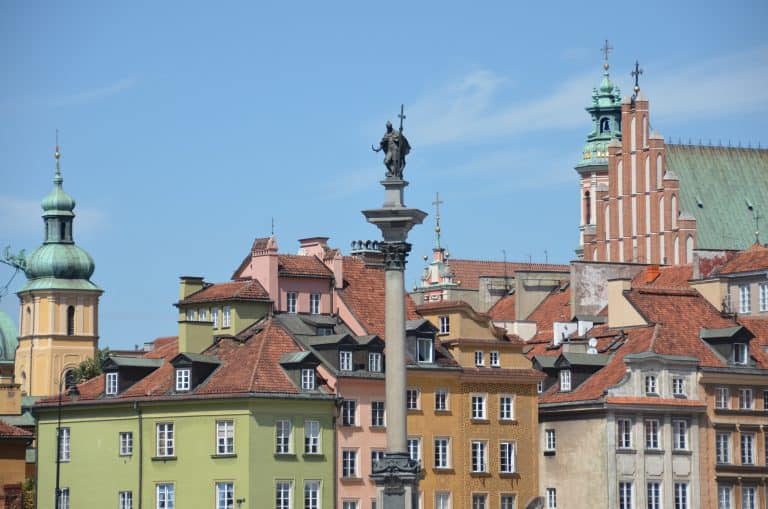
Warsaw is the capital and largest city of Poland, extending along the Vistula River. Its present appearance reflects an exceptionally complex history, with contemporary architecture, reconstructed historic districts and reminders of the past coexisting throughout the city.
Warsaw became Poland’s capital at the end of the sixteenth century and developed into an important political and cultural centre in Central Europe. The Second World War had catastrophic consequences for the city, including the destruction of the Jewish ghetto and, following the Warsaw Uprising of 1944, the systematic devastation of much of the historic centre.
After the war, numerous historic buildings were reconstructed using surviving documents, paintings and photographs. This extraordinary reconstruction was recognised by UNESCO, which inscribed Warsaw’s historic centre on the World Heritage List in 1980.
What to see in Warsaw
The historic heart of Warsaw is the Old Town, centred around its colourful Market Square. From here it is a short walk to Castle Square, dominated by the Royal Castle and Sigismund’s Column.
The Royal Route passes palaces, churches and historic buildings before continuing towards Łazienki Park, one of Warsaw’s most beautiful green spaces. Its attractions include landscaped gardens, historic pavilions and the famous Palace on the Isle.
To understand the city’s twentieth-century history, the Warsaw Rising Museum provides an extensive account of the 1944 uprising against German occupation.
The history of Warsaw’s Jewish community is also fundamental to understanding the city. The POLIN Museum of the History of Polish Jews, situated within the area of the former Warsaw Ghetto, explores a thousand years of Jewish history in Poland.
Modern Warsaw can be experienced around the Palace of Culture and Science, the monumental 1950s building surrounded today by a rapidly changing skyline of contemporary towers.
When to visit Warsaw
Late spring and early autumn generally provide comfortable temperatures for exploring Warsaw on foot. Summer brings long days and a lively atmosphere, while winter can be cold but reveals a very different side of the Polish capital.
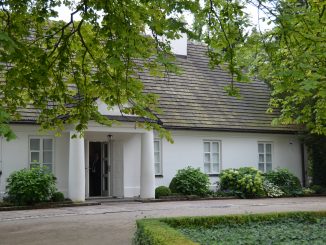
Chopin Tour – 2
[ Aug.2016 ] The latter half of the Chopin Tour in Warsaw, Poland, took us to the places outside of the city and we visited his birthplace and the church where he was baptized. Frederic…
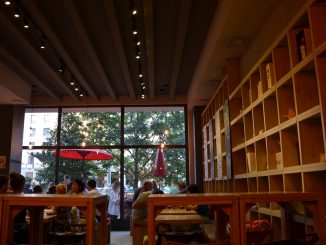
current Poland and ‘UkiUki’ restaurant
[ Aug.2016 ] My husband asked Mariusz, our guide who took us around for the Communism Tour, about the current situation in Poland. So he stopped the minibus on a bridge and started chatting. According…
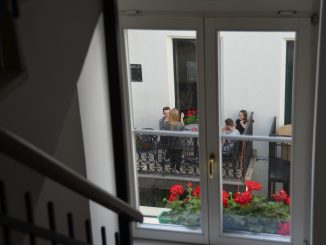
feeling as if we lived there
[ Aug.2016 ] The hotel we stayed at in Warsaw after coming back from Gdansk was called Residence St. Andrews Palace. I did not know until we got there, but it was not exactly a…
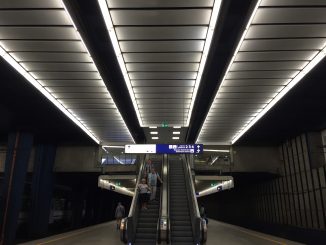
Train journey in Poland
[ Aug.2016 ] In Poland, we went to Gdansk from Warsaw by train. It departed from the underground platform in Warsaw Central Station. While we were waiting at the platform for the 11:20am train, there…
