[Dec. 2025] In Marrakesh, Morocco, we also had a local guide.
The second day was dedicated to this guided tour.
He arrived at our riad on time, and waiting for us was a tall man named Youssuf, wearing a flat cap.
It seems that, like in Italy, names are limited in Islamic countries, and he shared the same name as our driver.
Youssuf was very friendly, perhaps a little too friendly at times, so at first I thought he might be a bit of a frivolous man, but after a while I realised that wasn’t the case.
The entire tour was on foot, and we learned many interesting things along the way.
First, the structure of present-day Marrakesh.
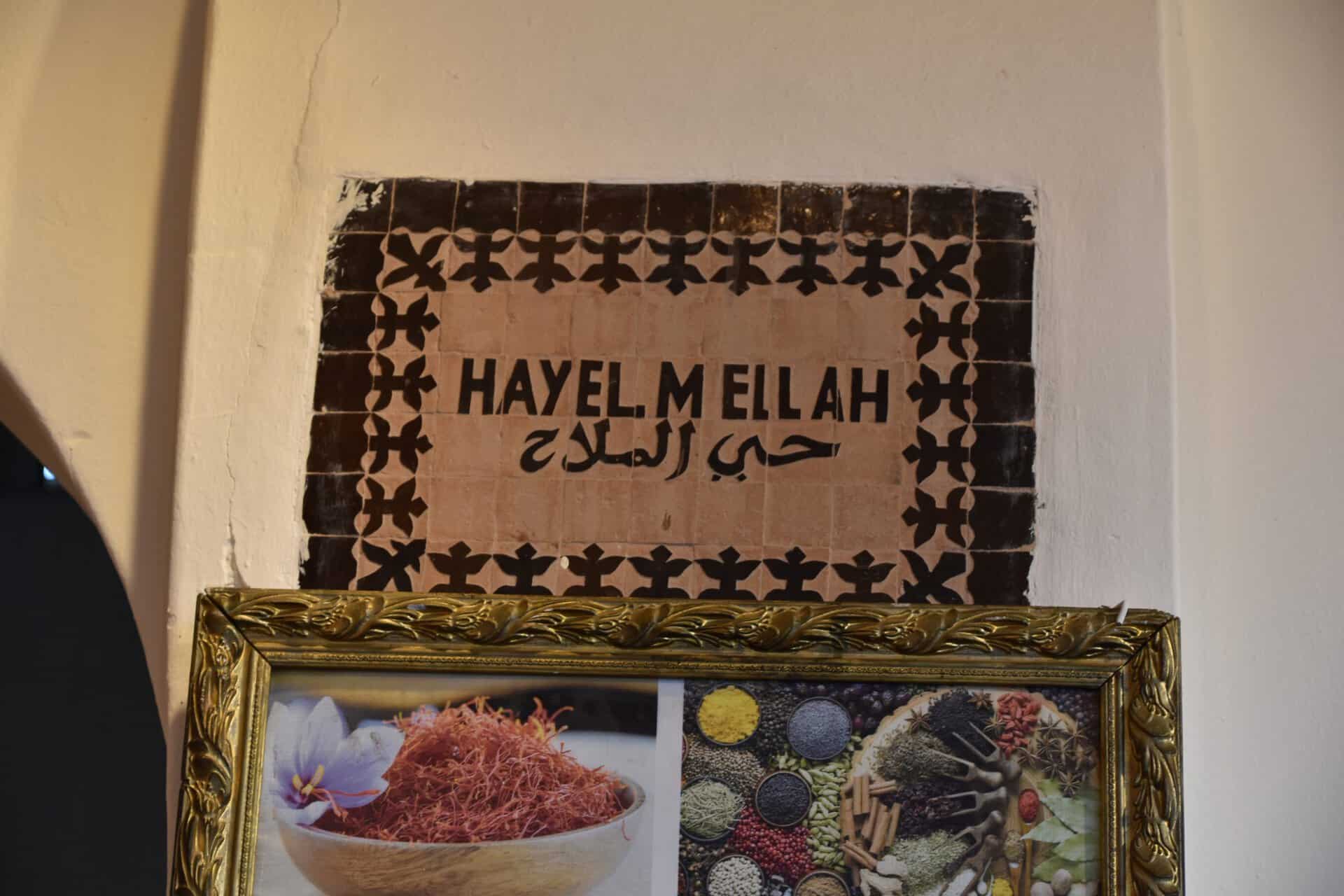
It seems to be composed of three layers: the old city (medina), the new city outside of it, and the upscale residential areas in the suburbs.
In the suburbs, he said, Europeans who bought tourist resources in the medina live in mansions.
There seemed to be a hint of jealousy in his words.
Then he talked about Mellah, the Jewish quarter near the Kasbah.
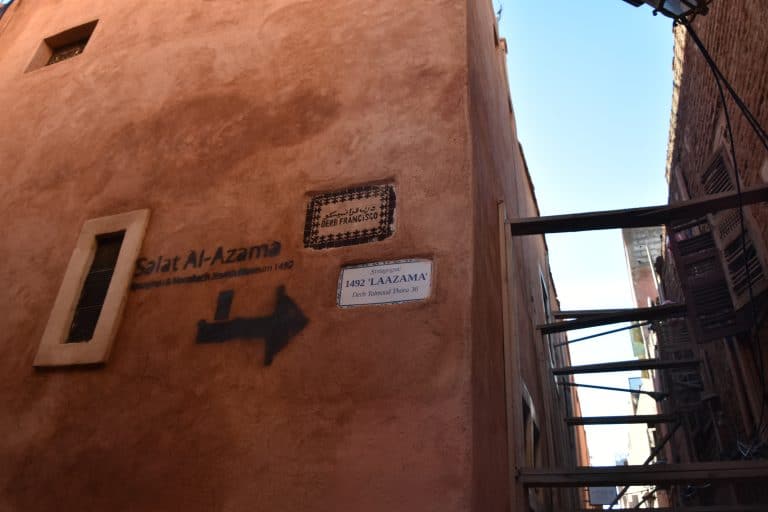
Jews had lived there since the 6th century, but after the Reconquista in 1492, the new immigrants from Spain didn’t want to mix with others, so they built a Jewish quarter.
At this time, Morocco was happy about the increased tax revenue and gladly welcomed the Jews.
Furthermore, there were Jews who fled the Nazi regime in the 1940s.
But, as we learned in Fez, they all left after the founding of Israel.
Now, they are coming again as tourists, so the Jewish quarter has been restored.
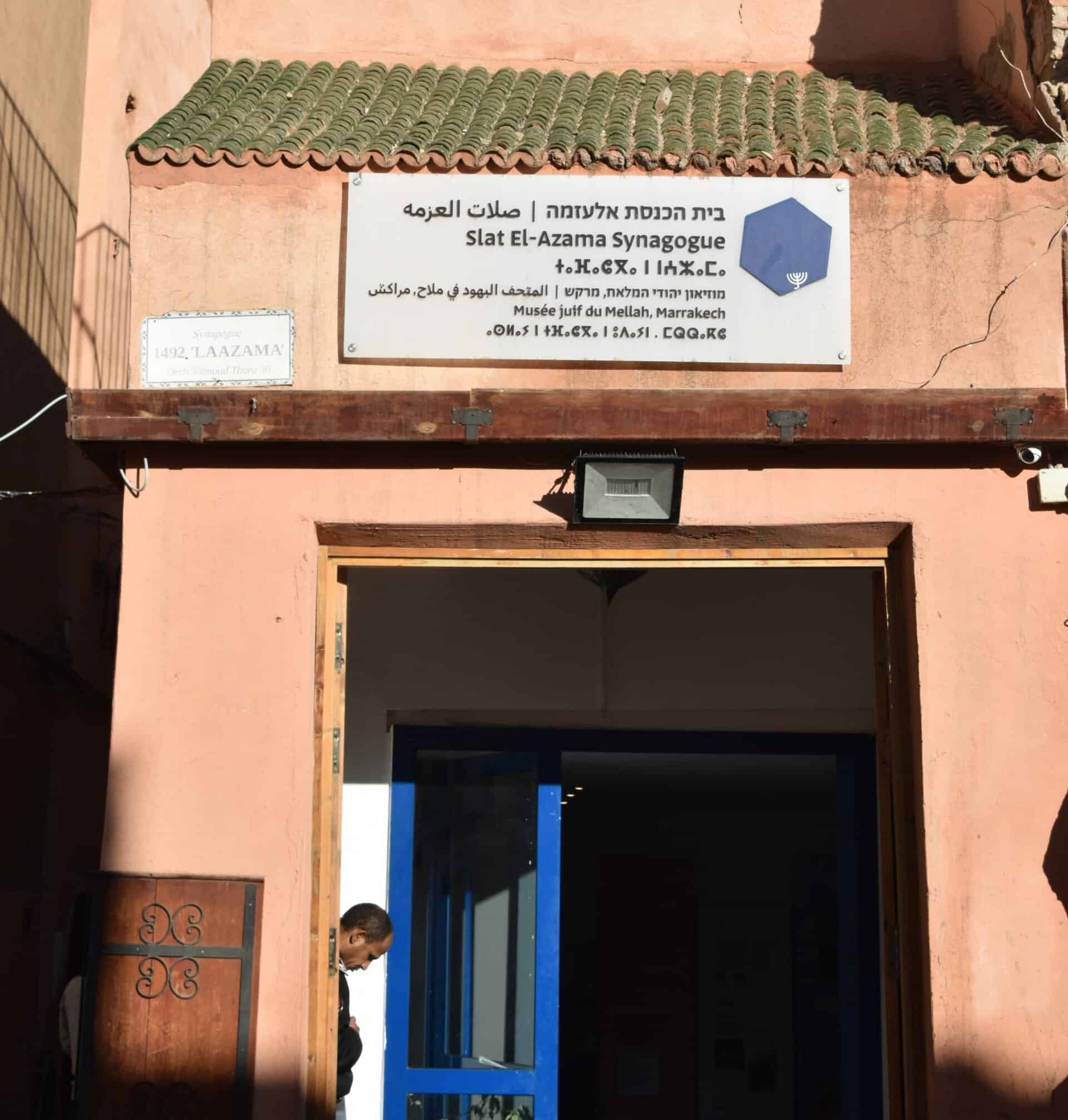
He also showed us an operational synagogue.
We didn’t go inside, though.
Youssuf pointed to a dye shop near the entrance to the Jewish Quarter where rock salt was being sold and said, “In the past, this rock salt was used as currency, traded at a 1:1 ratio with gold.”
There are remnants of caravanserais scattered throughout the medina.
Marrakech flourished as a trading hub, primarily trading with Timbuktu (part of present-day Mali).
Next to the Jewish Quarter was the Moorish Quarter.
The Moors refer to Muslims who migrated to the Iberian Peninsula around the 8th century and became very influential.
They, too, came to Marrakech during the Reconquista and established a settlement.
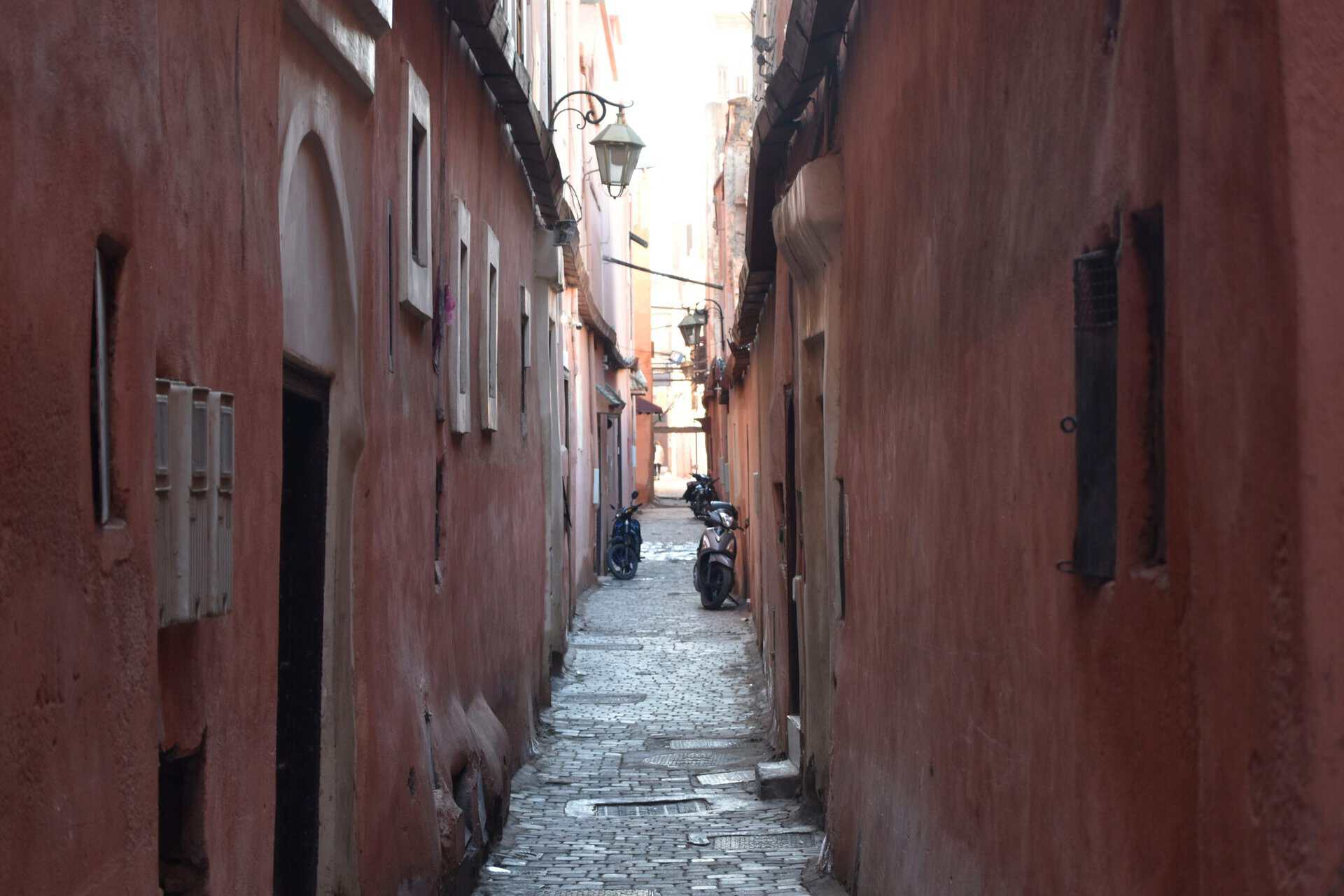
Incidentally, Marrakech is known as the “Red City” because of the houses built from the local red clay.
According to Youssuf, because it was designated a World Heritage Site, they couldn’t use any other colour.
So, he said that the concrete building was also painted a reddish-pink colour to match the others.