[Dec. 2025] Our second day in Fez, Morocco, was packed with sightseeing.
At 10:00 AM, our local guide, Hassan, picked us up at our riad.
Unlike our guide in Tangier, he was a humble, serious, and genuine guide.
His attire, demeanour, and even his facial expression exuded a trustworthy aura.
First, we went to the Royal Palace together in our driver Youssuf’s car.
Along the way, he explained the history of Fez.
In short, the city was founded in the 9th century, and although city walls were built in the 12th century, the city grew so large that in the 14th century, the then-royal family started a new medina on a flat area a little further away.
We were now heading to the Royal Palace in that newer medina.
According to Hassan, the current Moroccan royal family is the seventh in history.
The royal family was apparently sometimes Arabs and other times Berbers, but currently, it’s an Arab royal family.
There are 12 large royal palaces throughout the country, guarded by a diverse group of uniformed guards.
This system was developed based on an experience from the 1970s when a coup d’état nearly occurred.
It was designed to make it difficult for the army, air force, and other branches of the military to organize a coup, by having all branches of the military work together to protect the palaces.
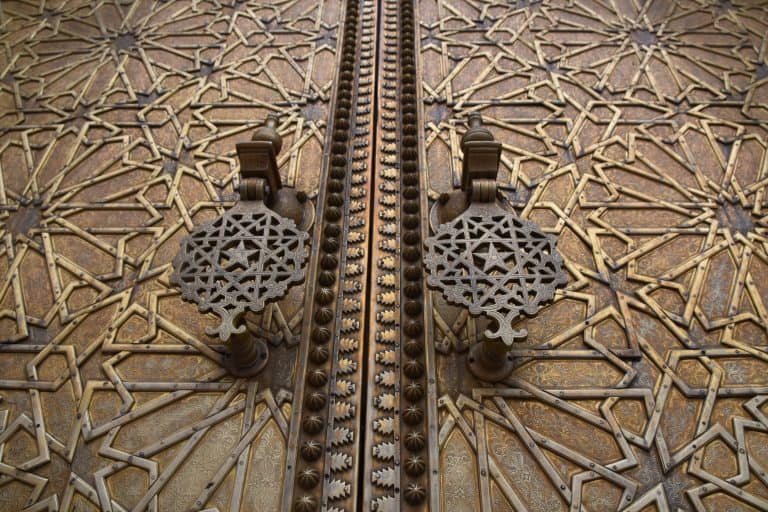
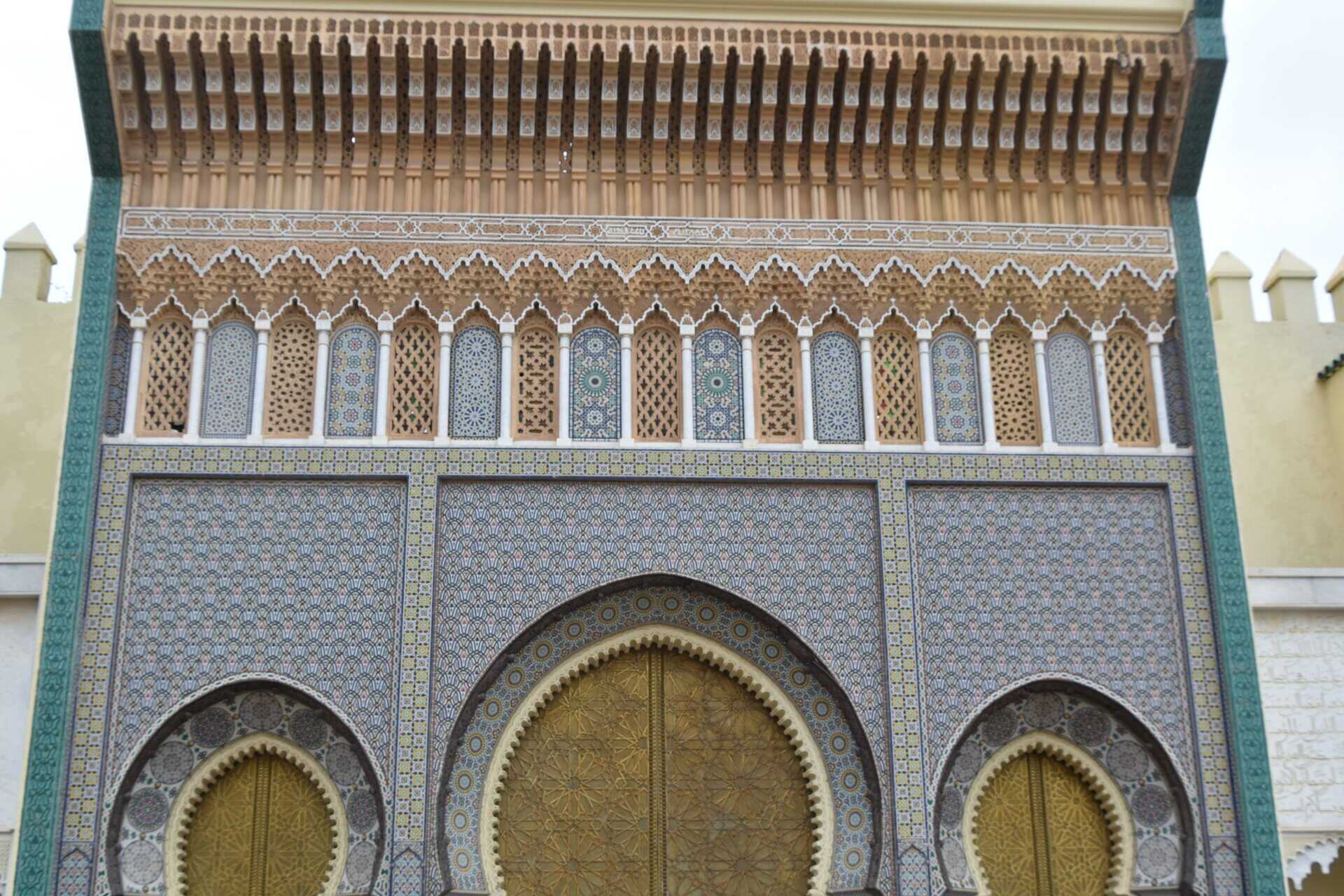
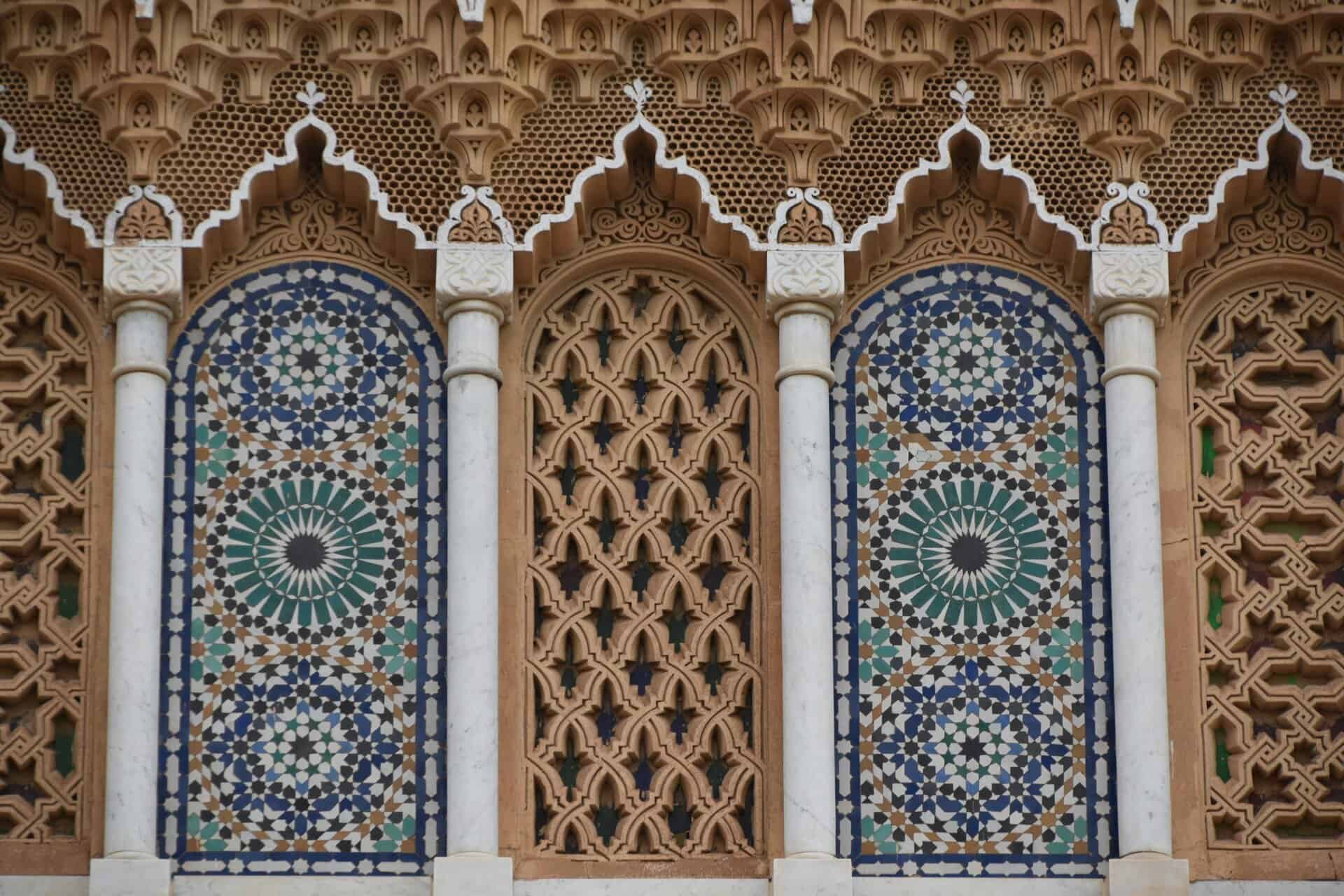
Upon arriving at the palace, he explained the building’s construction.
The basic materials are tiles, copper, and plaster, and all the intricate patterns are handmade.
When the royal family moved the palace here, they brought in Jews to stimulate the economy, so the area immediately behind the palace is a Jewish quarter.
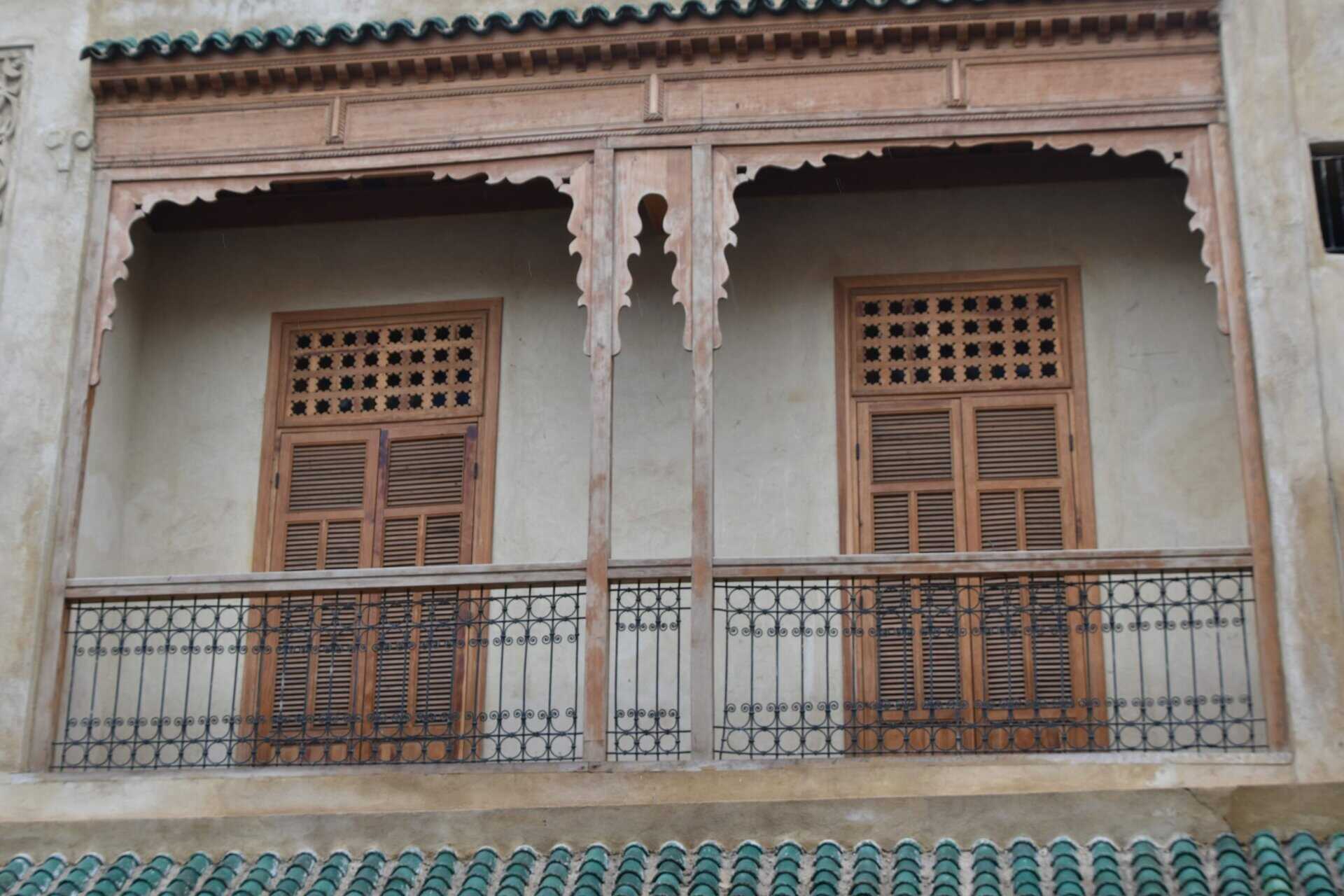
So, then and now, Jews are the backbone of the economy.
Jewish homes are easily identifiable because they have verandas facing outwards.
In contrast, Muslim homes have inward-facing verandas, with windows only facing the courtyard.
There’s a gate halfway down the main street of the Jewish quarter, and beyond that is the Muslim quarter.
Although there were distinctions, there was no discrimination or animosity at the time; they coexisted peacefully.
The reason there are no Jews living here now is because Israel was founded in 1948 when Morocco was under French rule, and all Jews were encouraged to move there.
According to AI, there are more complex circumstances behind this, but it’s a clear explanation, isn’t it?
We walked around learning about the history that connects to the current world situation.
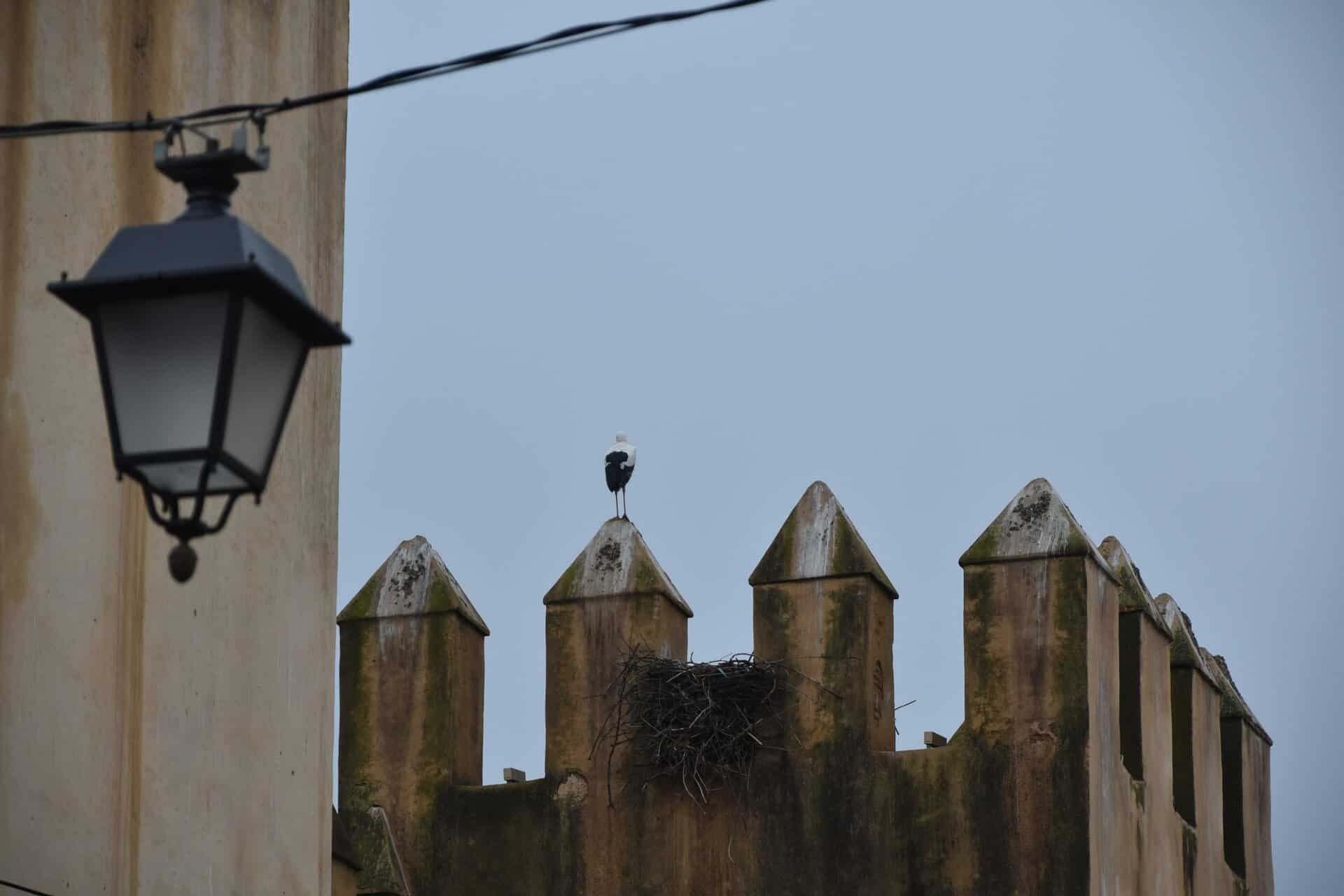
There were lots of storks around here.