[Dec. 2025] Our stroll through the souks of Fez, Morocco, continued.
Along the way, we passed the mausoleum dedicated to Moulay Idris, the founder of this town.
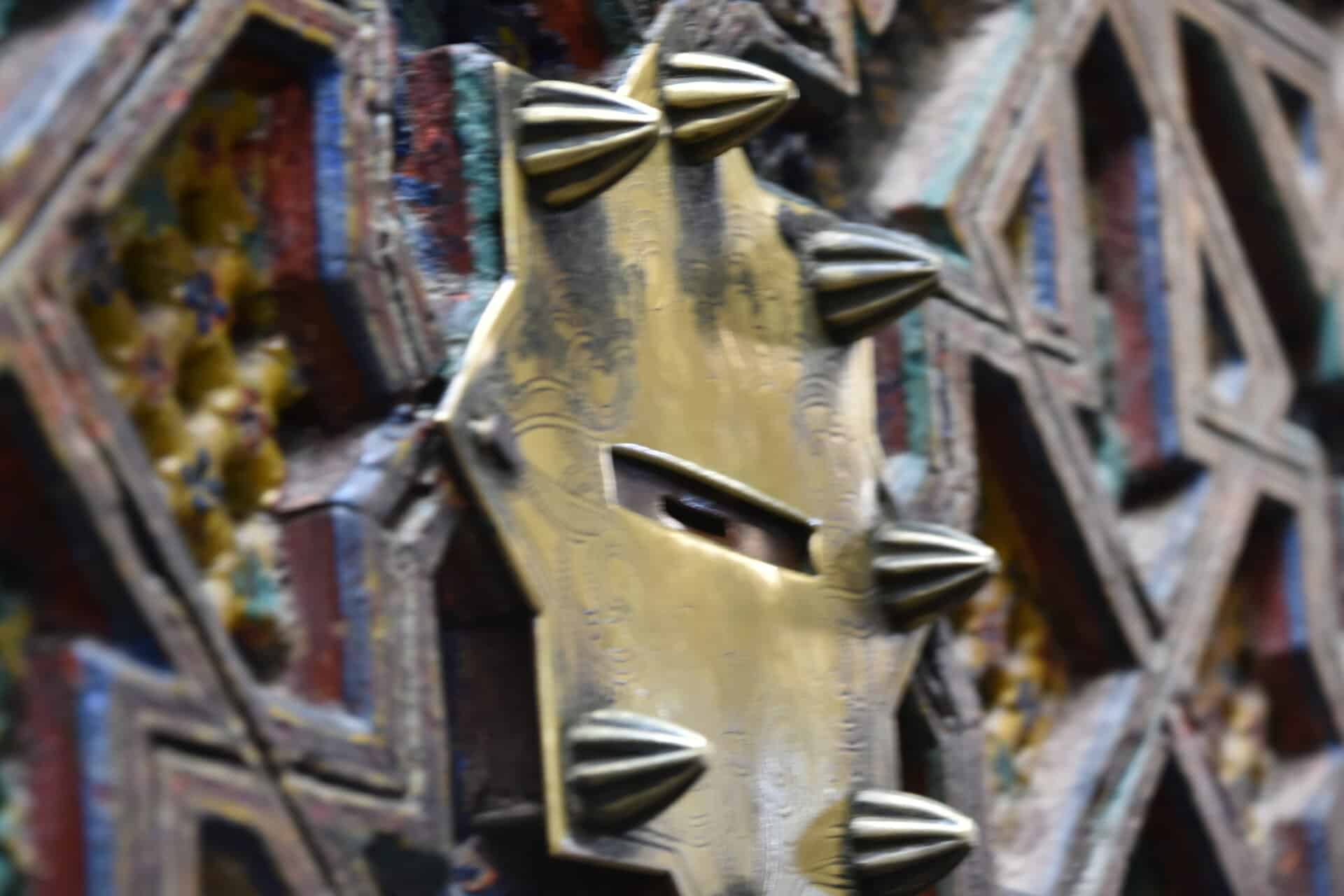
Apparently, you can offer your prayers from outside by placing your offering through a letterbox-like opening, even without entering the mausoleum.
It reminded me a bit of Japanese temples and shrines.
Furthermore, there was a mausoleum of the founder of a Sufi (Islamic mysticism) order, and we peeked inside.
When I think of Sufis, I recall the swirling dance in Turkey, but there are various sects, and apparently the Moroccan version doesn’t involve swirling.
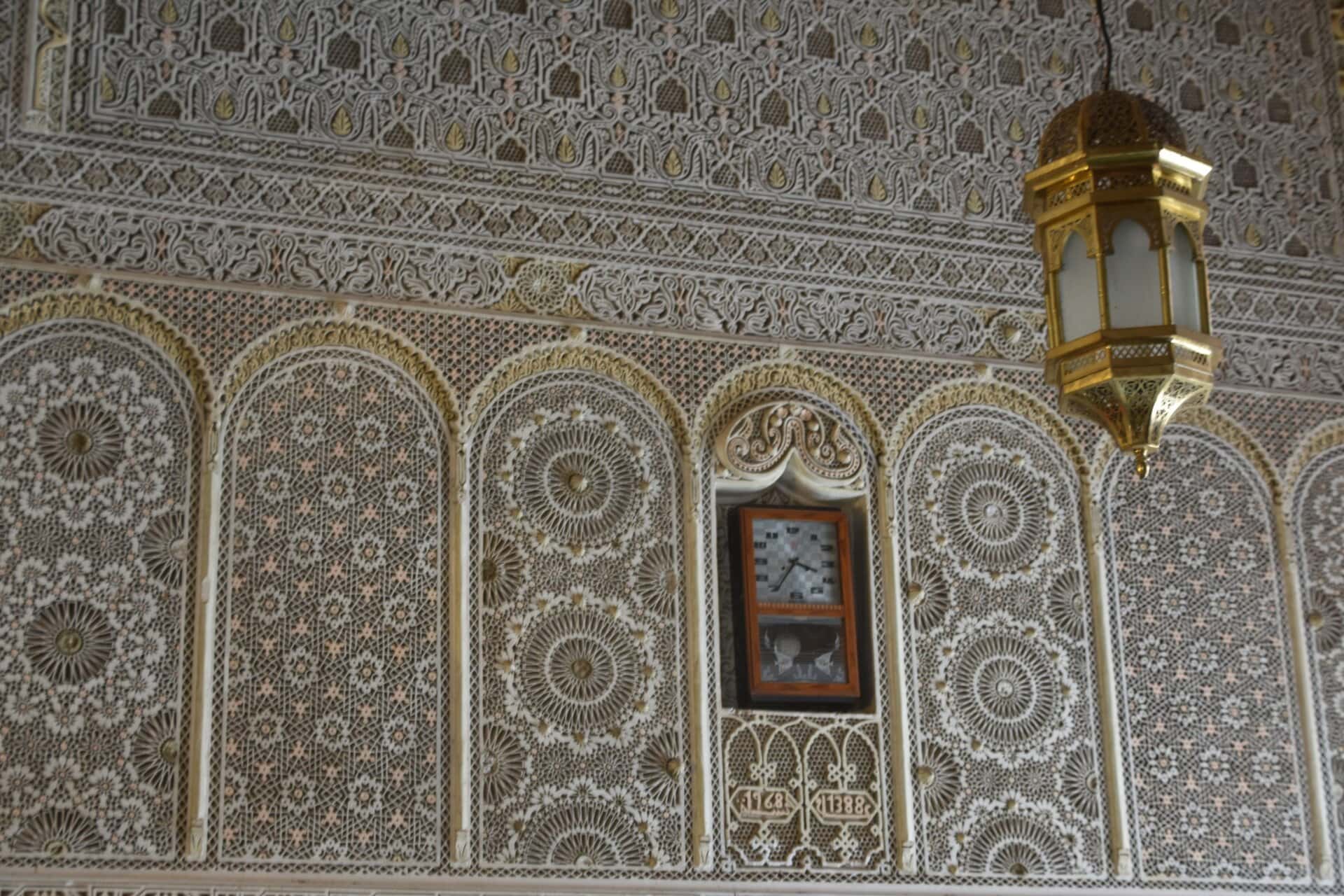
This mausoleum is that of the founder of the Tijaniya order, and our guide, Hassan, said that people come to worship here from all over Africa.
I peeked inside and was struck by the reality of the place, seeing a regular grandfather clock amidst the opulent Islamic architecture.
That was the end of our religious visits.
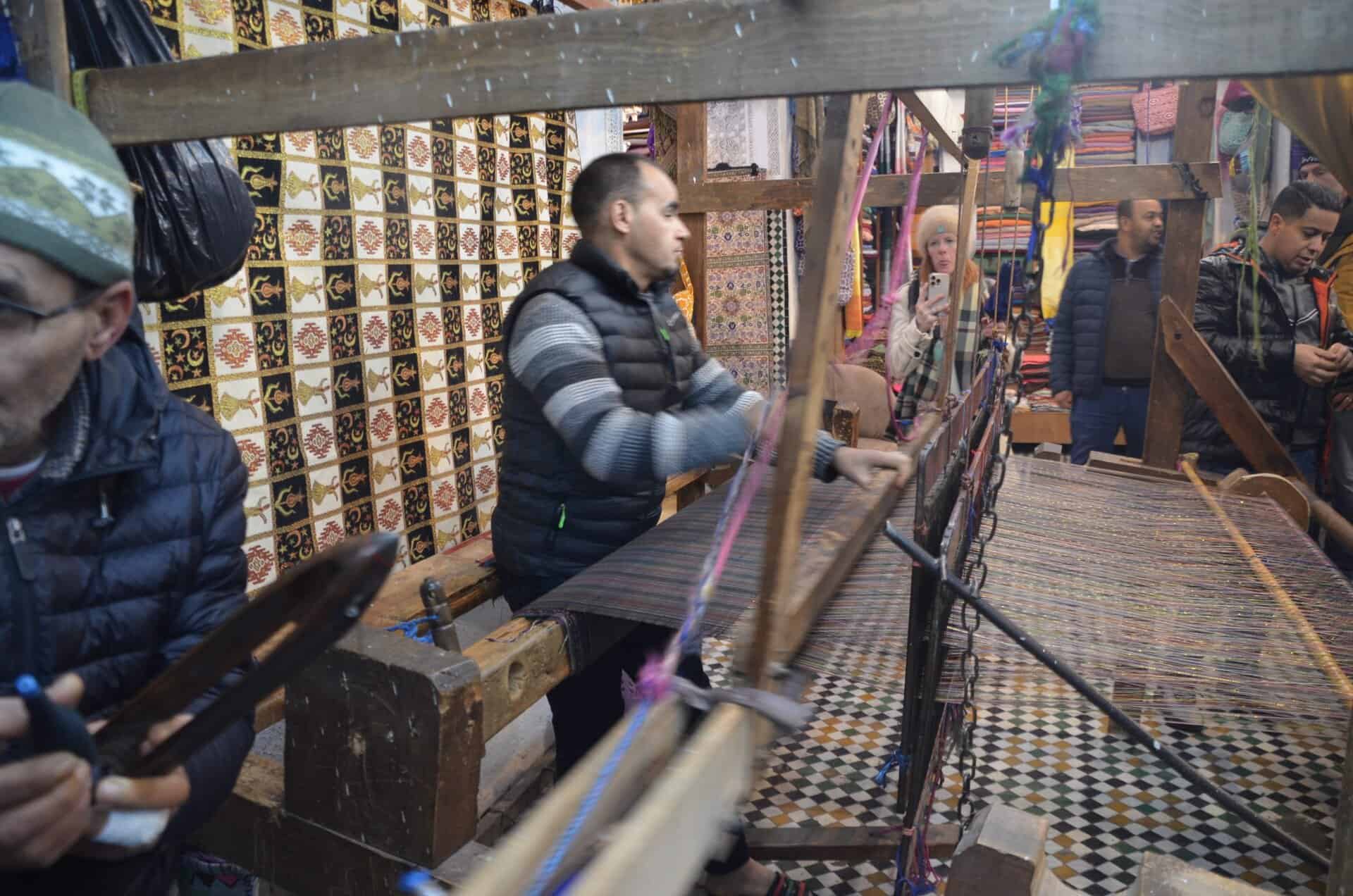
We then went into shops demonstrating making metal carvings and textiles, but nothing really caught our eyes, so we didn’t buy anything.
Conversely, we bought four souvenir boxes from a vendor who happened to be setting up shop at the edge of a woodworking district.
They only accepted cash, so we had to find an ATM to withdraw money.
Hassan patiently accompanied us in our search for an ATM without rushing us.
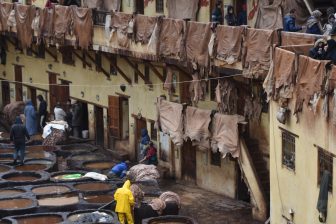
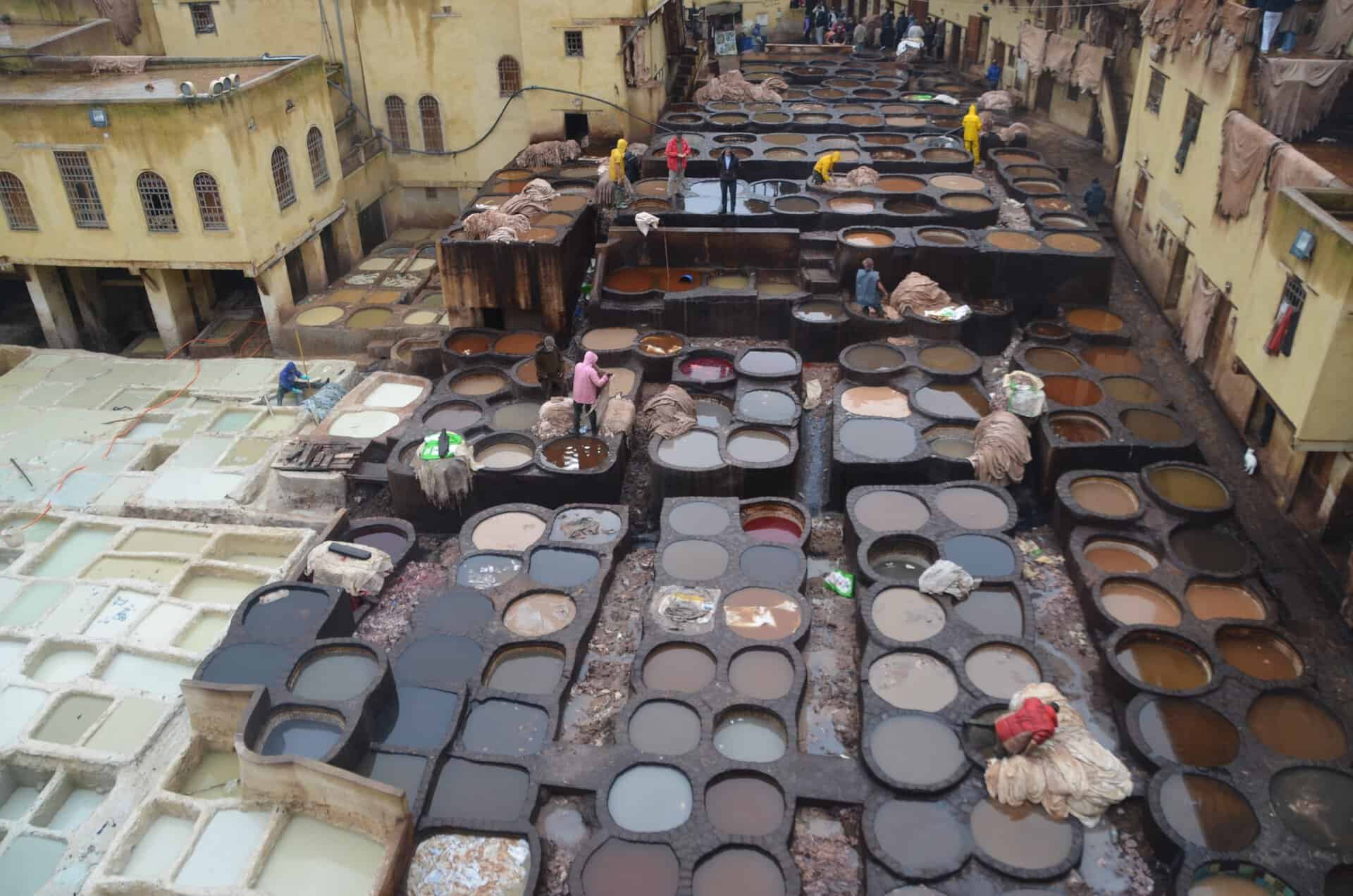
Our final stop was a tannery, famous in Fez.
I didn’t check the name, but I think it was probably Tannery Chouara.
Hassan didn’t go inside; a staff member from the factory (or shop?) guided us.
Because of the smell, we were given mint leaves at the entrance.
But in reality, the smell wasn’t that strong.
Later, Hassan mentioned that the smell is weaker in winter.
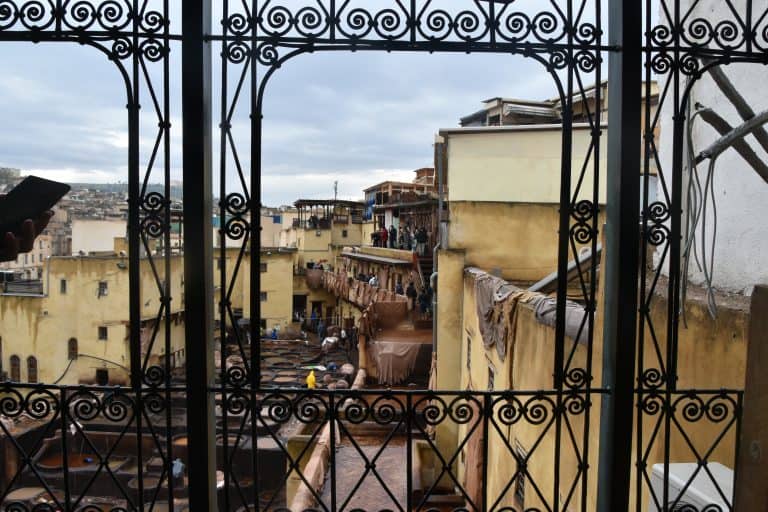
This tannery certainly presents a picturesque scene, but only a few people were working there.
Perhaps it was because it was a Saturday, but my husband’s research revealed that the primary purpose now is to show tourists the traditional appearance, and actual production is minimal.
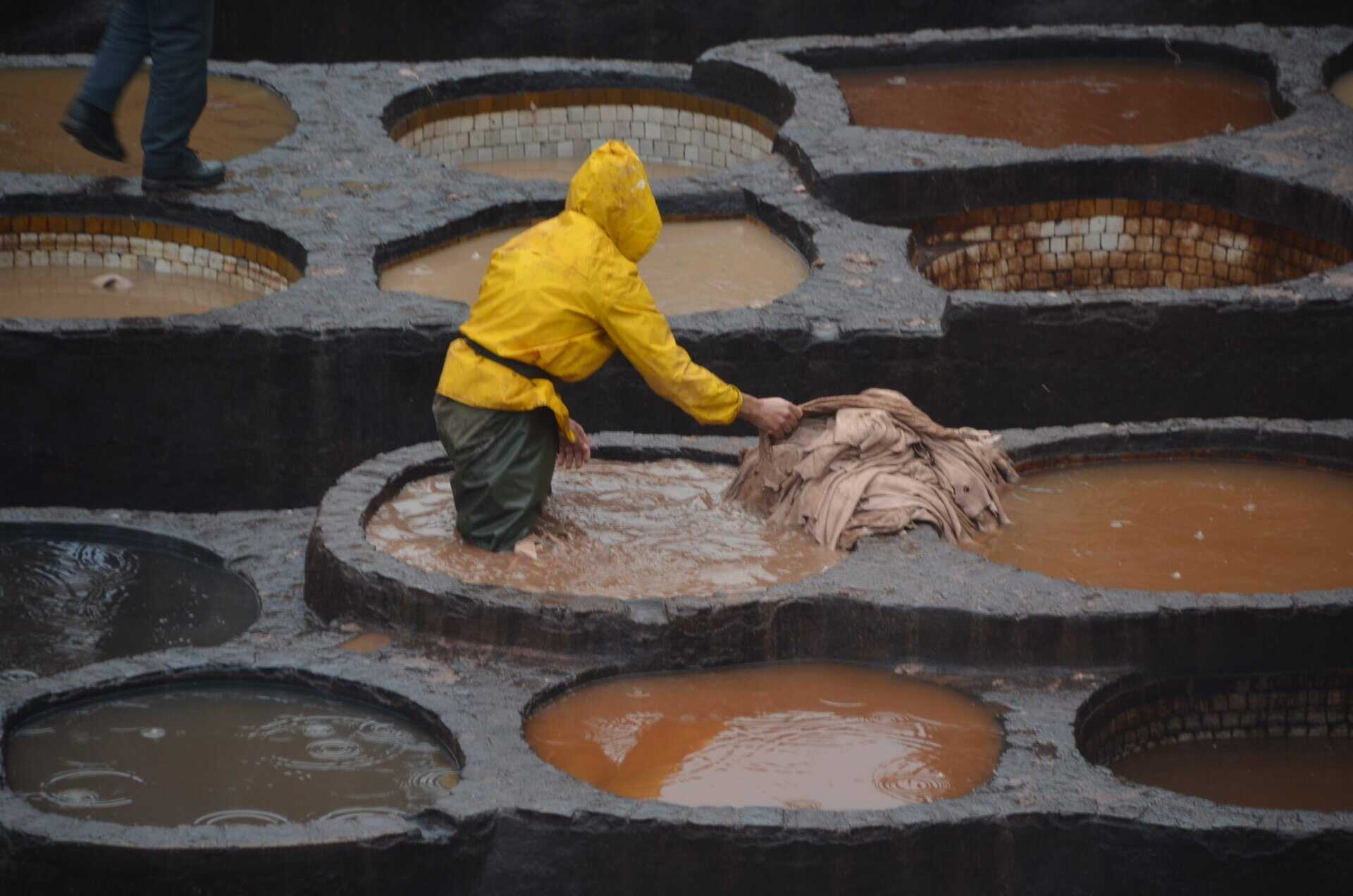
It was my second visit, and my husband had seen many photos before, so there wasn’t much surprise.
However, we felt sorry for the workers whose arms and hands were stained.
We were looking down from a high vantage point, and each floor leading up to it was a shop with salesmen giving explanations.
I bought a pair of slippers (babouches) that I had decided to buy, but they cost 200 dirhams (about 18 euros), and I felt like I’d been ripped off.
Then it was lunchtime, but Hassan didn’t come in either, waiting for us to come out.
This is because our riad is quite far from the old medina, and he had to take us back by car.
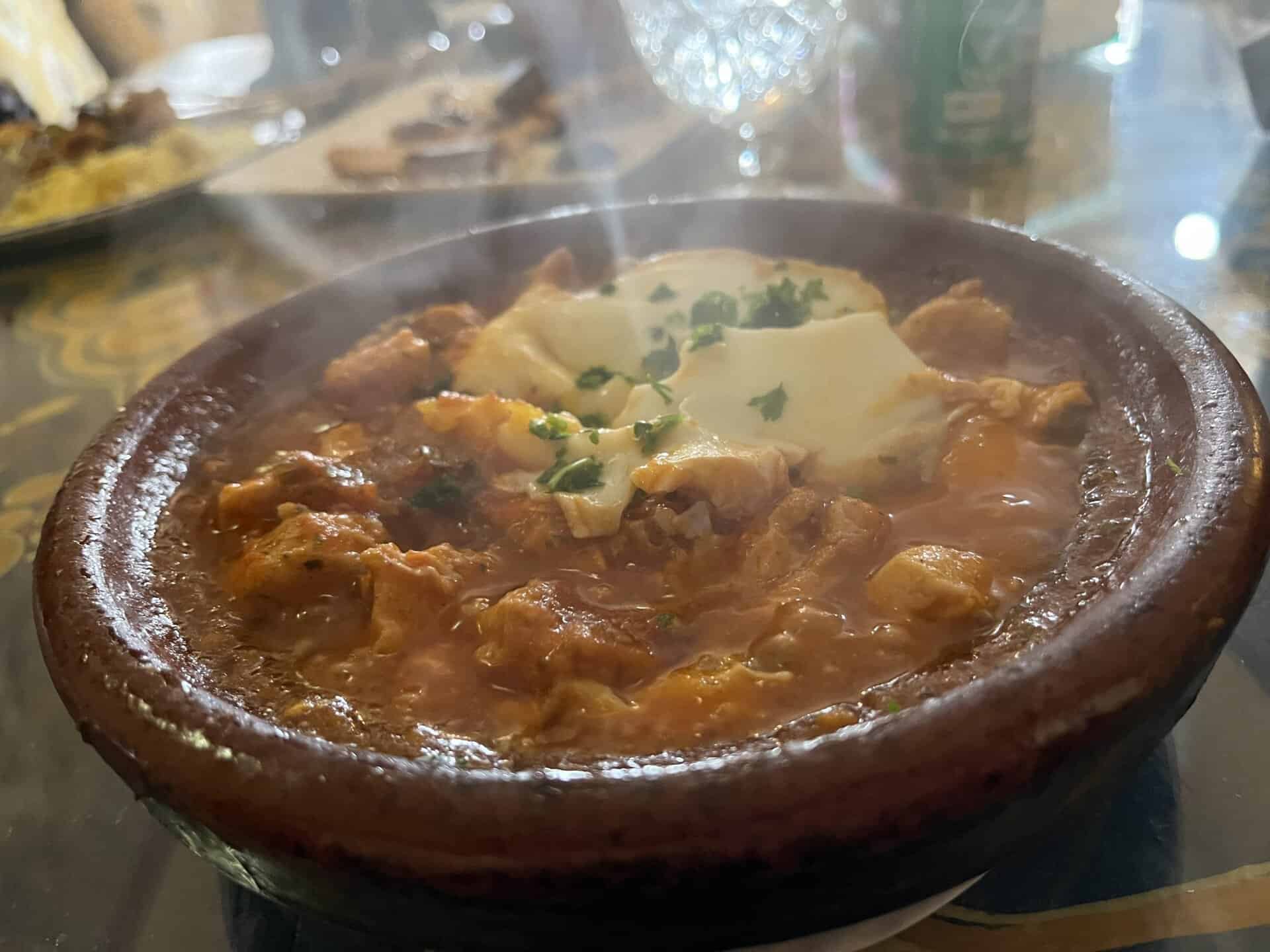
The lunch itself was the usual: my husband had chicken kebab, and I had chicken and egg tagine.
It came with an omelette and biscuits, and at 285 dirhams it wasn’t cheap, and it wasn’t particularly delicious either.
That concluded our walk through the souk.
We gave Hassan a 200 dirham tip.
We don’t know the general going rate, but this was our own “going rate,” as we were satisfied.