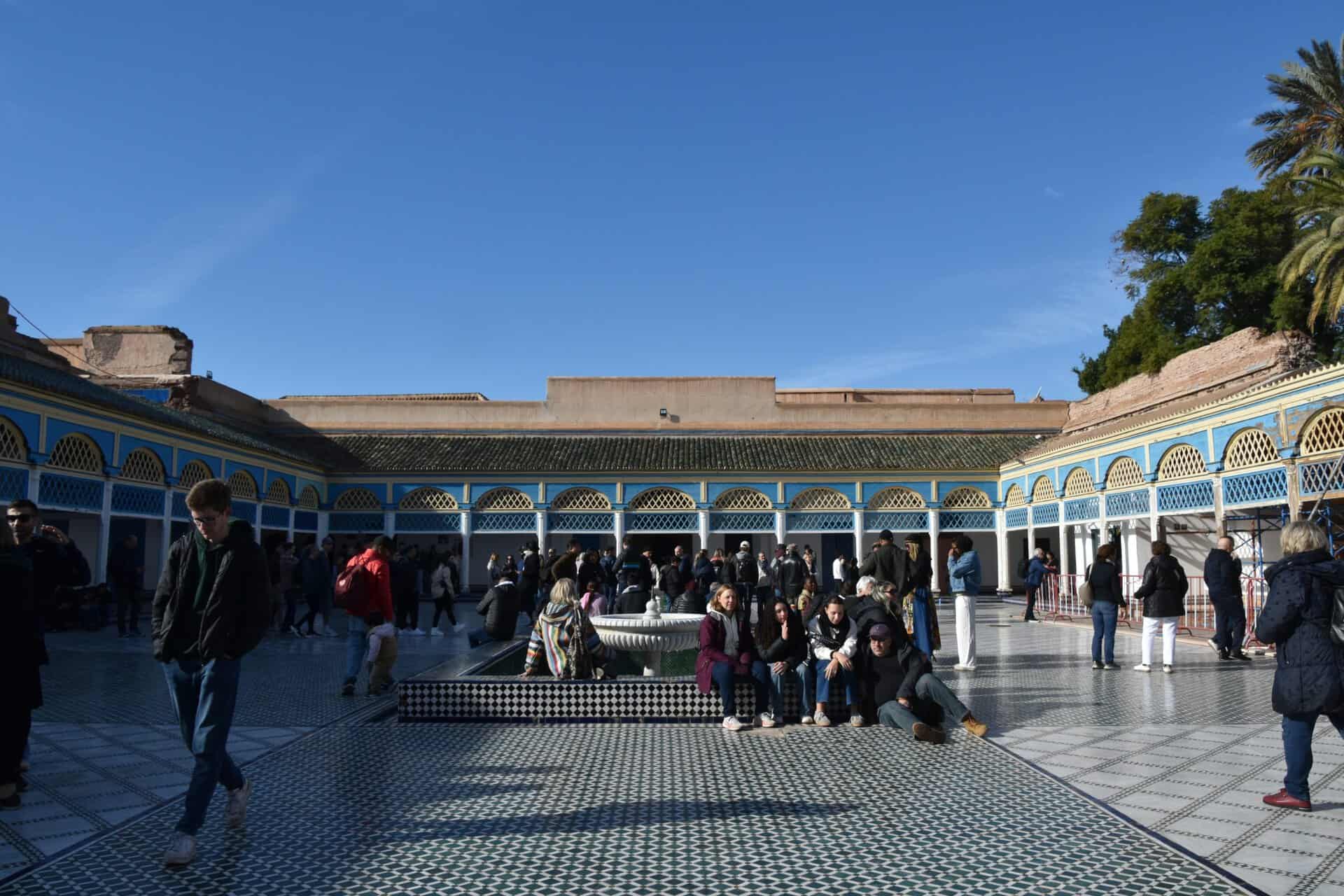
[Dec. 2025] Our next stop on our guided walking tour in Marrakesh, Morocco, was the Bahia Palace.
We paid 100 dirhams (about 9 euros) per person to enter.
Although it’s a magnificent mansion built in the late 19th century, it’s not the king’s palace.
It was apparently the residence of Ba Ahmed, the vizier who governed when the Alawite king was still a minor.
And Bahia is the name of his first wife.
It’s lovely that he named it after his wife, not his own.
However, this man had four wives and 24 concubines, and they all lived together.
According to our guide, Youssuf, polygamy originally meant providing a place for women to go if a man died in battle and became a widow.
A harem, in essence, was a living space provided for such widows, and it was said that the men of the household were not allowed to touch the widows.
However, this changed due to men’s desires.
Incidentally, the current king, Mohammed VI, is the first in history to embody monogamy and is said to have contributed to Morocco’s modernization and the advancement of women’s rights.
And this king is also the first in history to have divorced.
Well, perhaps this is also a sign of modernization.
He has not remarried since.
Let’s return to the Bahia Palace.
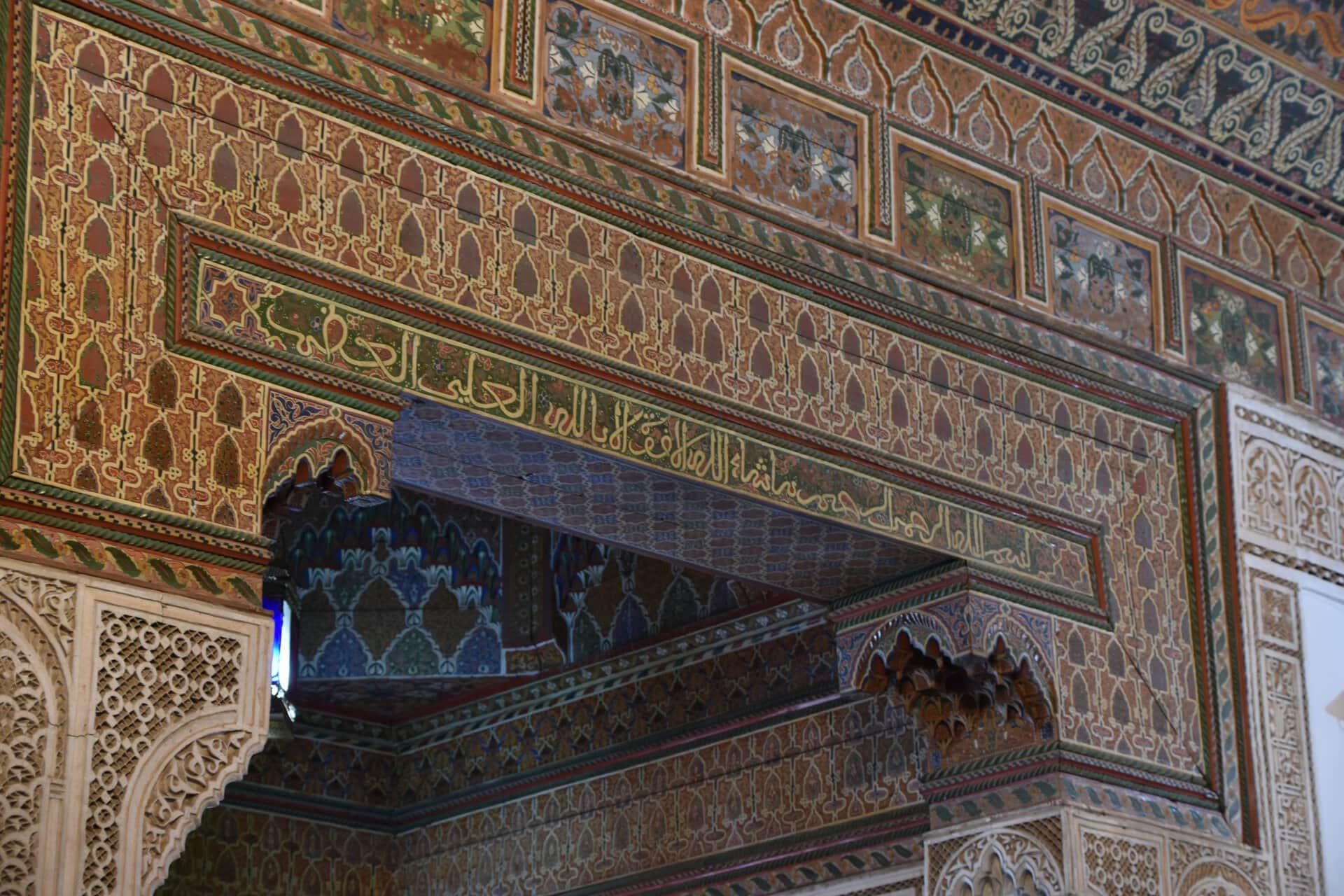
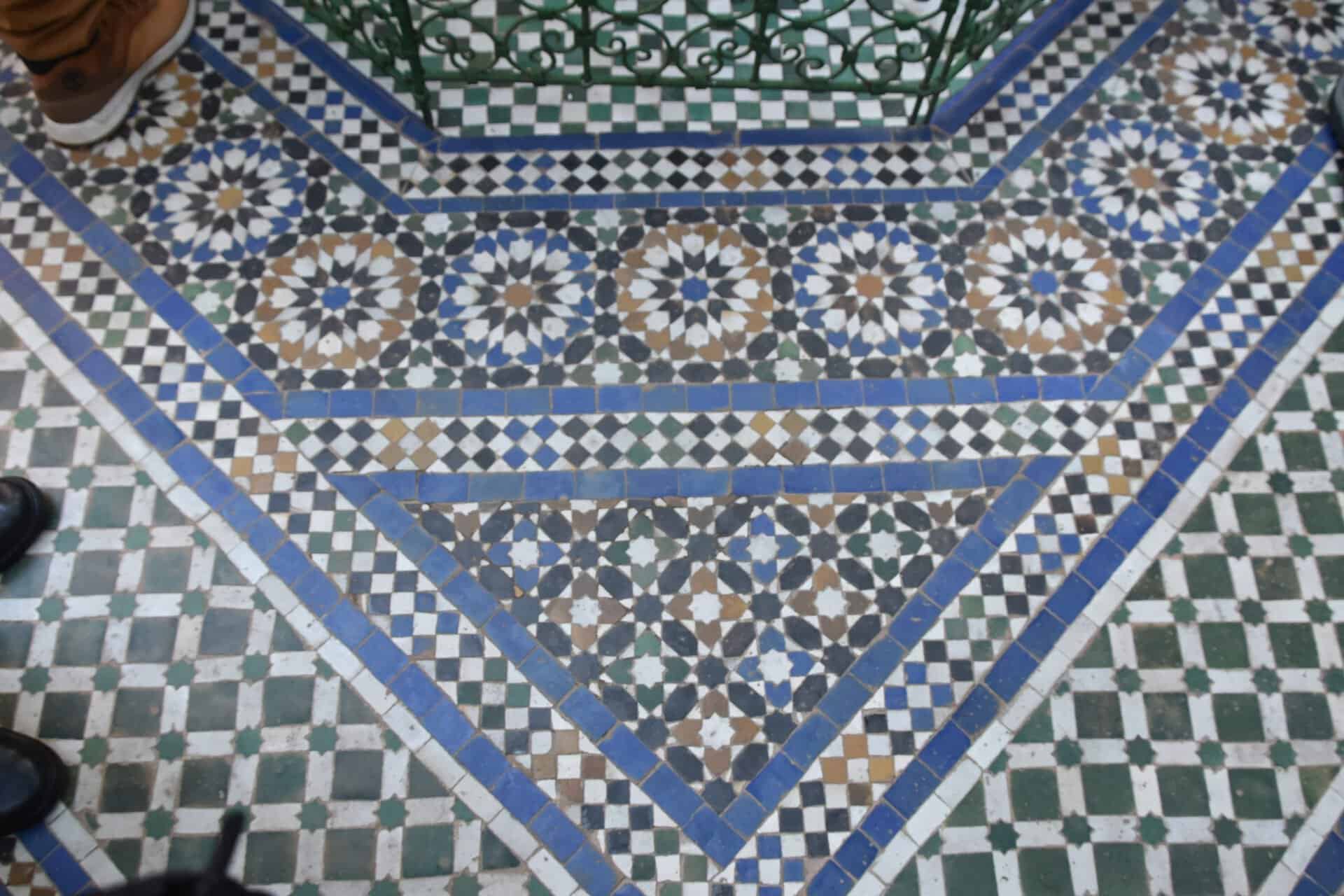
Islamic architecture is said to consist of five elements: water, tiles, plaster, wood, and marble.
The fountain in the courtyard is the water element.
Here, I learned that riads with pools in the courtyard have been remodelled only for tourists.
The tile colours are fixed: Islamic green, sky blue, joyful yellow, white as the background colour, and black to fill in the gaps.
Apparently, no other colours are used.
That’s why the similar looking tiles are used both in Morocco and in the Moorish towns of Andalusia, Spain.
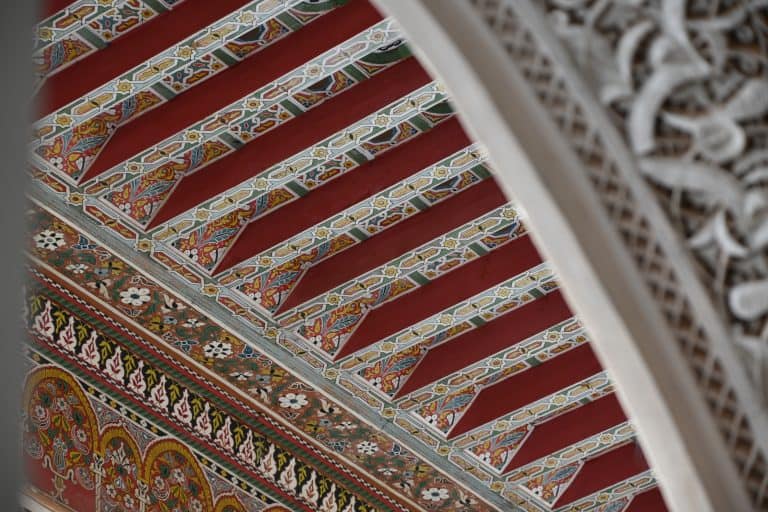
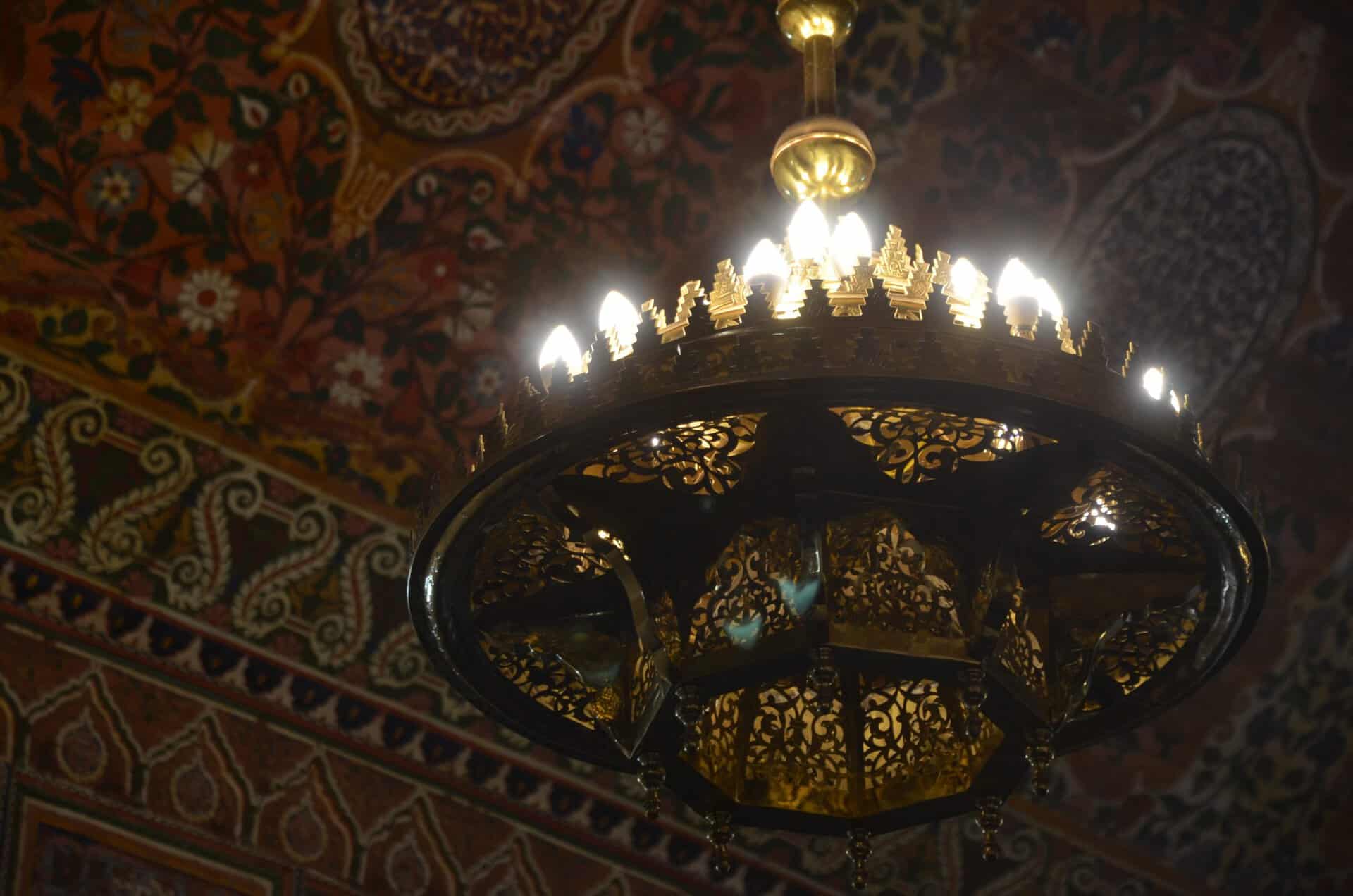
The paintings on the luxurious wooden ceilings inside depict flower fields, evoking paradise.
The most important room in the palace was Bahia’s room, which was exceptionally splendid.
This first wife, Bahia, was also the vizier’s right-hand woman.
Incidentally, there was a hole in part of the door; this was a hole for cats to come and go.
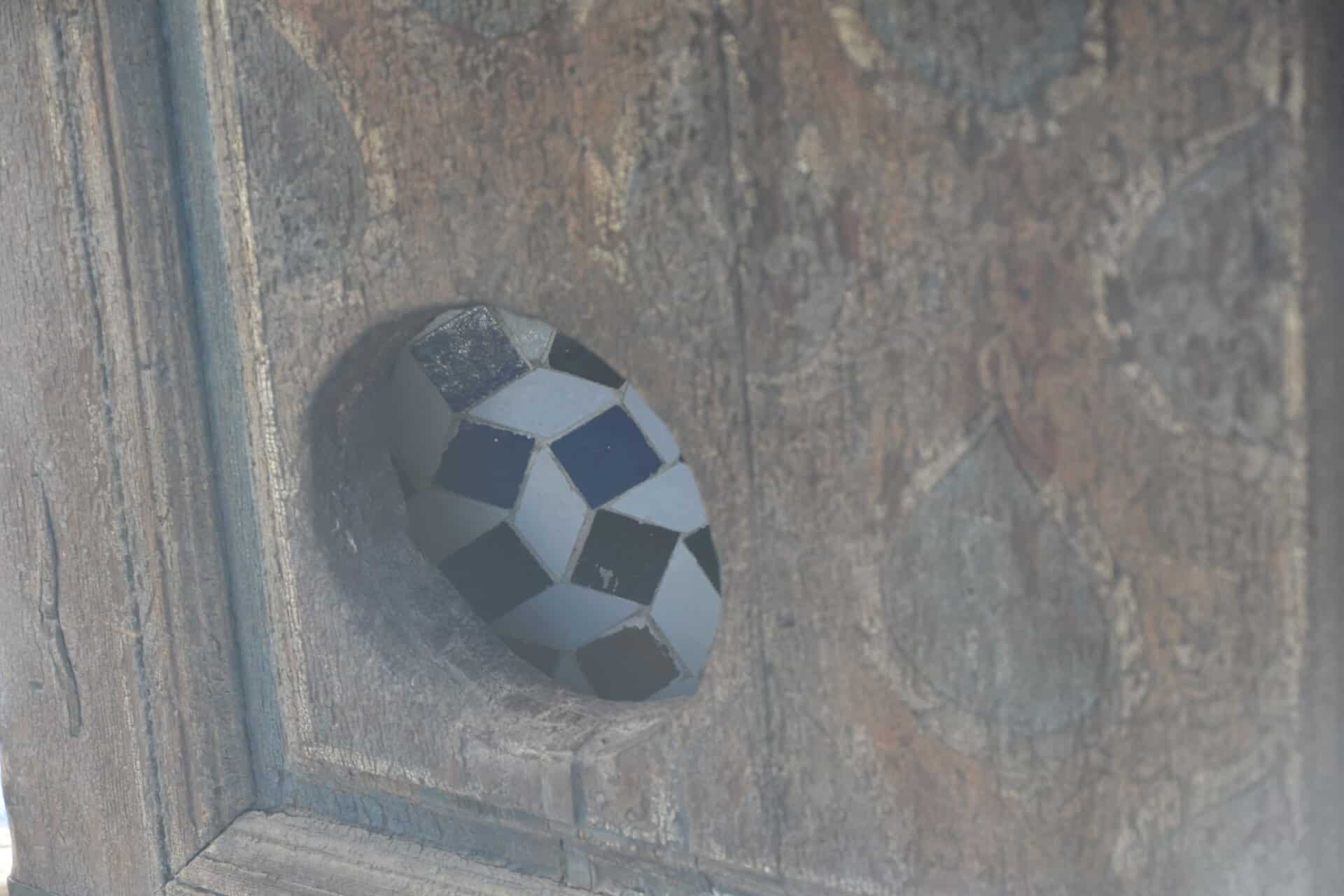
Cats, which are useful for controlling rats, are considered sacred.
Regarding the large rats that cats can’t kill, Youssuf said that in the past, they would set a price per rat and have children kill many of them.
Then, about the orange tree in the garden.
I saw oranges here and there, but apparently the fruit from the trees with bifurcated leaves is bitter and inedible, so it’s used to make marmalade.

It was a fulfilling palace visit, not only because of the beautiful architecture, but also because I heard many interesting stories.
。