[Jan. 2026] We arrived in Essaouira, a port town on the Atlantic coast of Morocco.
We parted ways with our driver, Youssuf, just before reaching the port, and went for a stroll.
On this New Year’s Day, Essaouira was blessed with warm, sunny weather.
We first walked around the port.
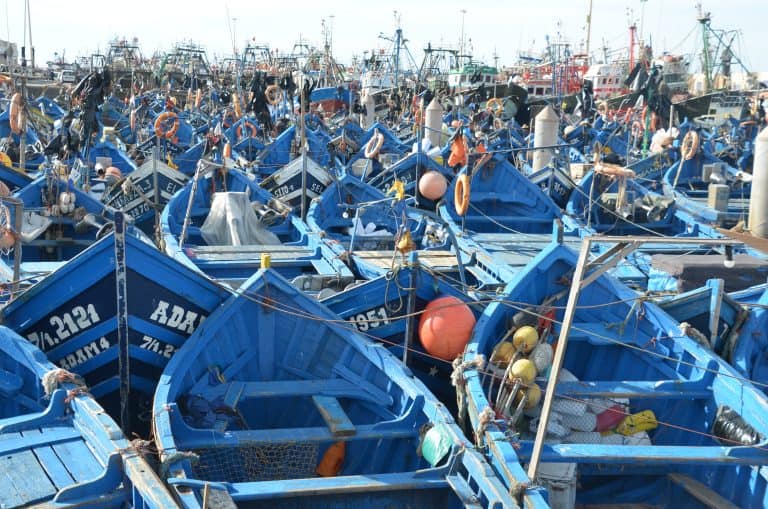
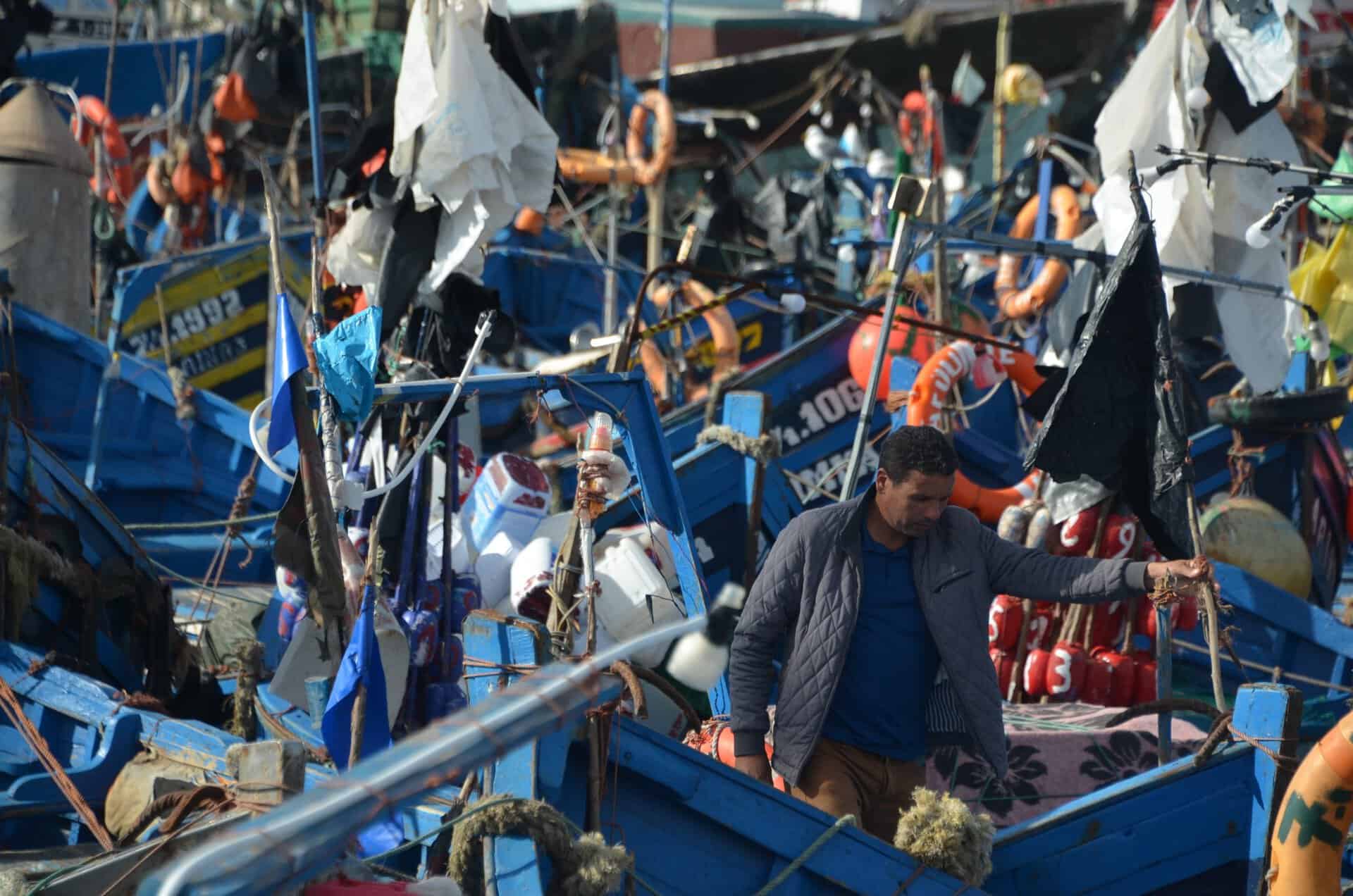
The first thing that caught our eye was the sight of countless blue fishing boats lined up haphazardly.
It was an impressive sight.
How many boats were there, I wonder?
It looked almost chaotic, but surely there must be some order to it.
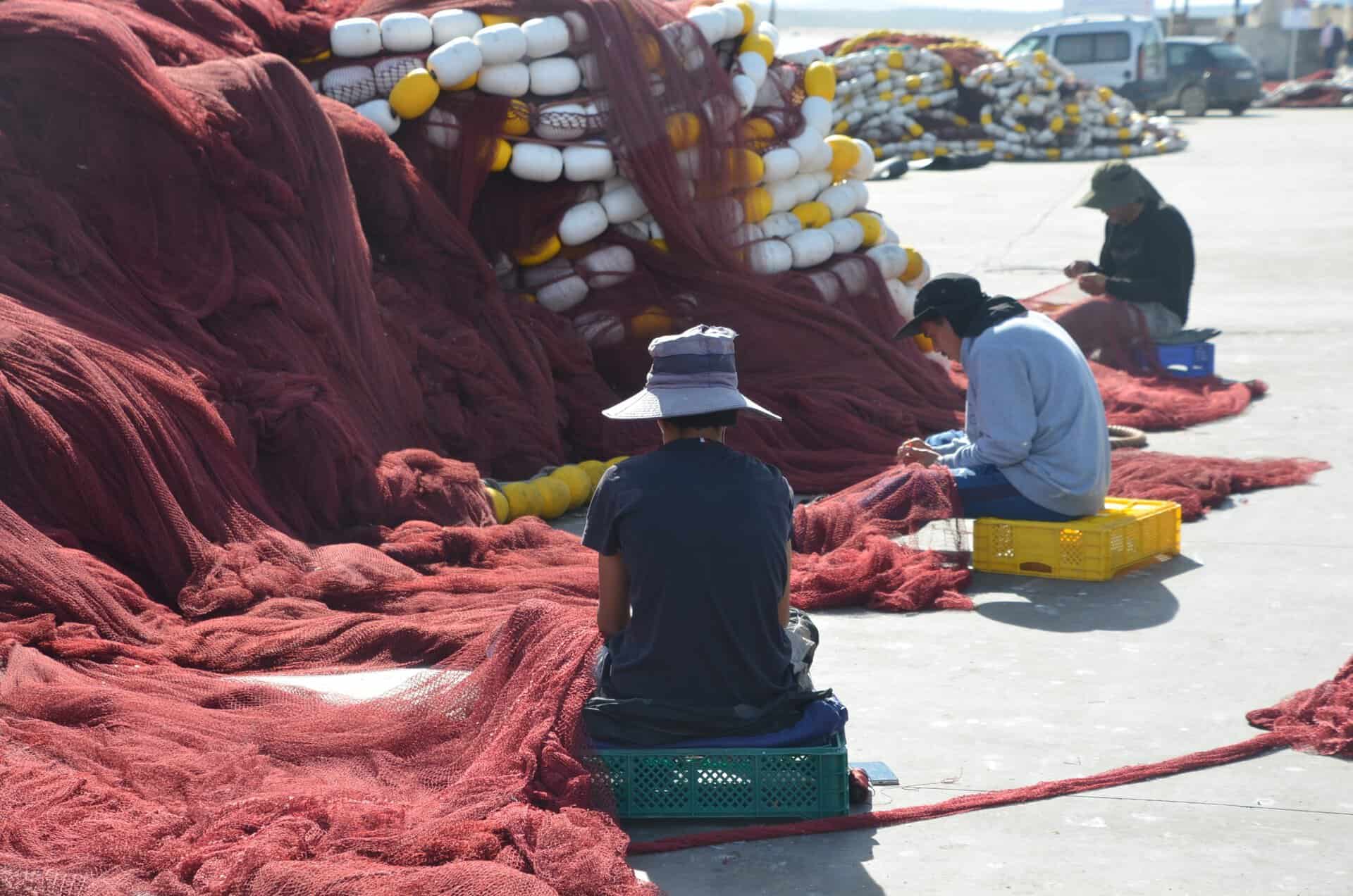
Apparently, they all go out fishing at night and return in the morning.
Since we arrived just before noon, fishing was long over, and the boats seemed to have been back in port for hours.
We saw fishermen tending their nets in the port.
All the boats are the same blue colour.
Upon researching, I learned that the colours are designated so that the origin of the fishing boats can be identified; for example, Essaouira uses blue, Agadir uses green, and so on.
In addition, blue is said to be a colour that wards off evil in Morocco, so there’s also a religious significance to it.
That’s why the doors of houses are often blue.
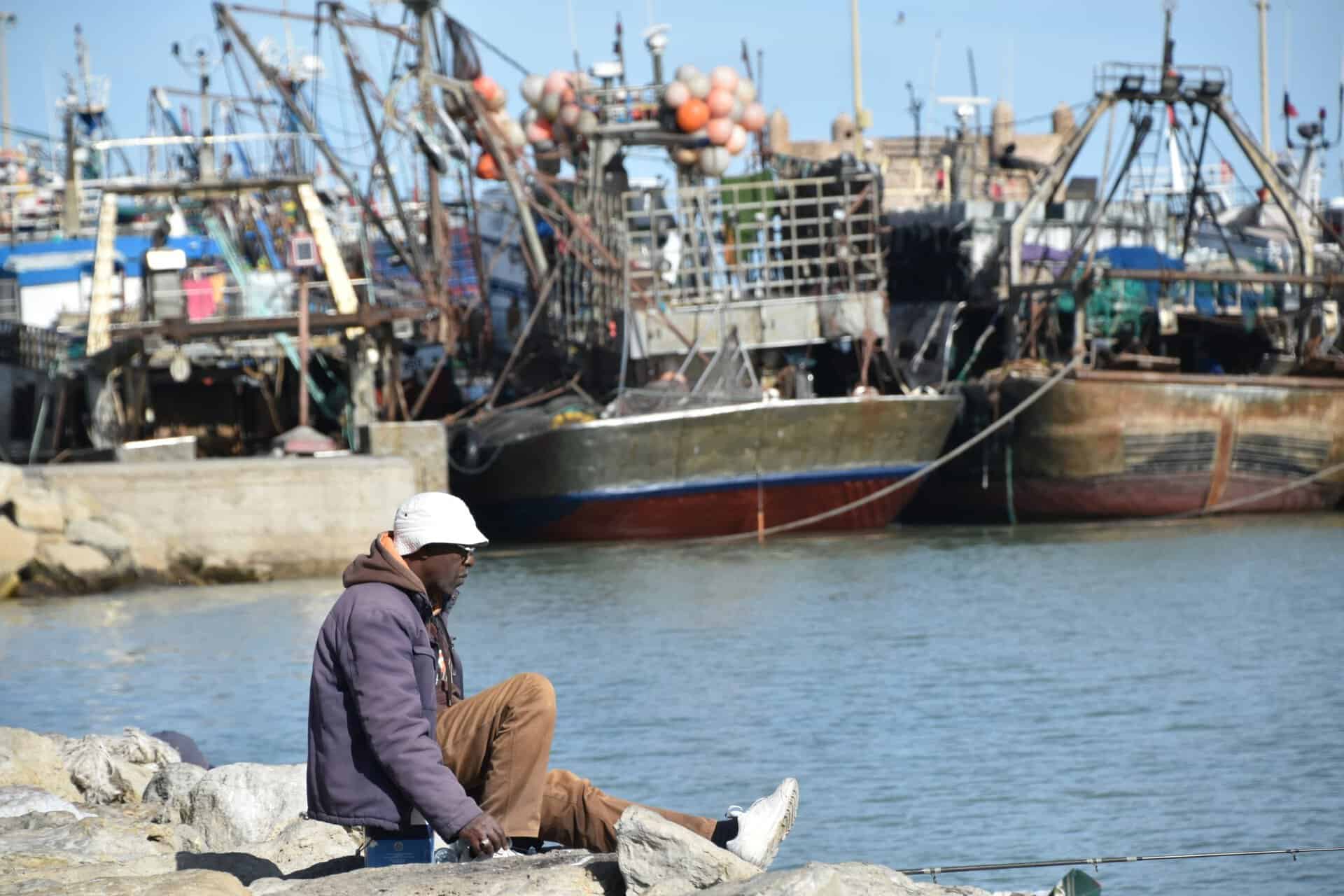
Walking a little further out along the breakwater, we saw even larger fishing boats lined up.
Next to them, there were people quietly fishing, and a single boat was silently sailing offshore—a beautiful sight.
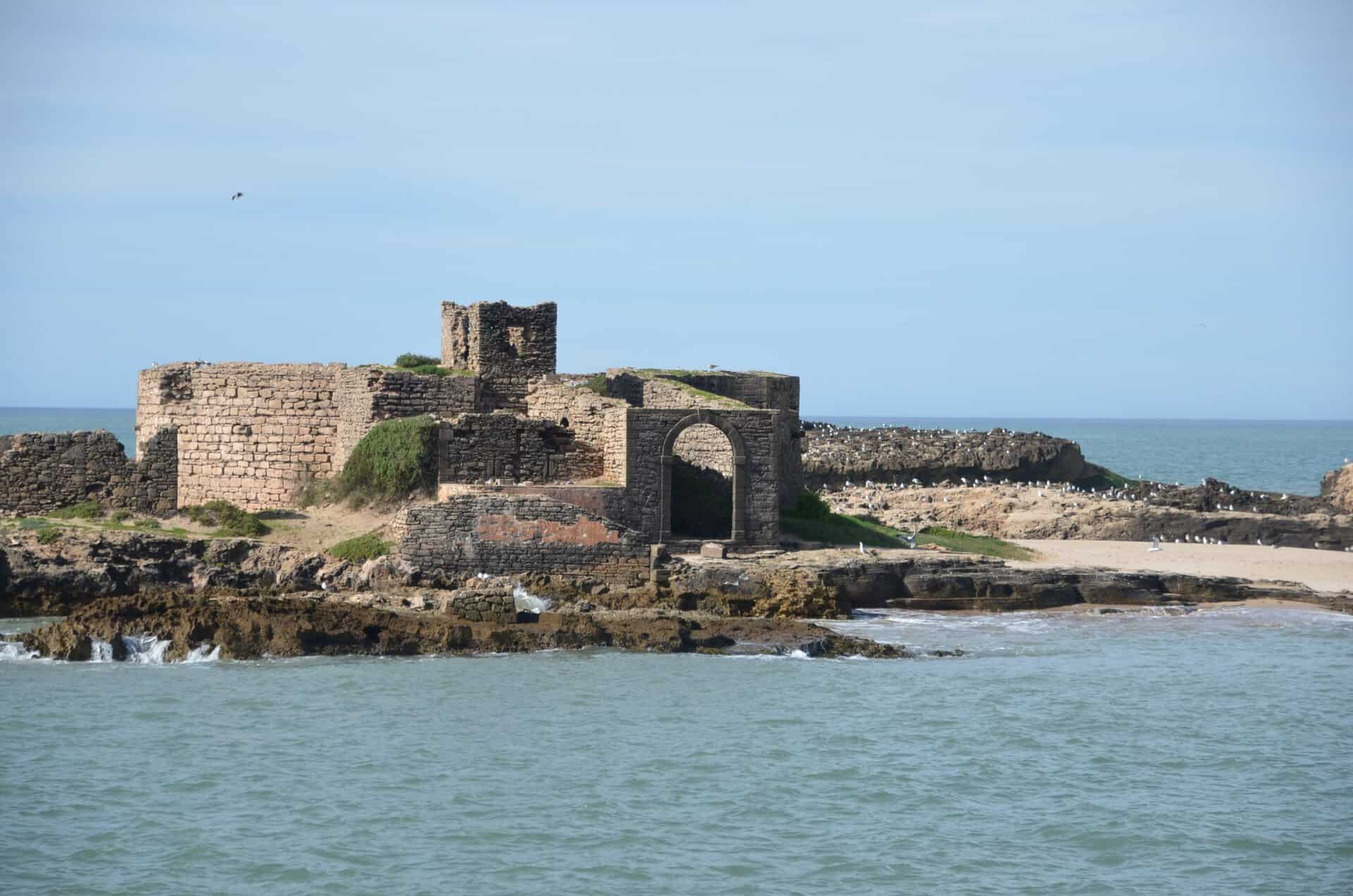
Climbing up to the highest point of the breakwater, we saw an island on the other side.
Apparently, this is Mogador Island, which was once used as a fortress and prison.
The rows of houses along the coast, viewed from above, reminded me of Ortigia Island in Syracuse, a historical town on the island of Sicily, Italy.
Around the harbour, there are small fish markets, some with outdoor eateries where you can have the fish you buy grilled on the spot.
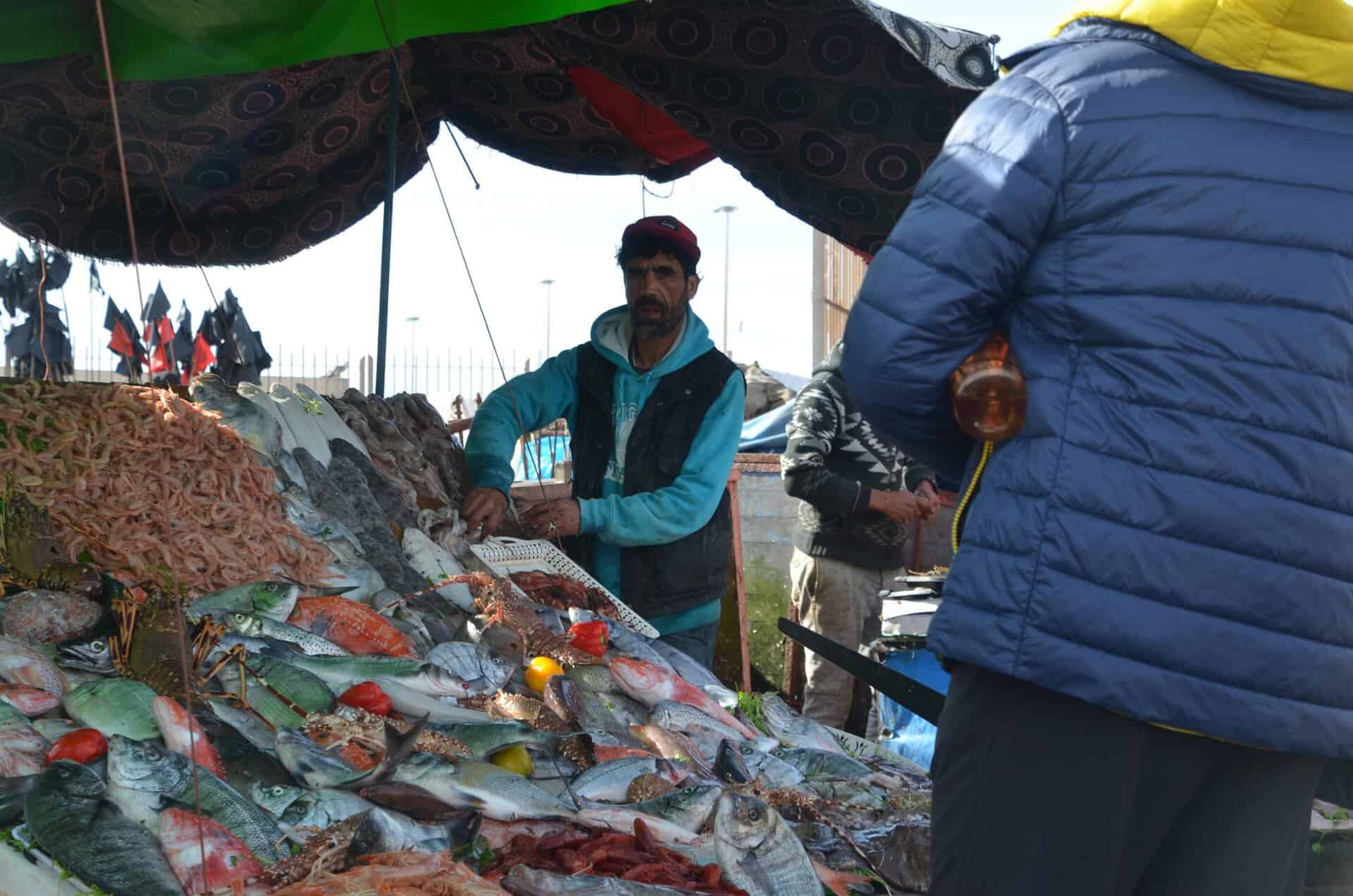
It’s bound to be delicious, but unfortunately, my husband was too concerned about hygiene, so we just passed by.
Near the harbour, there were the remains of a fortress that once protected the port, and it looked like you could go inside, but we were hungry, so we passed that by too.