[Oct. 2025] On our final day of a short trip to Lyon, France, the sky was a deep blue, a stark contrast to the previous day.
First, we went to see the cathedral in the old town, which we could not see two days earlier.
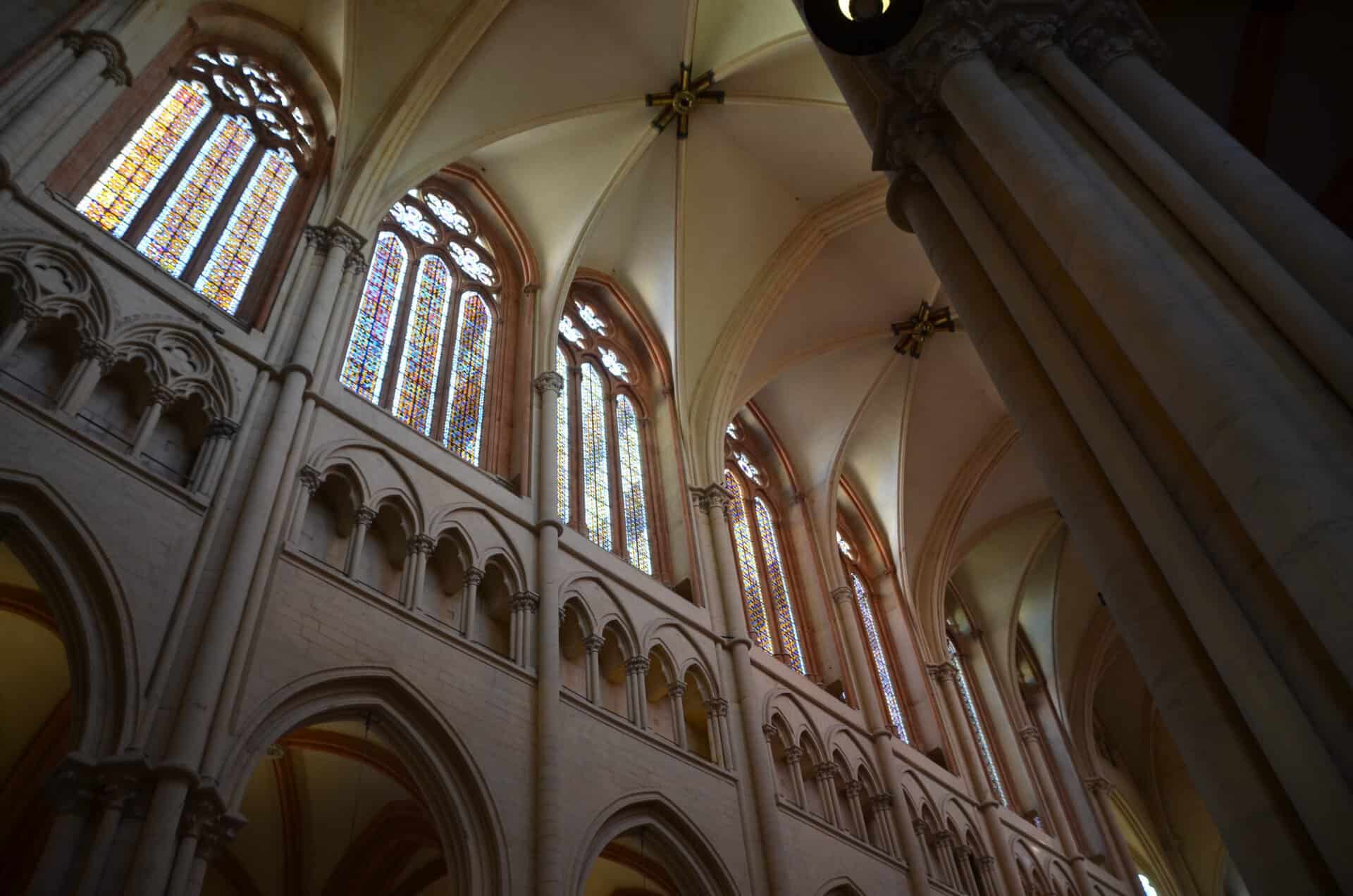
Saint-Jean-Baptiste Cathedral is apparently the religious centre of the town.
The construction began in the 12th century on the site of an earlier church, and it continued until the late 15th century.
It has apparently undergone numerous restorations since then, which is why it didn’t feel all that old.
Perhaps it was because of the light colour of the wood used.
My husband said several times, “It has a warm feel, I like it.”
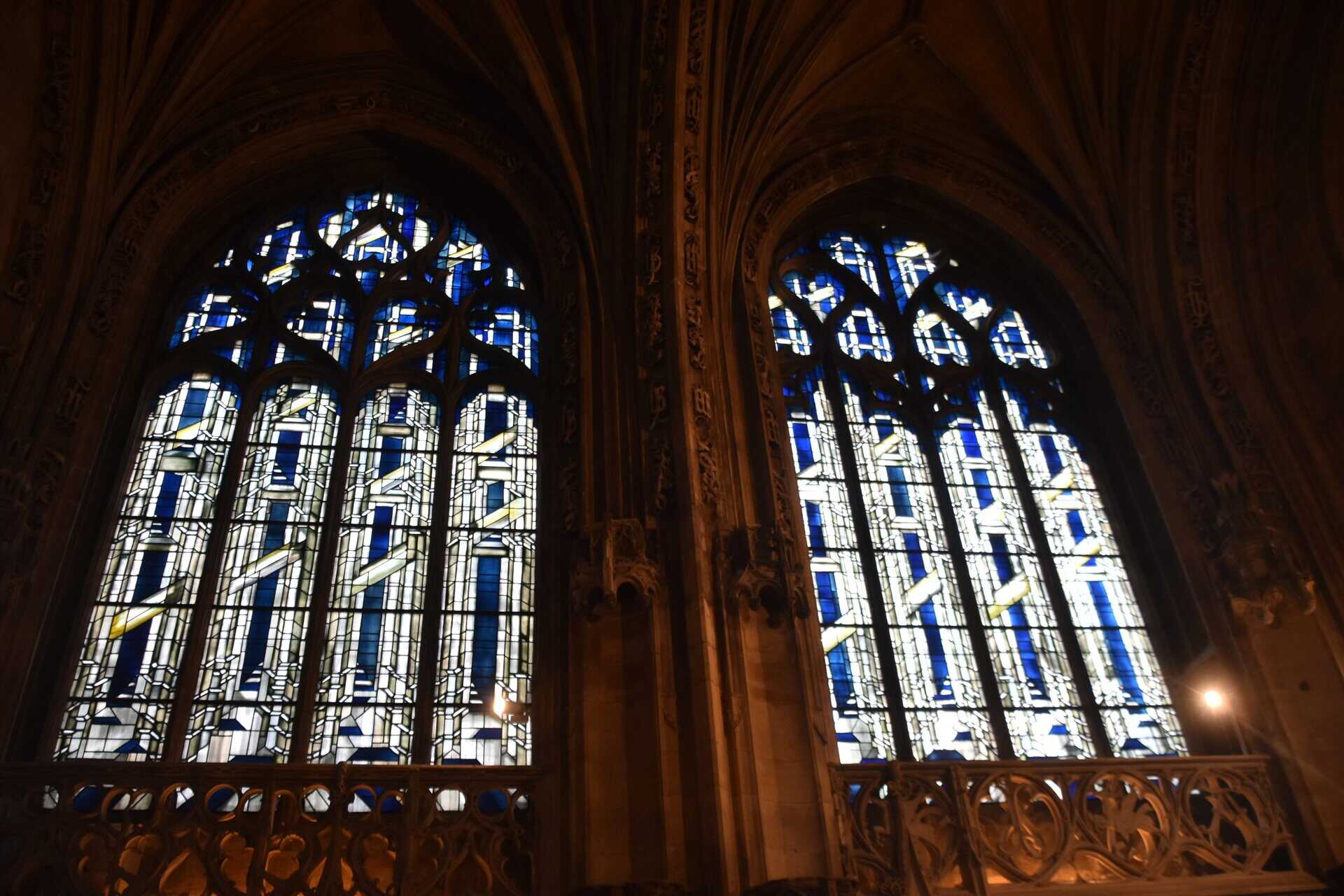
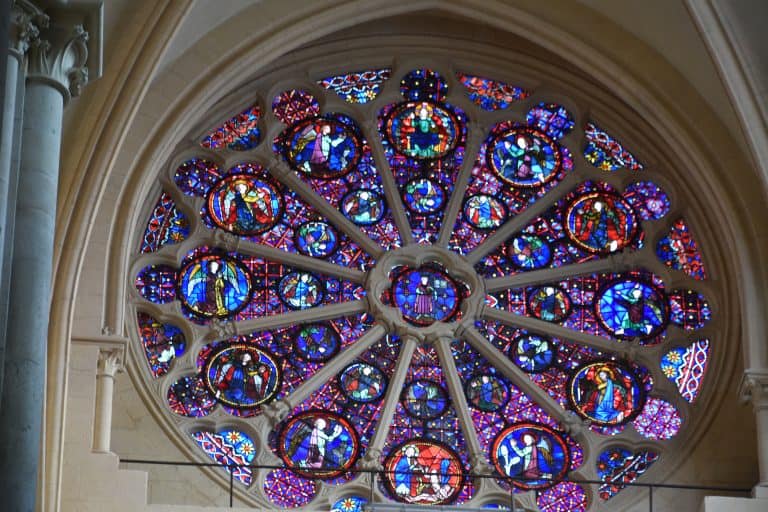
The rose windows were particularly impressive.
They were captivatingly beautiful.
The other stained glass windows, with their varied designs, were also fascinating.
After researching, I learned that some of the original 12th-century windows remain.
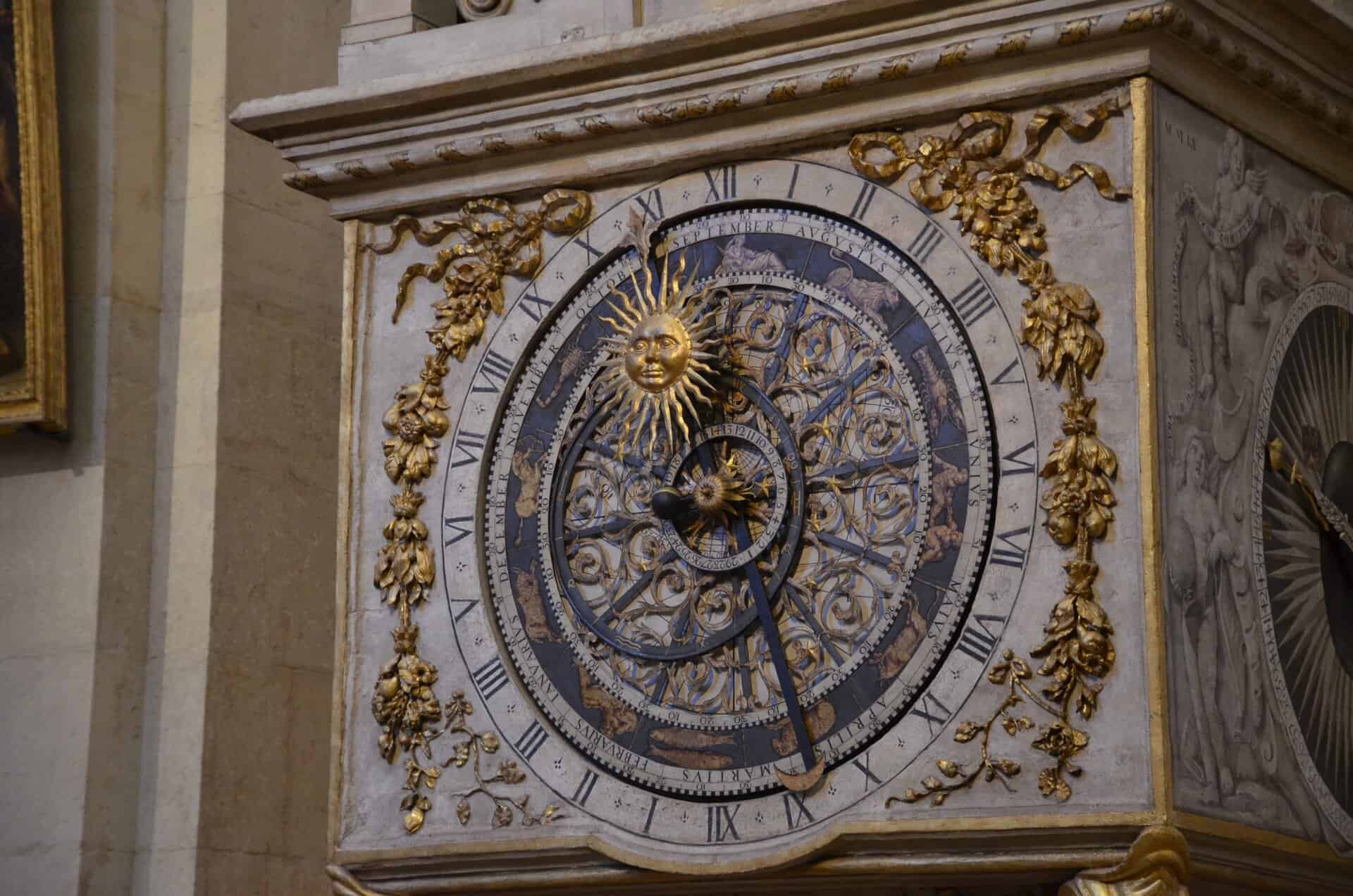
Another highlight here is the 14th-century astronomical clock.
This clock, which tells the time and the movement of celestial bodies, is said to be rare for a medieval piece.
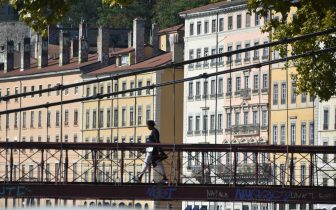
After leaving here, we crossed the Passerelle du Palais de Justice, a bridge we hadn’t crossed before, and headed into the new town.
There was a small food market along the river, and quite a few people were shopping there.
The French really love markets, don’t they.
We happened upon the Saint-Nizier Church, so we decided to go inside.
According to an English pamphlet we bought for €0.50, this church also has a very long history, dating back around 700 years.
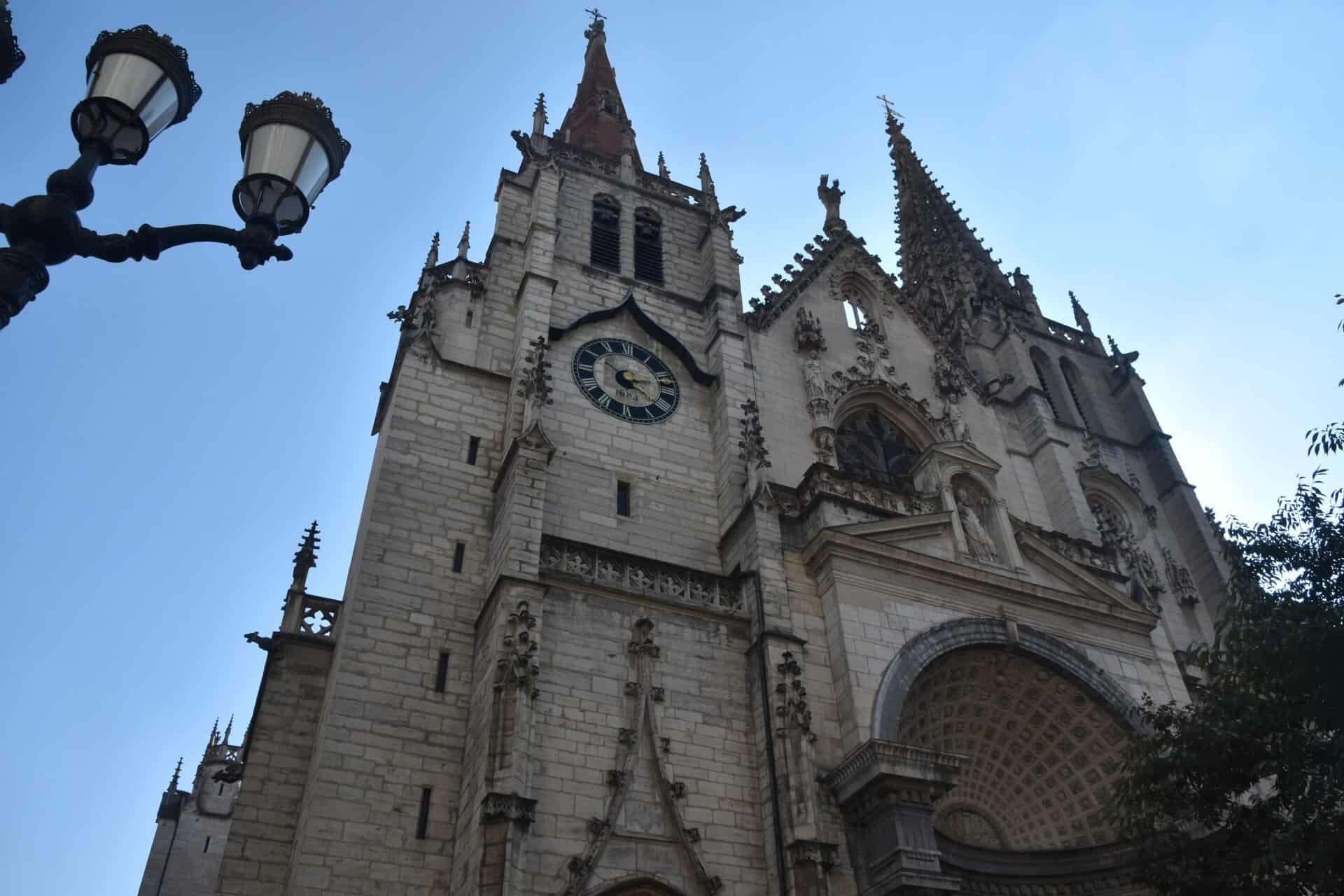
Saint-Nizier was apparently a 6th-century bishop of Lyon.
Despite being damaged during the religious wars and revolutions, it has continued to serve the common people.
The church’s antiquity was truly evident, with a dignified presence.
What was interesting was the modern paintings hanging on the pillars to the left as you enter.
The paintings imagine how Christ might have been bullied if he were alive today.
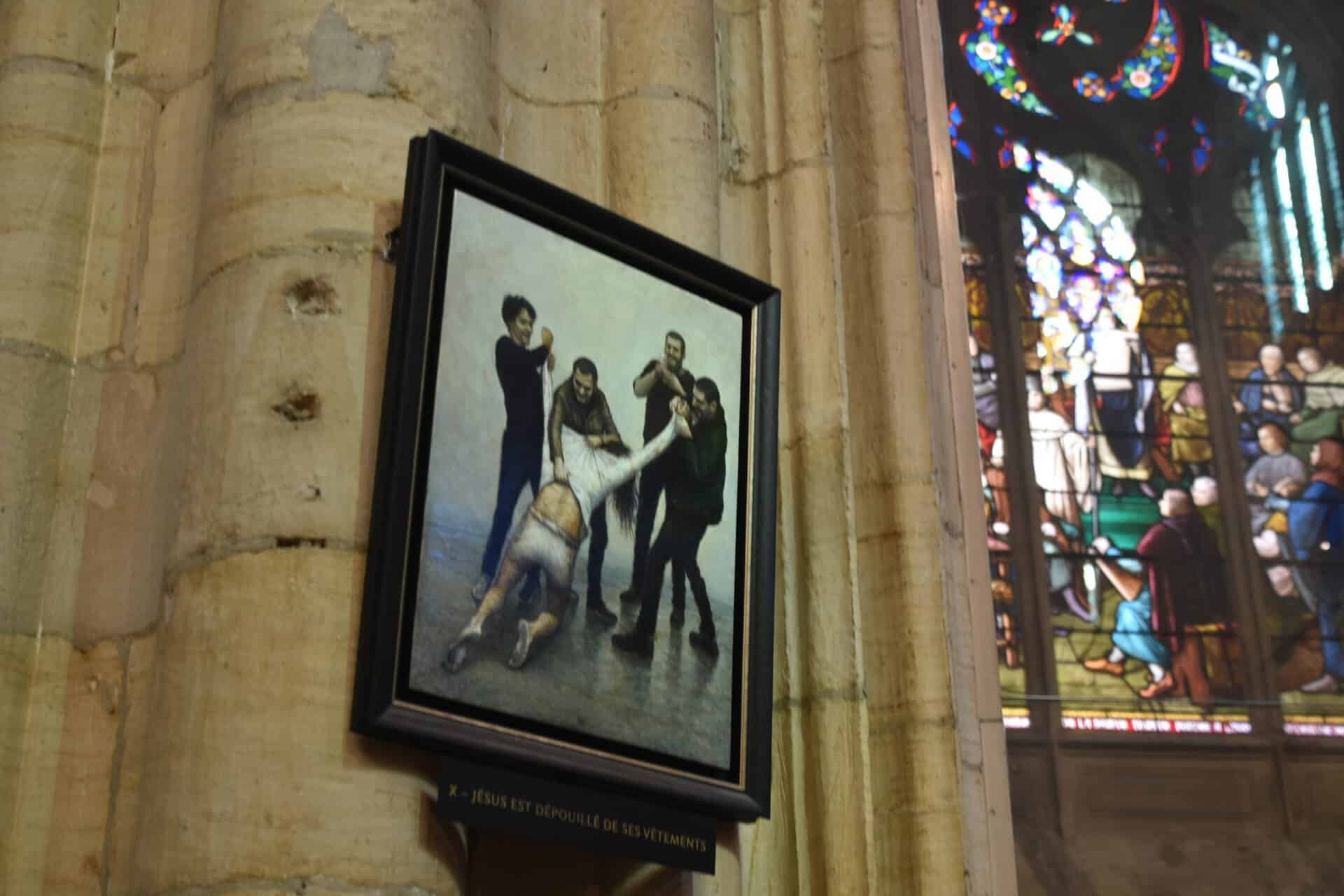
The paintings, with its predominantly grey colour scheme, are quite tasteful and I really liked them.
According to the pamphlet, it’s part of a series called “Way of the Cross” by a local painter named Bruno Desroche.