[July 2026] We had visited Nardò, in the Apulia region of Southern Italy, on a previous trip to the area.
It was a charming town, but I felt I hadn’t really explored it thoroughly, so we decided to return.
We are the kind of lazy tourists who don’t bother researching sights beforehand—we just ask AI once we arrive.
Just as one might go temple-hopping in Kyoto, here, one naturally ends up church-hopping.
Our first stop was the Church of San Domenico.
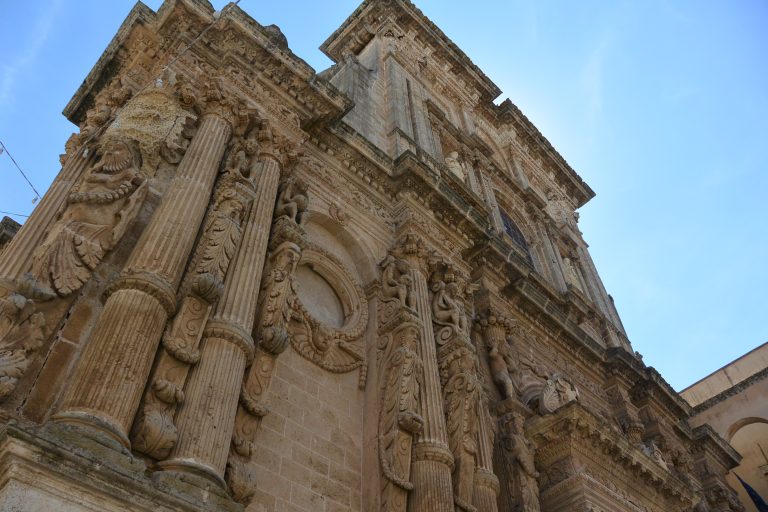
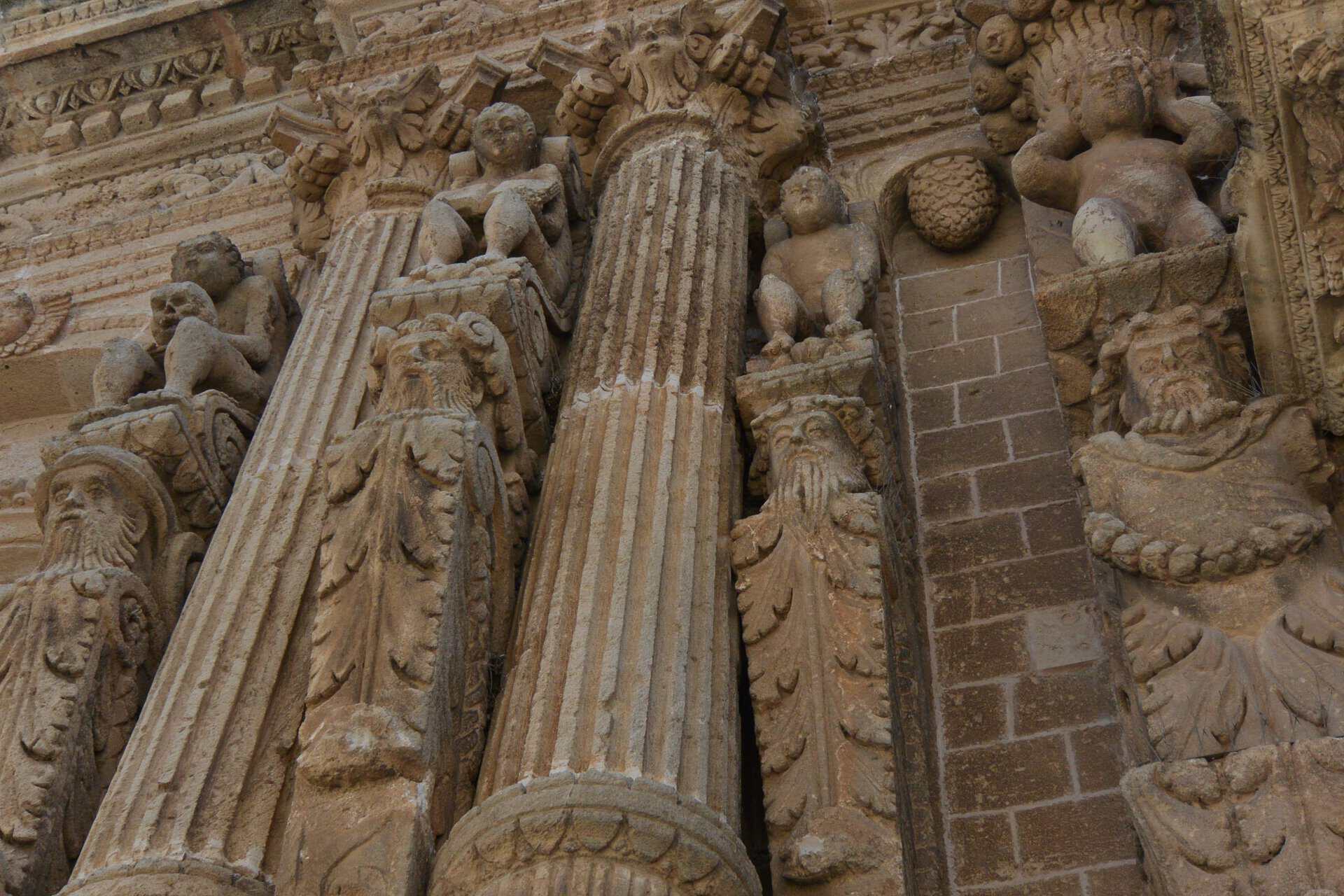
I was immediately overwhelmed by the exterior carvings.
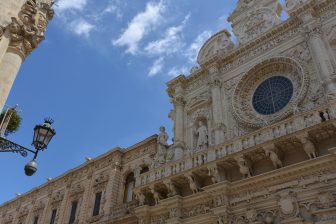
The Basilica of Santa Croce in Lecce, which we had seen the day before, also featured intricate sculptures—but while those were simply breath-taking in their beauty, these felt somewhat oppressive.
There are so many faces, in fact, that I could almost understand why, in various parts of the world, some Muslims have sought to destroy human-like statues…
The church’s history dates back to around 1300, though the current structure is a combination of elements from the 16th century and later reconstructions following an earthquake in the 18th century.
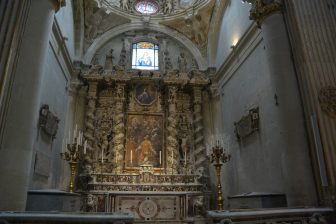
Despite the ornate, cluttered exterior, the interior is surprisingly simple.
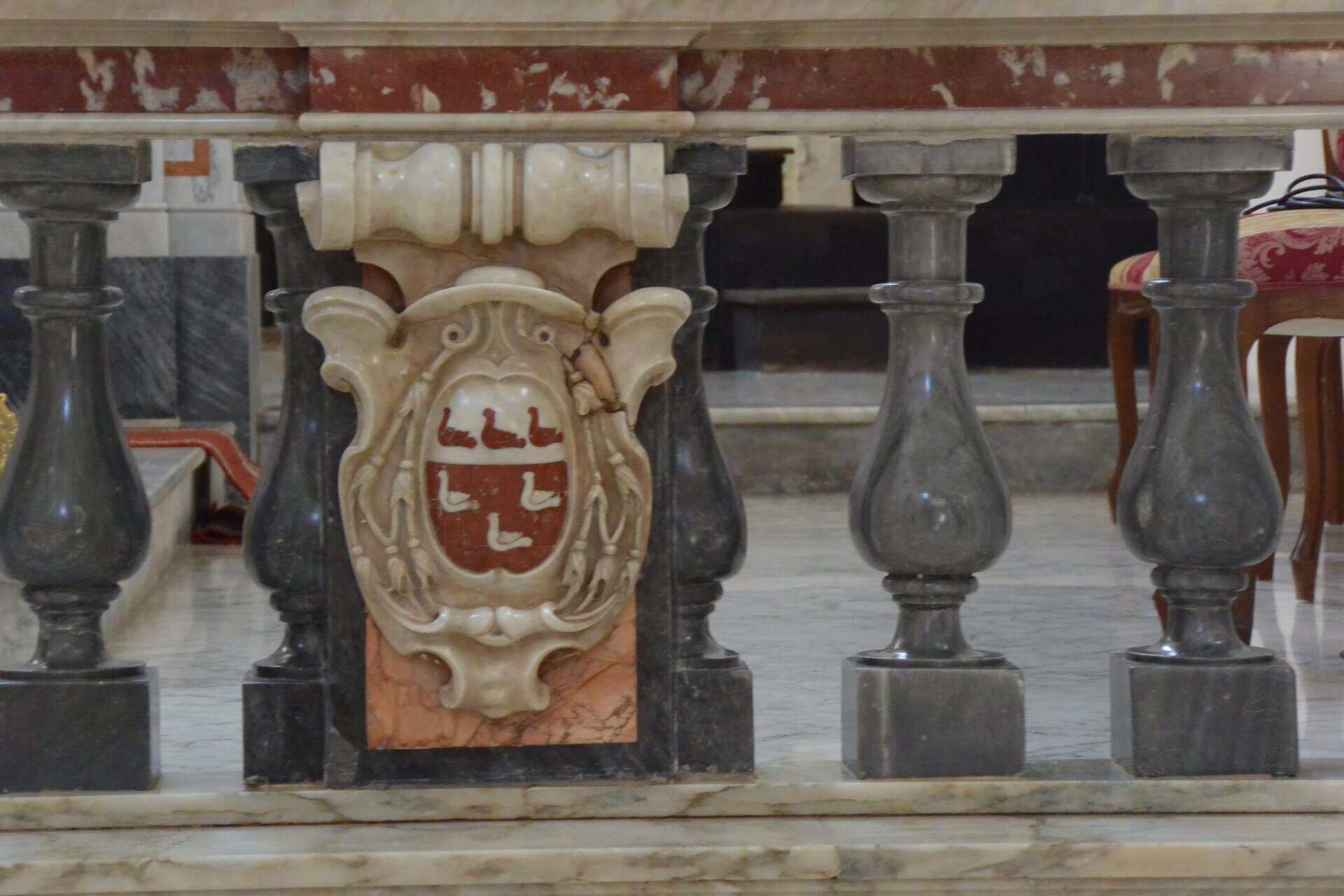
I wondered about the duck-like symbol on the marble altar railing; it turns out to be the family crest of a bishop from 300 years ago—and it’s actually a goose, not a duck.
There was also a statue of a friar with what looked like red leaves atop his head.
These, however, are not leaves, but flames representing the fervour of his preaching—it is a statue of Saint Vincent Ferrer, a Dominican friar.
The ceiling is made of wood and painted green.
The pipe organ also looked wonderfully old, though the pews were new.
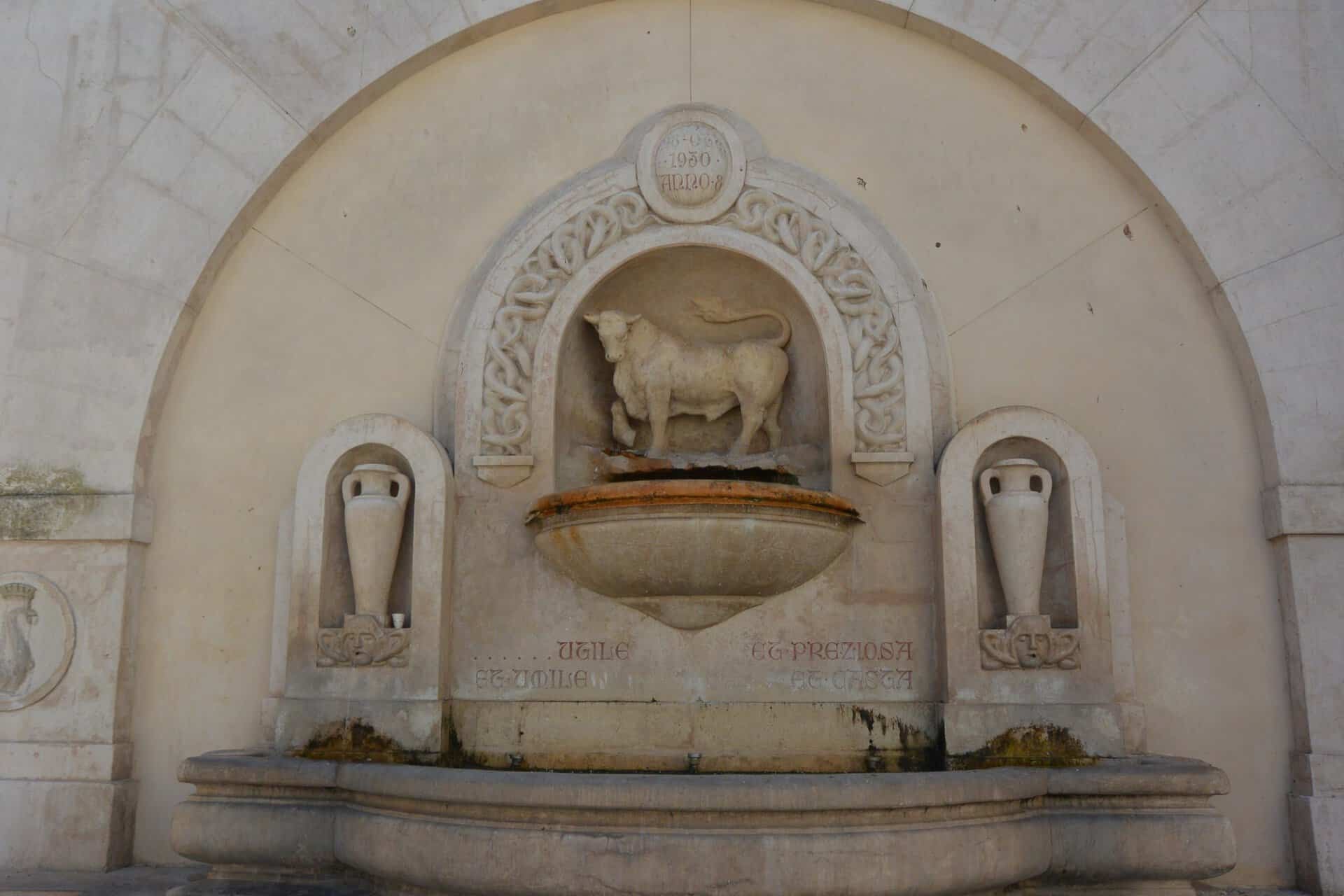
Beside the Church of San Domenico, there is a fountain featuring a sculpture of a bull.
I recalled having seen this before.
According to legend, a bull began kicking the ground in front of a group of people who were wandering in search of a place to settle; water gushed forth from the spot, leading to the founding of the town of Nardò.
The bull is said to be the symbol of the town.
Next, we headed to the Nardò Cathedral, but we couldn’t enter as a wedding ceremony was just about to begin.
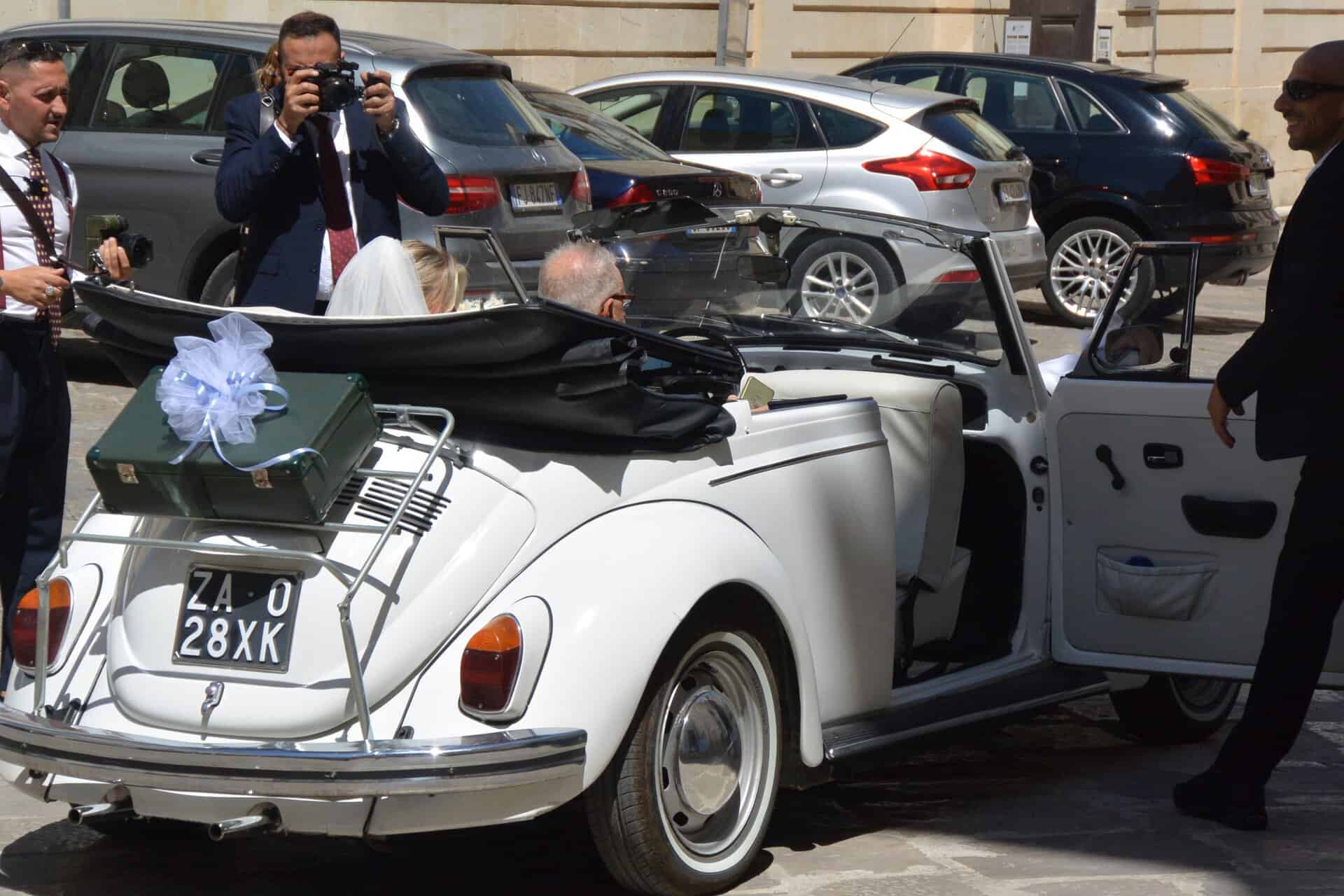
We caught a glimpse of a bride arriving in a white Volkswagen Beetle.
After that, we set off toward the castle.
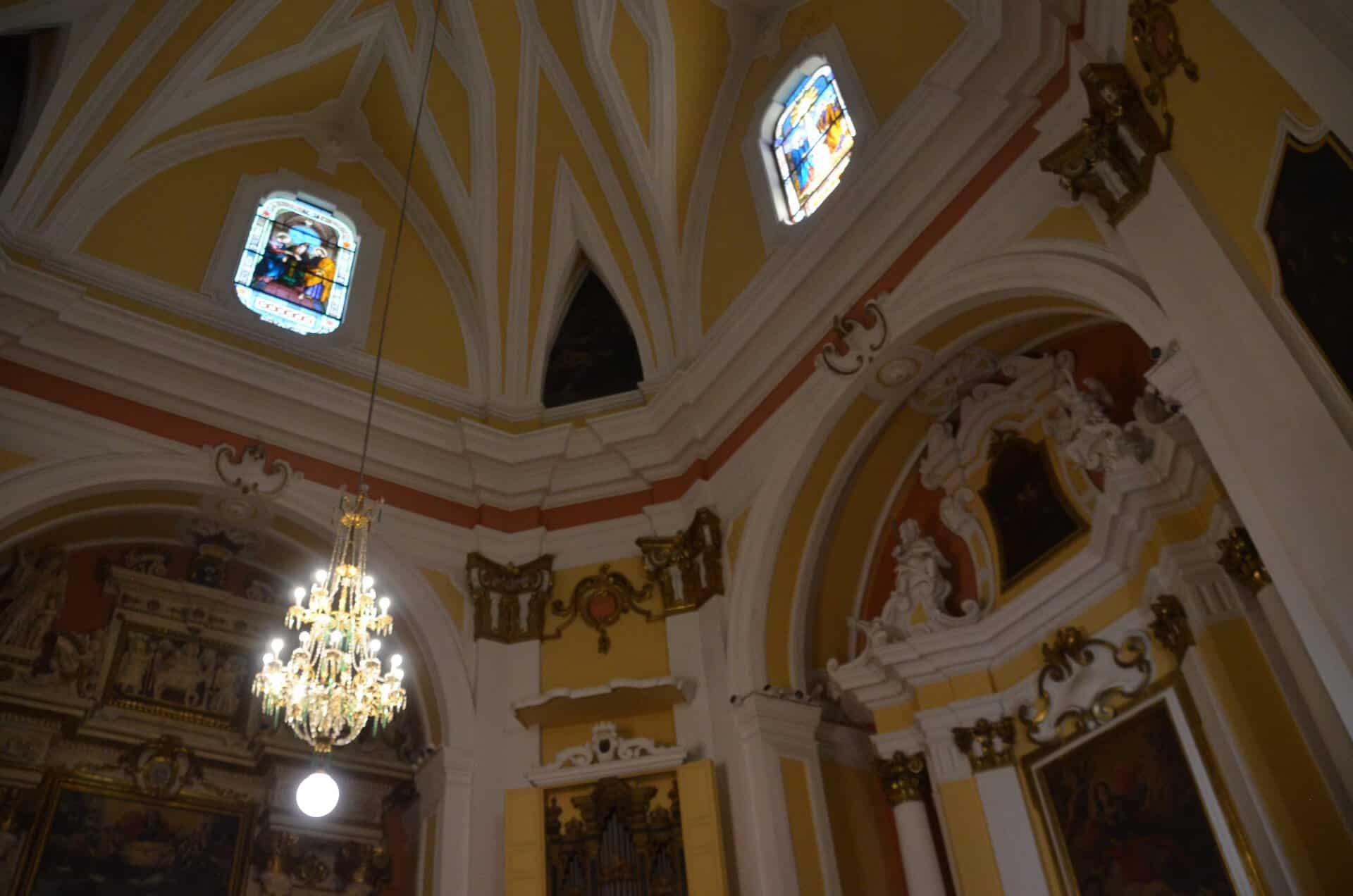
On the way, we stopped by the Church of San Giuseppe (Saint Joseph).
It was a small, single-room, octagonal church, and I was struck by its intimate, welcoming atmosphere.
I remembered seeing churches with a similar layout at a monastery in Turin and also in Palermo.
The current structure dates back to the mid-18th century, having been rebuilt following an earthquake in the 17th century.
The castle itself was built between the late 15th and 16th centuries as a defence against the Ottoman Turks, but in the 19th century, it became the residence of a local baron.
In the 20th century, the city acquired the property, and today, a portion of it serves as the town hall.
Staff members were offering guided tours for a fee, but as we were short on time, we only took a peek into the rooms that were open to the public for free.
Consequently, it wasn’t particularly interesting.
The reason we were short on time was that we had a restaurant reservation.