[July 2026] Lecce, in the Puglia region of Southern Italy, is said to have once been home to as many as 120 churches.
I learned this while participating in a walking tour (costing €20, per person) that included visits to four of these churches.
Back then, the town was reportedly teeming with members of the clergy—priests, nuns, and other religious figures.
Of those original churches, only about 30 remain today.
Our guide was a short, round woman with long fingernails and a large ring on her finger; she told us she had been working in this field for 25 years.
We met at the Piazza del Duomo, so we began our tour at the Duomo (cathedral) itself.
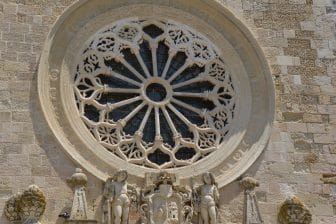
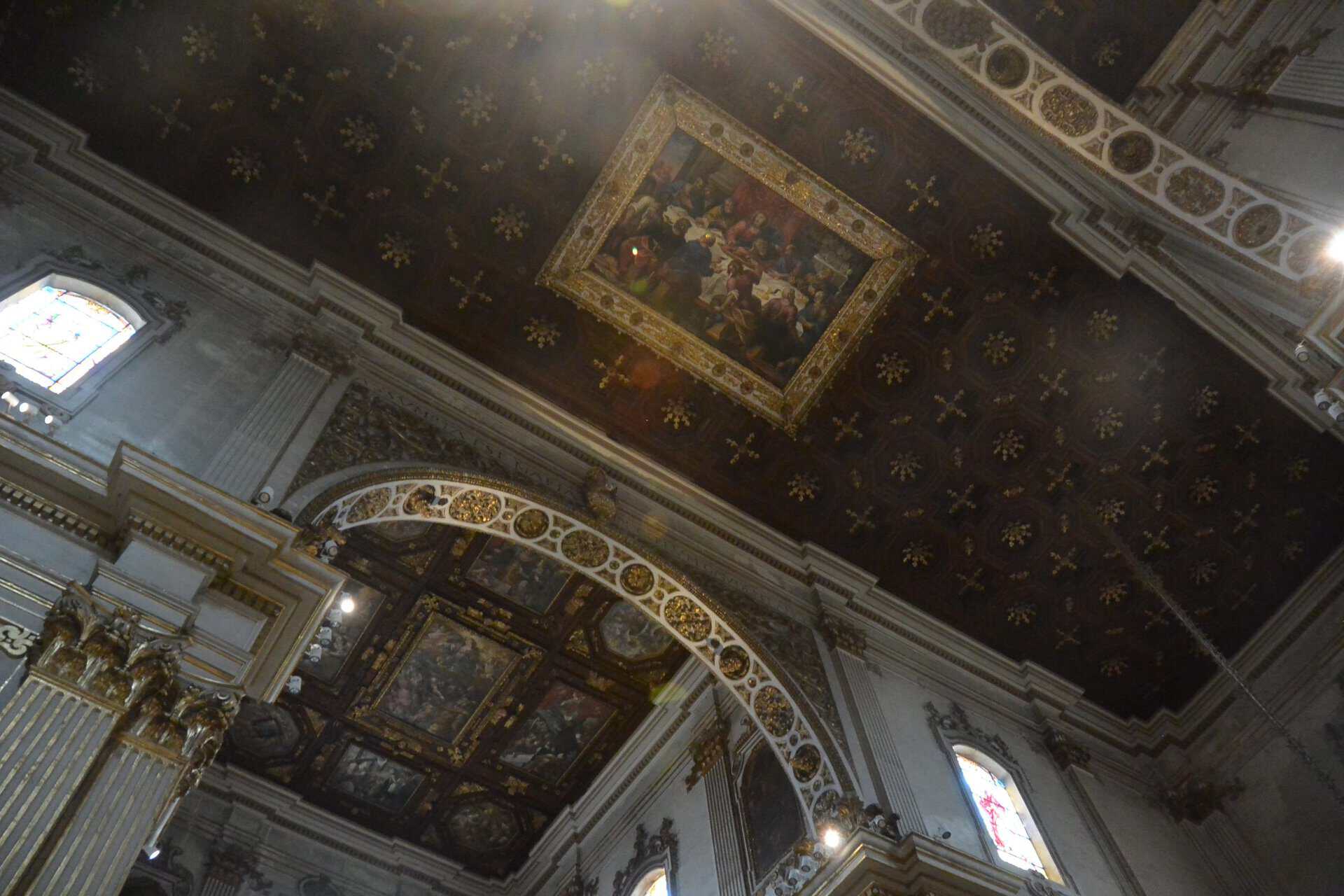
Although the church dates back to the 12th century, it underwent a major renovation in the 17th century—following the end of a plague epidemic—which gave it the appearance it has today.
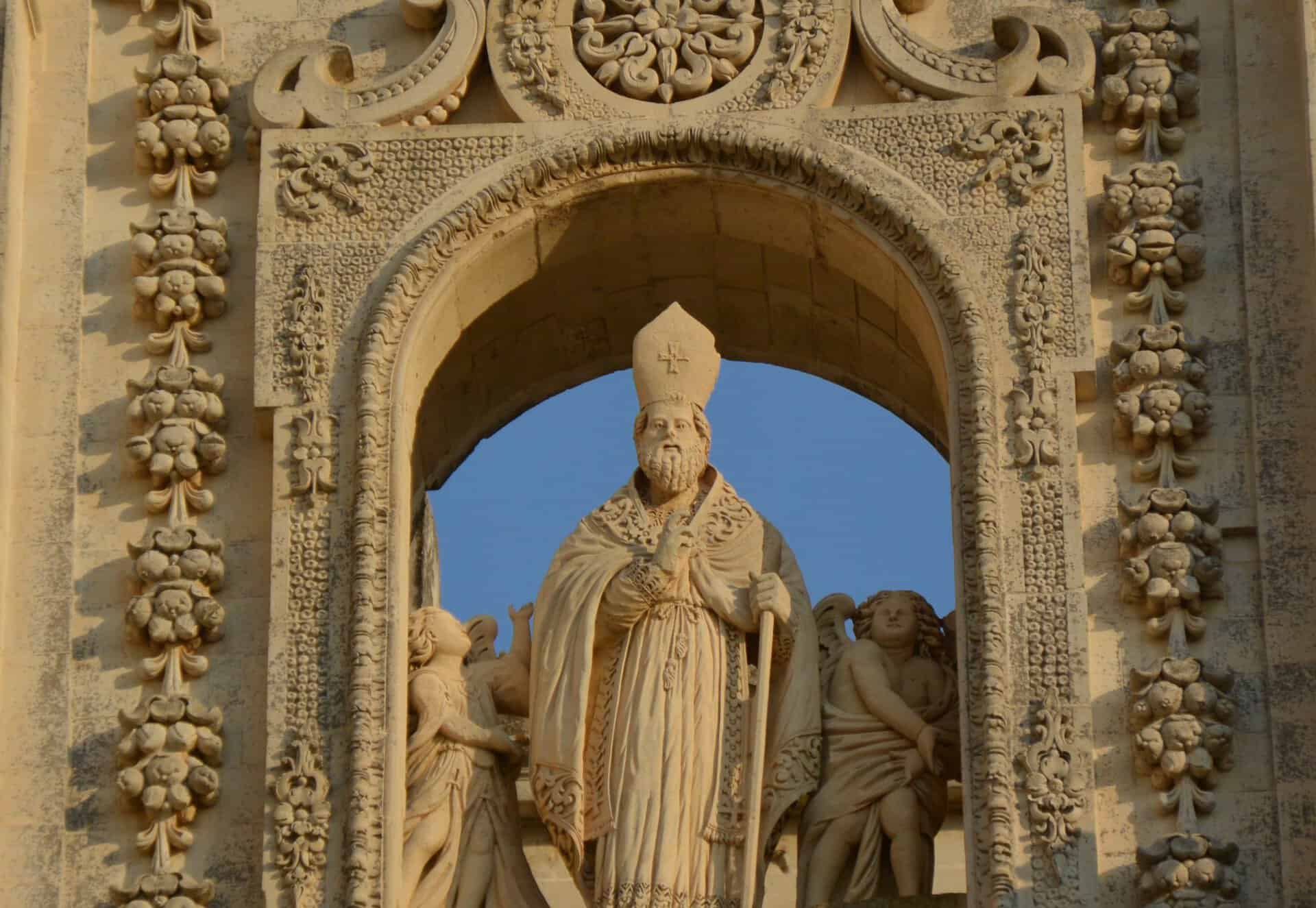
It was during this time that the city’s patron saint was changed from Saint Irene to Saint Oronzo.
The story goes that Saint Oronzo, a local figure, appeared in a dream to the bishop at the time and promised to save the town from the plague.
In fact, Lecce was relatively unaffected by the plague.
At the time, Lecce was under the rule of the Kingdom of Naples, and it seems that directives from Naples may have also played a role in these changes.
Originally, only members of the clergy were permitted to be buried here; however, after merchants from Genoa contributed significant funds toward the church’s restoration, they, too, were granted the right to be buried within its walls.
Descending into the crypt, we found a space filled with numerous columns—about 90 in total.
Unlike the columns in the cathedral at Otranto—which we had visited the day before and which were sourced from various different locations—these columns were uniform in appearance.
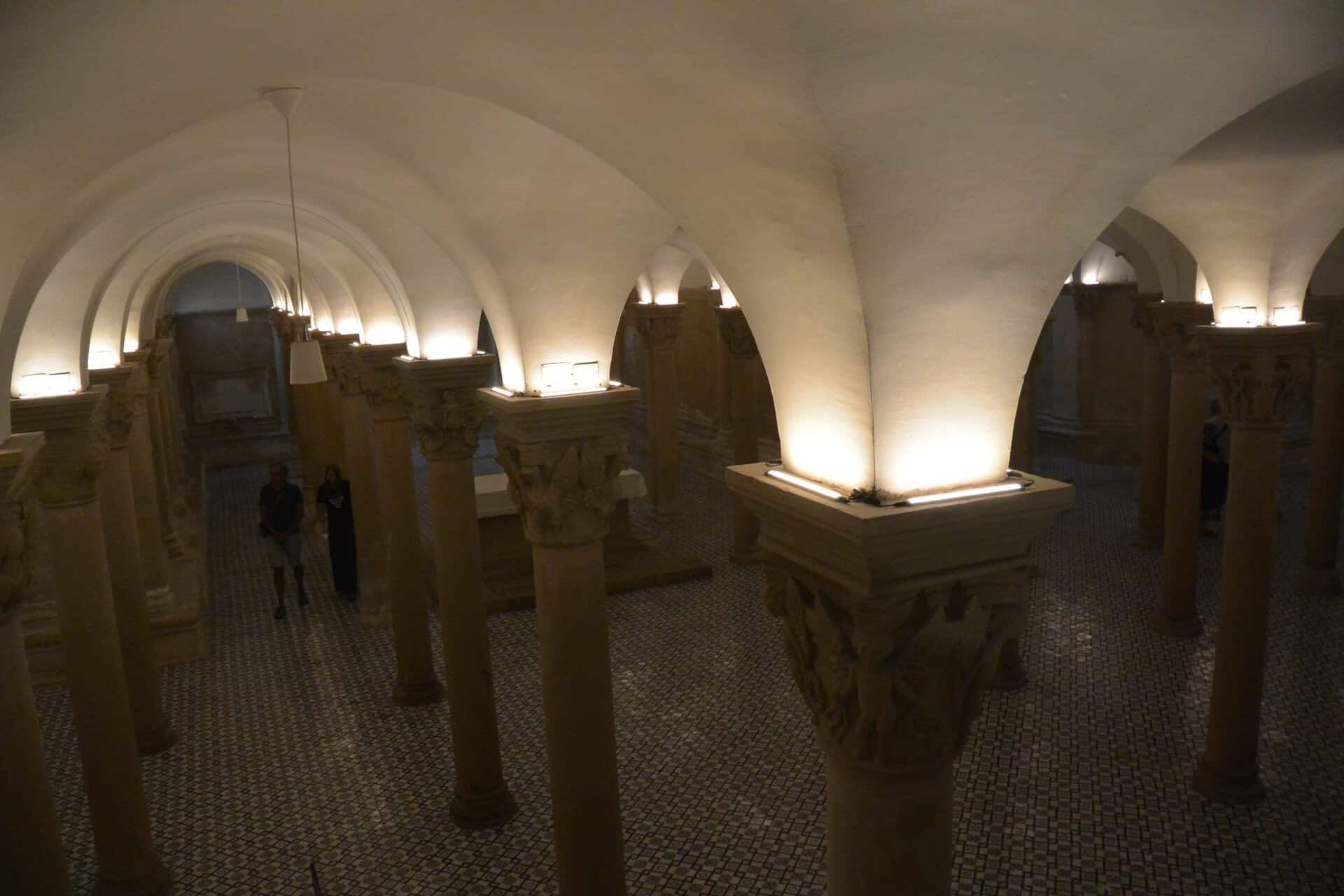
In terms of character and charm, the cathedral in Otranto was the more impressive of the two.
According to our guide, in regions south of Rome, it was once customary to sever the wrists and ankles of a deceased person—allowing them to drain of blood—before burial.
Traces of the area where this procedure was performed can still be seen in the depths of the crypt.
While it may sound macabre, this practice was likely related to the custom of mummifying the dead.
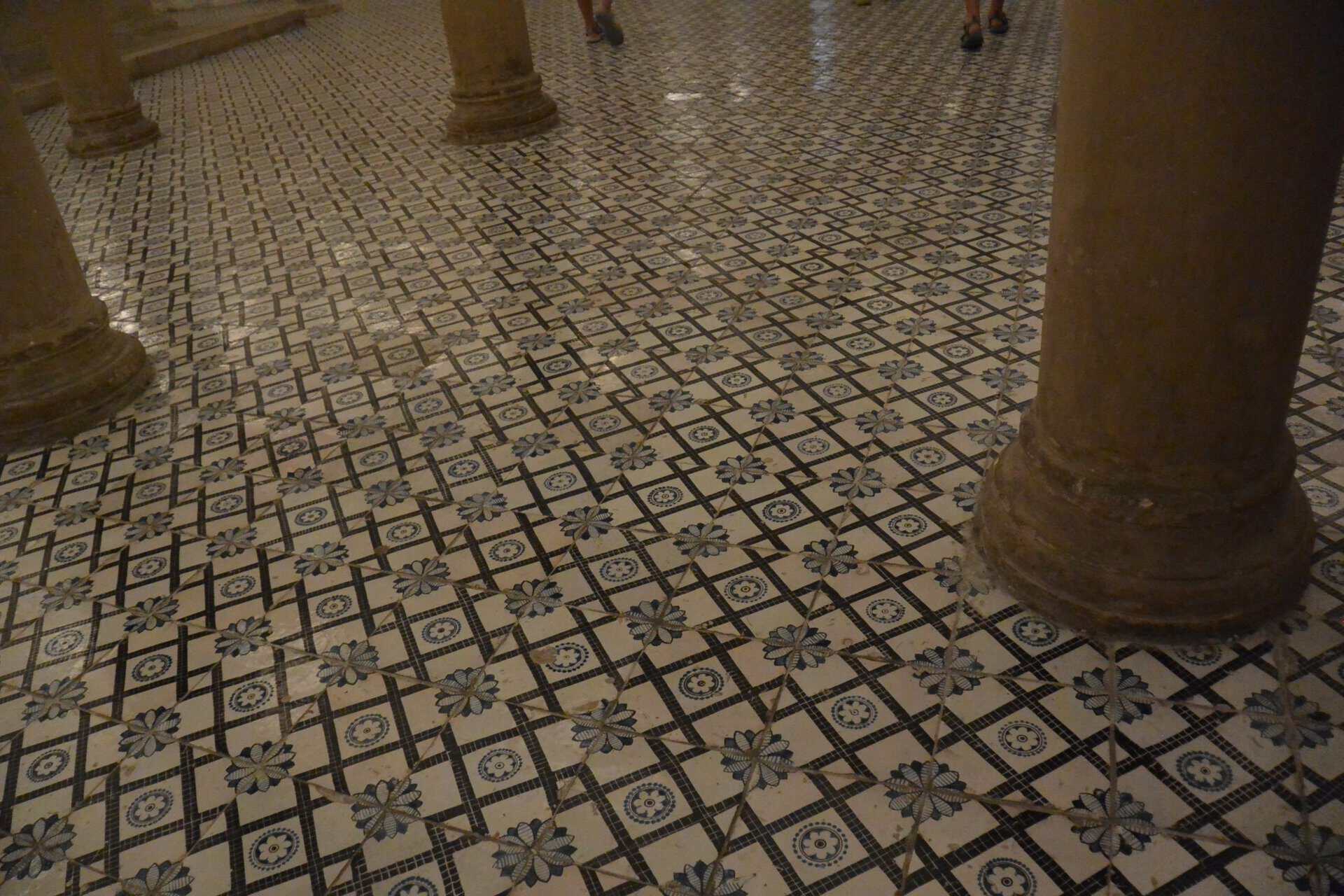
The floor tiles were replaced in 2016, and they certainly looked pristine.
However, I was told that the original design was preserved.
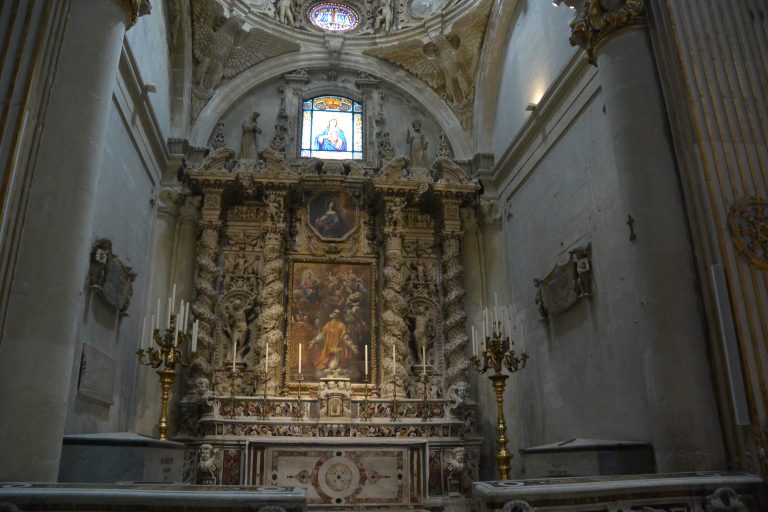
Incidentally, this cathedral is a prime example of “Lecce Baroque” architecture.
Our guide explained that churches in this style are characterised by the presence of plump angels, carvings of familiar food items, and twisted columns.
Furthermore, in churches throughout Lecce, the sun and the moon are invariably depicted somewhere.
The sun symbolises light, while the moon represents shadow and compassion; they are also commonly interpreted as symbols of the male and female genders.