[July 2026] During our two-week stay in Lecce, in the Apulia region of Southern Italy, we visited a variety of restaurants.
In the latter half of our trip, we found ourselves dining mostly at casual, unpretentious spots that served home-style cooking.
One of these was a restaurant called “Dall’Antiquario.”
“Antiquario” means “antique shop,” and it seems the space was once an antique store before being converted into a restaurant.
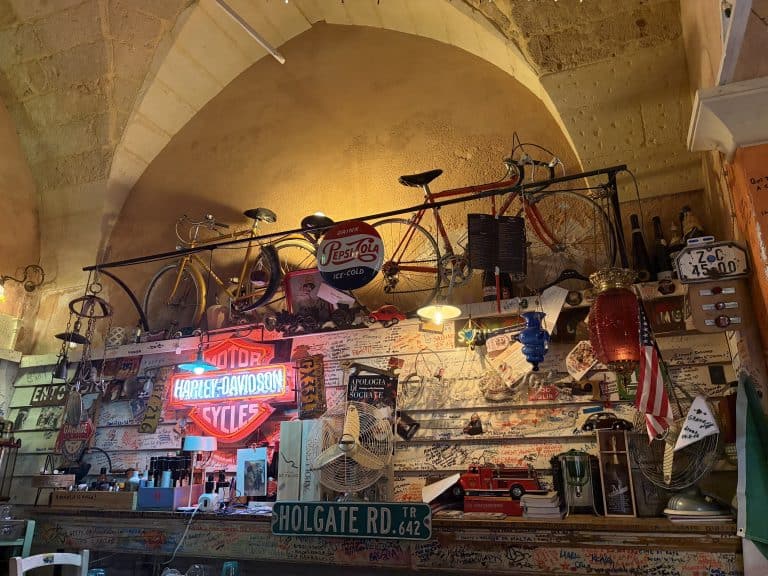
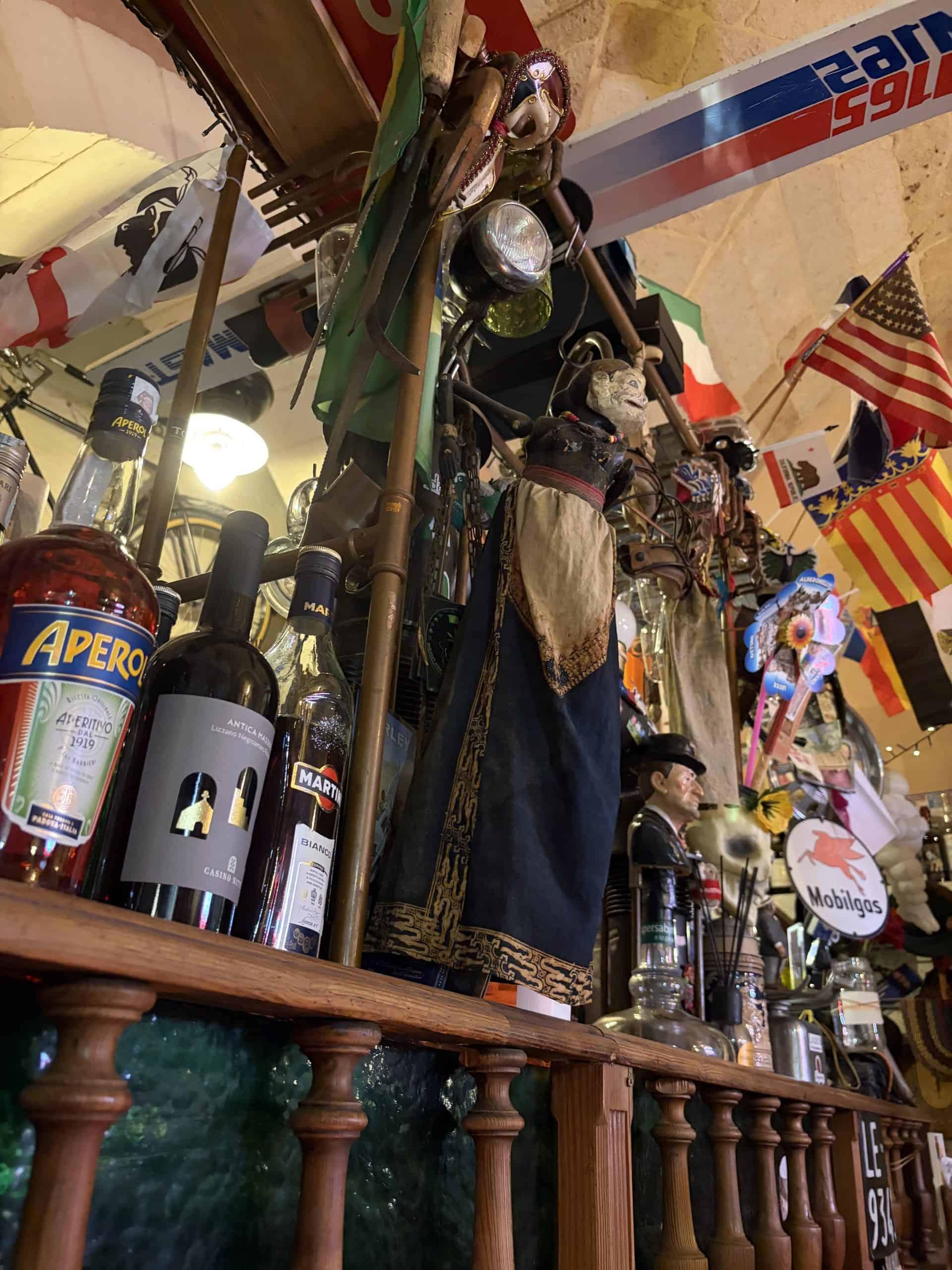
Perhaps as a remnant of its past, the relatively small interior was packed with a wide assortment of items on display.
This place was recommended to us by one of my husband’s Tai Chi acquaintances.
My husband has strong personal ties to the Apulia region, and—coincidentally—many of the friends he has met through Tai Chi also happen to have connections to Apulia.
When we arrived at the restaurant, we were a bit surprised as we were first greeted by two black men, though three locals later joined the staff.
While the interior was quite unique, the menu was very much home-style.
For starters, the only options were vegetable-based; we chose *caponata* and a Neapolitan-style aubergine dish to share.
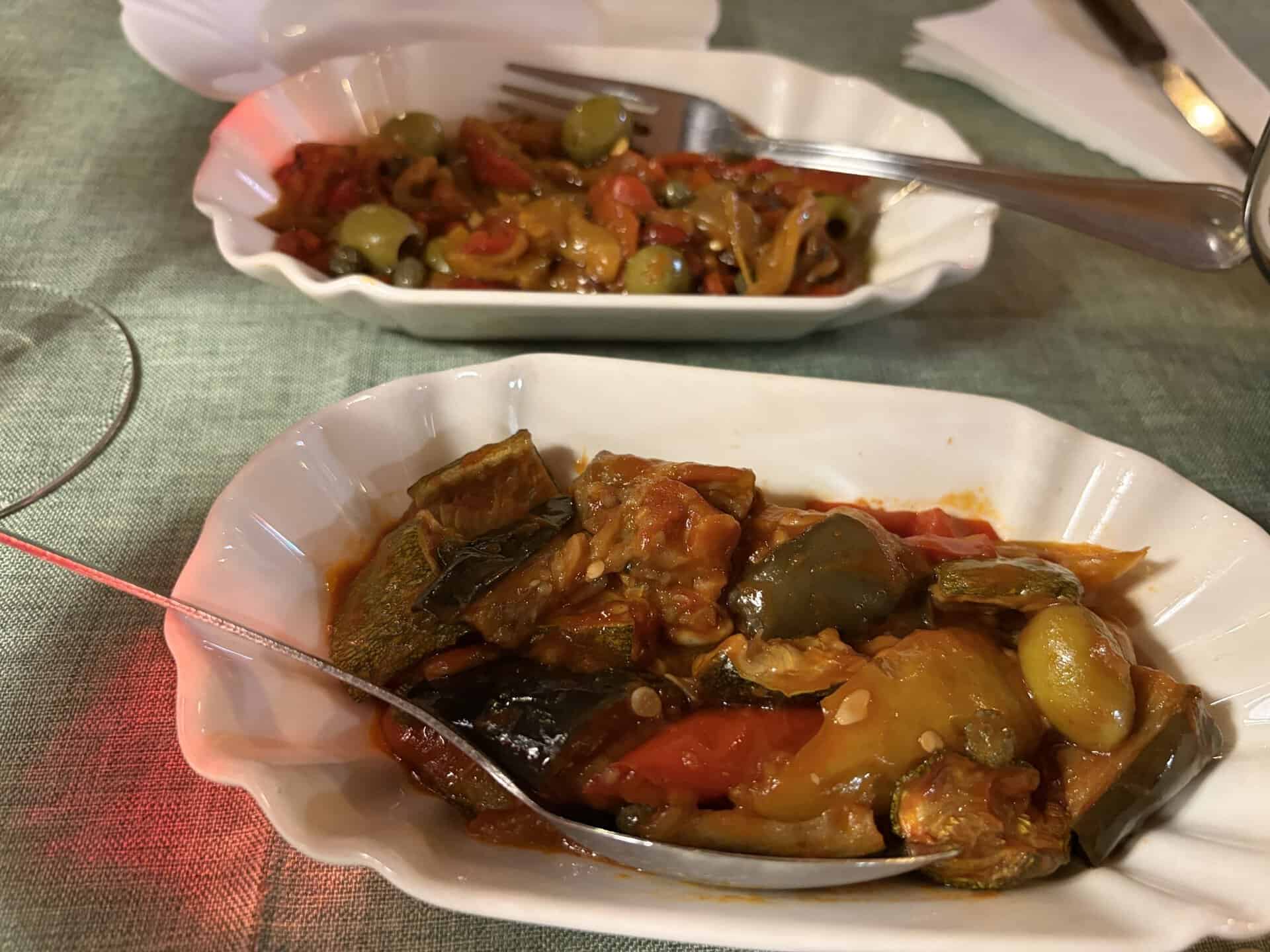
As it turned out, the two dishes were quite similar, but it was a great way to make up for a lack of vegetables in our diet.
For my main course, I ordered *polpette* (meatballs).
They were served in a tomato sauce and topped with white cheese.
They were certainly delicious, but not better than the ones my husband makes at home.
In hindsight, I realised that the menu also featured fried *polpette*—I should have ordered those instead!
After all, we don’t make fried *polpette* at home.
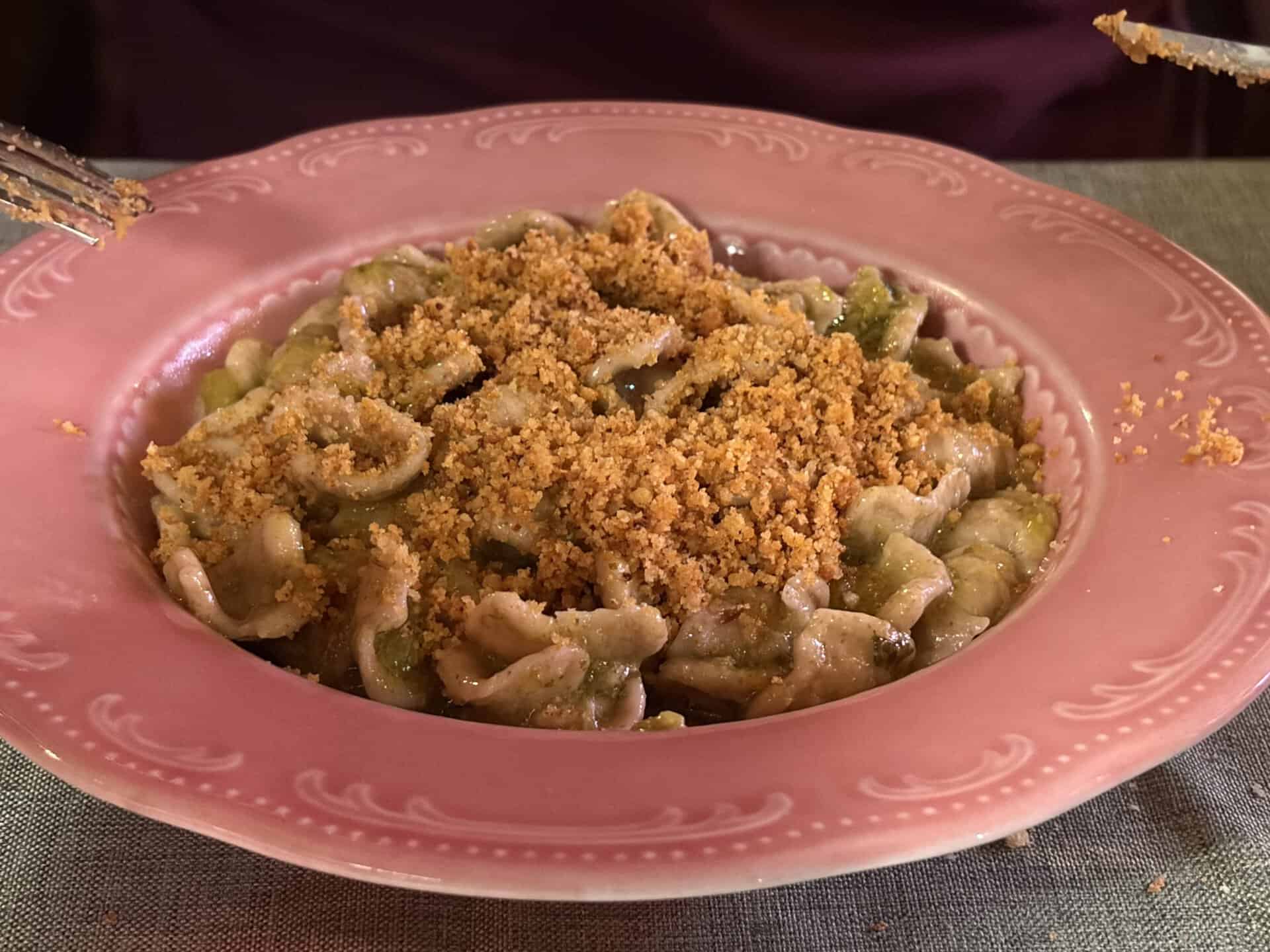
My husband opted for a classic Apulian dish: *orecchiette* with *cime di rapa* (turnip greens).
It was a bit unusual—the orecchiette was served topped with oven-toasted breadcrumbs.
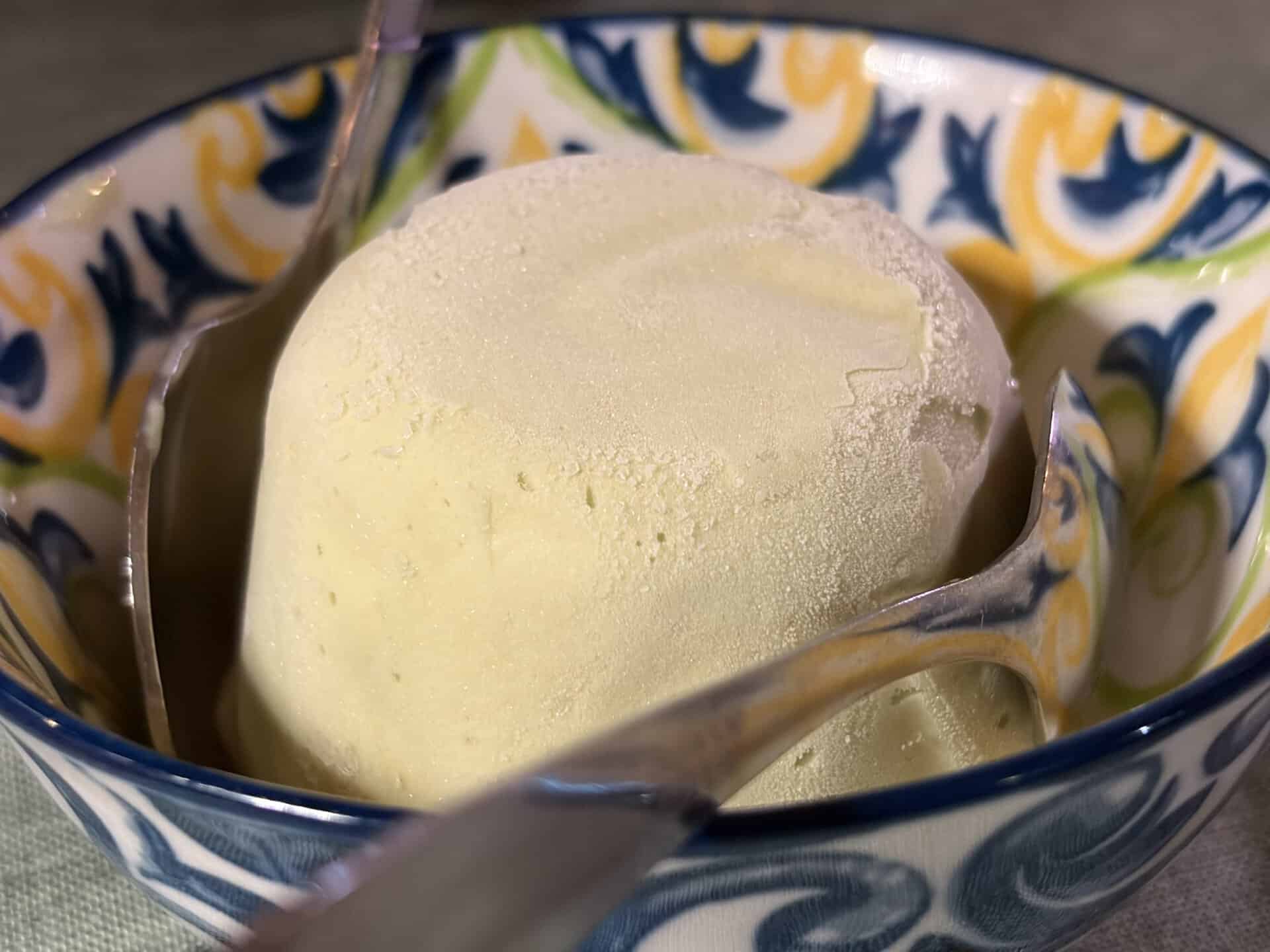
For dessert, we had a type of gelato called “spumone.”
My husband wasn’t familiar with spumone, and the staff even asked him, “Are you from the north?”
Apparently, it’s a common treat in Southern Italy, consisting of several layers of gelato pressed together.
The version my husband had featured almond-flavoured gelato with a nut-based, paste-like filling inside.
We also ordered a local *amaro* (digestif), and they brought us one made in-house from carob.
We had learned about carob—known in Italian as *carruba*—the previous year in Crete, Greece, where we discovered it’s the origin of the term “carat.”
It had a bitter, astringent taste—not exactly something I’d be eager to drink again!
Including a carafe of the house red wine, the total came to €68 —a quite reasonable price.
After paying, they offered us some limoncello and a ginger-flavoured *amaro*.
While it’s not a place I’d necessarily become a regular at, I think it’s an excellent spot to experience authentic local home-style cooking.