[July 2026] During our summer holiday in Lecce—an old city in the Apulia region of southern Italy—we decided to use it as a base to explore various parts of the Salento area.
The Salento region refers to the southernmost part of Apulia, which itself forms the “heel” of Italy’s boot-shaped peninsula.
We roughly mapped out our itinerary for the two-week stay on the very first day.
The first stop on the list was Galatina, which we visited on day two.
It is located about 25 kilometres south of Lecce—a drive of around 30 minutes (we had rented a car for the trip).
Like Lecce, Galatina was lined with cream-coloured houses and dotted with numerous churches.
We parked next to a park and walked toward the tallest tower we could see.
We had assumed this was the town’s main attraction, but it turned out to be something else.
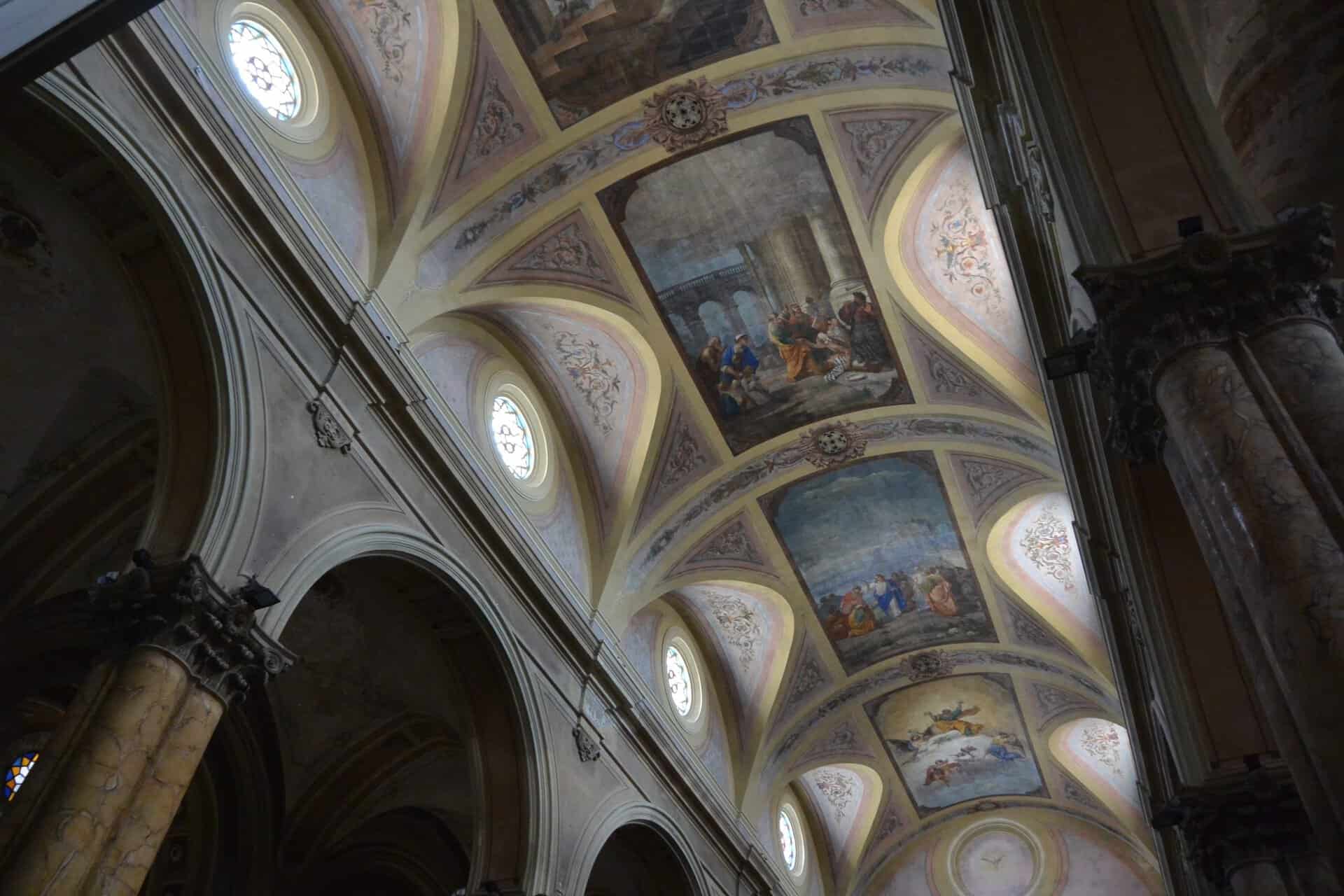
It was the Basilica of Saints Peter and Paul; the current structure is a relatively modern one, rebuilt during the 17th and 18th centuries.
Interestingly, however, there is a legend that the water from the well here can cure people bitten by tarantulas.
In this region, it was believed that if someone was bitten by a tarantula, they could recover by dancing wildly to expel the venom, then drinking water from this well and offering prayers.
There were exhibits in the town detailing this story.
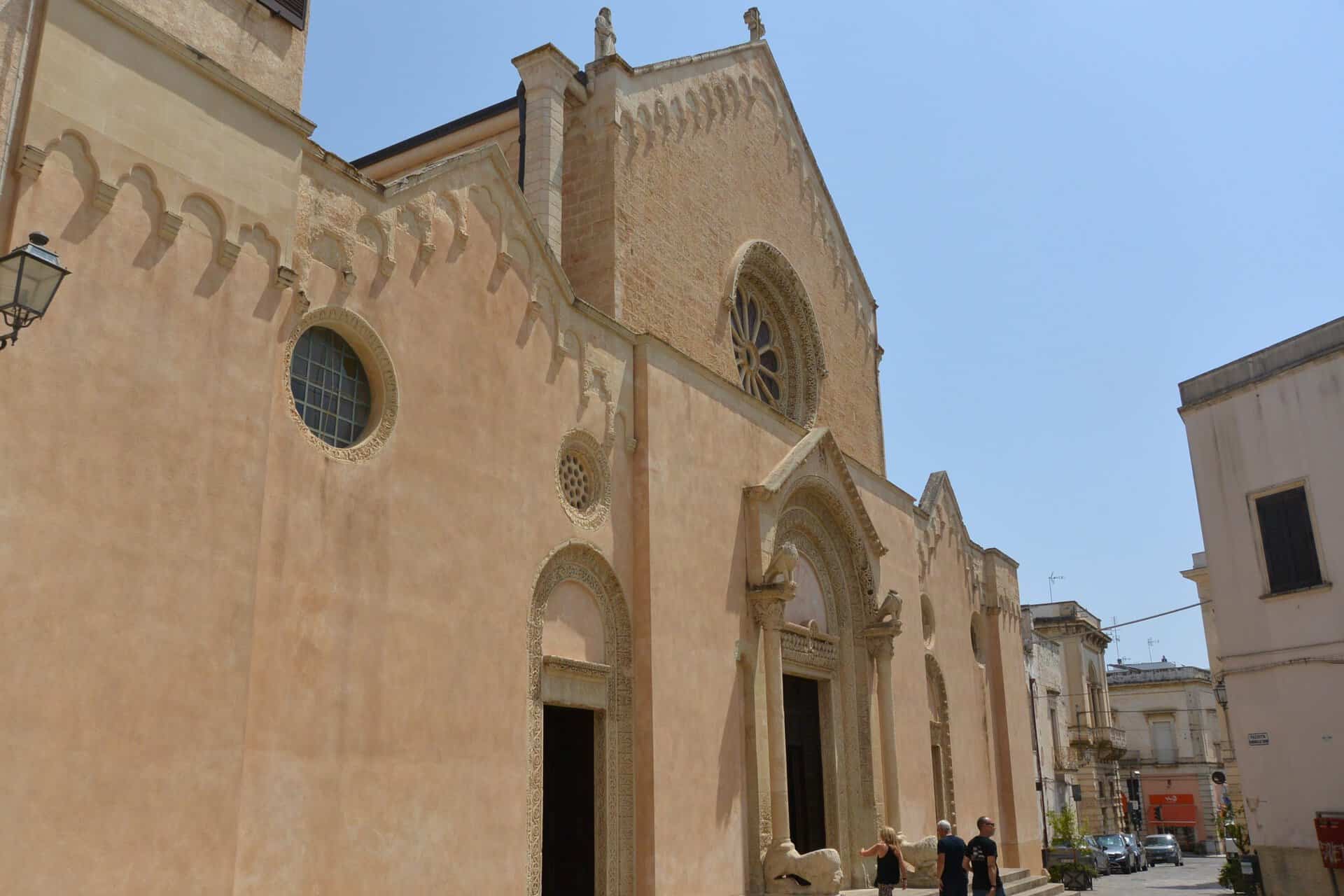
Now, the place we had actually been looking for was the Basilica of Santa Caterina d’Alessandria.
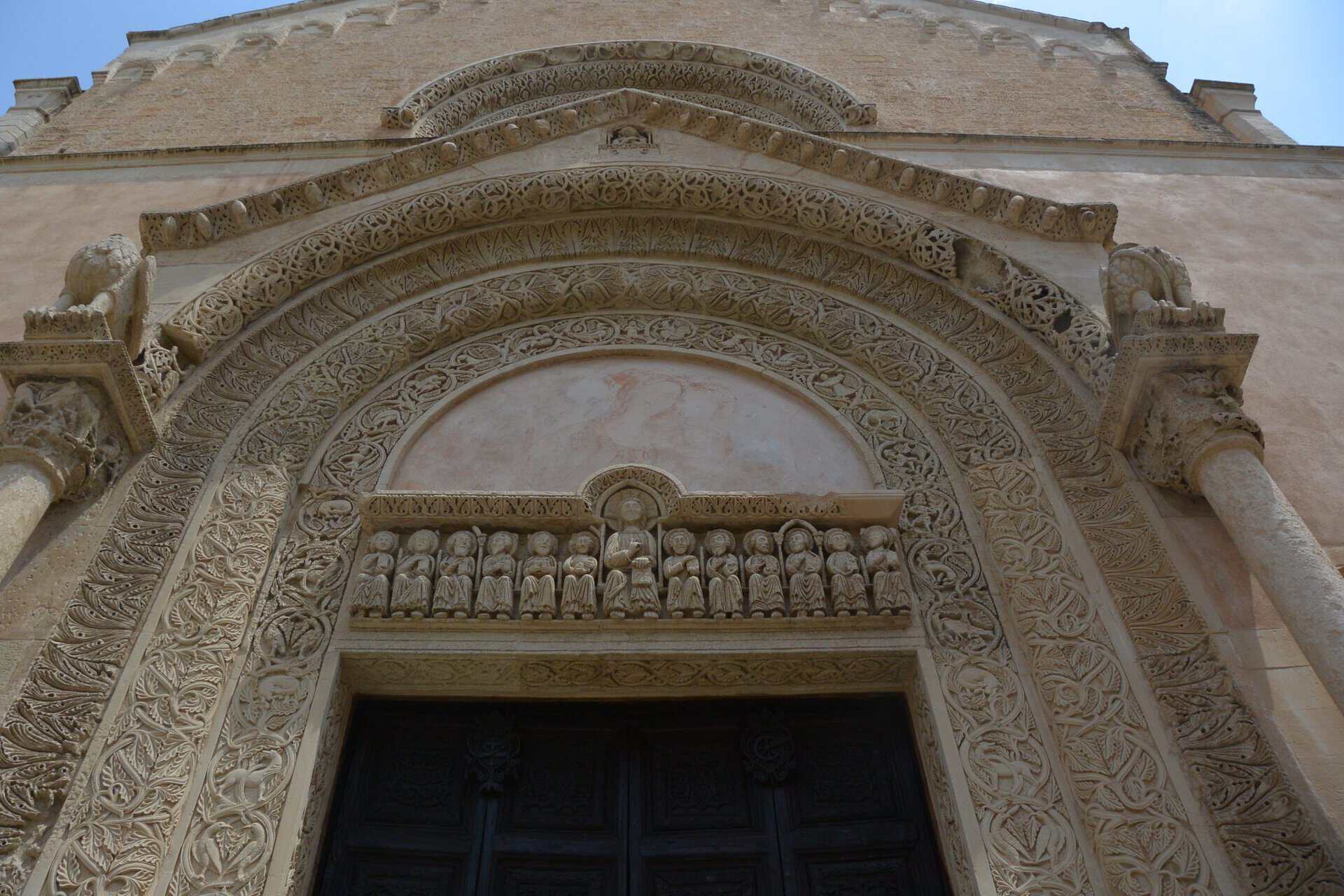
The basilica we arrived at was surprisingly small and unassuming, but upon closer inspection, the intricate carvings at the entrance were magnificent and truly striking.
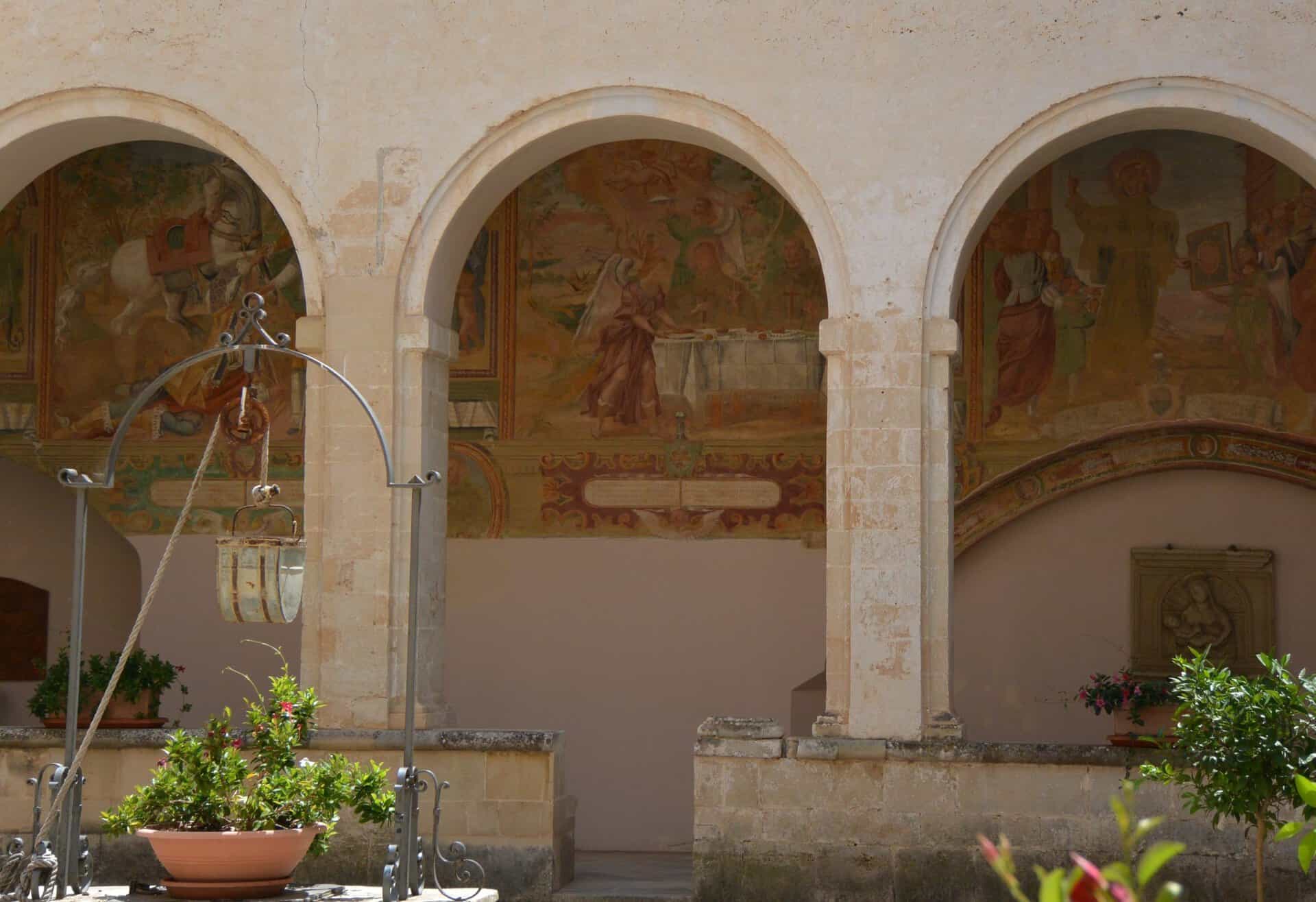
I had read online not to miss the cloister, so we started there—it has a separate entrance.
It was a beautiful cloister surrounded by frescoes featuring golden-yellow hues..
When we entered the main church, it appeared there was an admission fee; however, when my husband asked about the cost, we were told it was a donation.
We paid €5.
This is truly a church worth making a special trip to see.
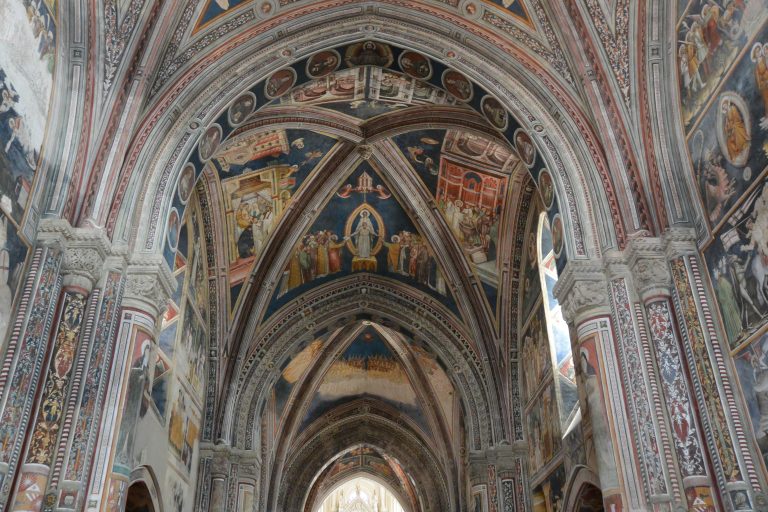
The ceiling, adorned with magnificent frescoes in shades of deep blue, is a breath-taking sight.
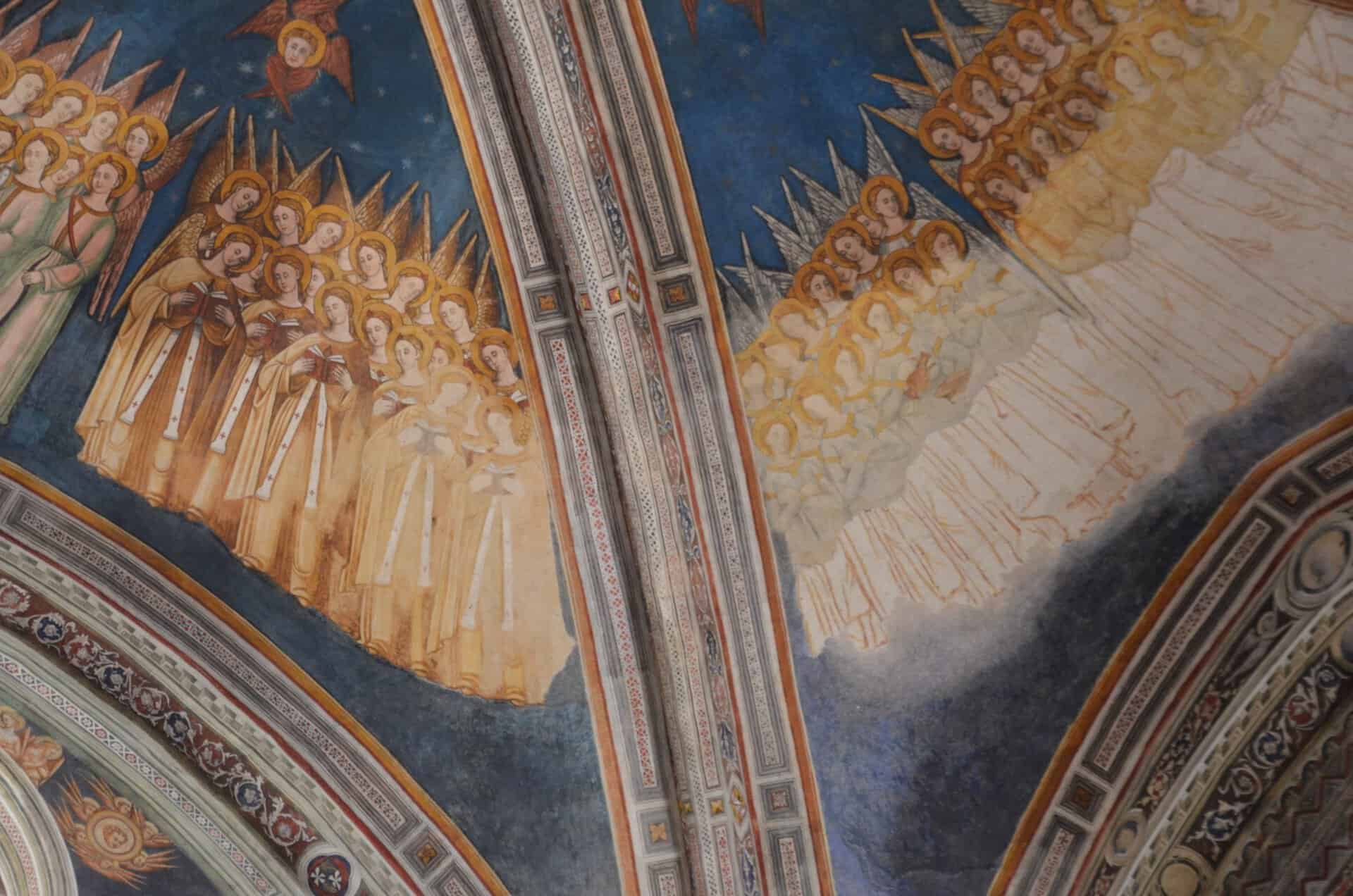
Built between the 14th and 15th centuries, the church is known as the “Assisi of the South” because the total surface area of its frescoes is second only to the Basilica of Saint Francis in Assisi.
Although not designated as a UNESCO World Heritage Site, it is a top-tier Italian national treasure and has been granted the title of “Basilica Minor” by the Vatican.
This title is awarded to churches that the Vatican recognizes as having a direct link to the Pope and significant historical value; other famous examples include the Sacré-Cœur in Paris, the Sagrada Família in Barcelona, and Oura Church in Japan.
One of the ceiling frescoes depicts a long line of angels; to me, it looked like corps de ballet, which left a lasting impression.
Incidentally, women wearing tank tops were given lightweight capes to wear upon entry.
I was wearing shorts, so I was a bit concerned, but I was told it was fine.
It seemed that exposing one’s shoulders was the issue.